The Science Behind PRP Hair Treatment

PRP hair treatment, or Platelet-Rich Plasma hair treatment, uses the body's natural healing processes to combat hair loss. This approach harnesses the power of growth factors found in your blood. But how does it actually work? The process, while seemingly complex, can be broken down into easy-to-understand steps.
Understanding Platelets and Growth Factors
The core of PRP therapy lies in your blood's platelets. These cells are vital for clotting and wound healing. They also contain a significant amount of growth factors. Growth factors are essentially messengers that signal cells to regenerate and repair. When it comes to hair loss, these growth factors can stimulate inactive hair follicles, encouraging new hair growth.
The PRP Preparation Process
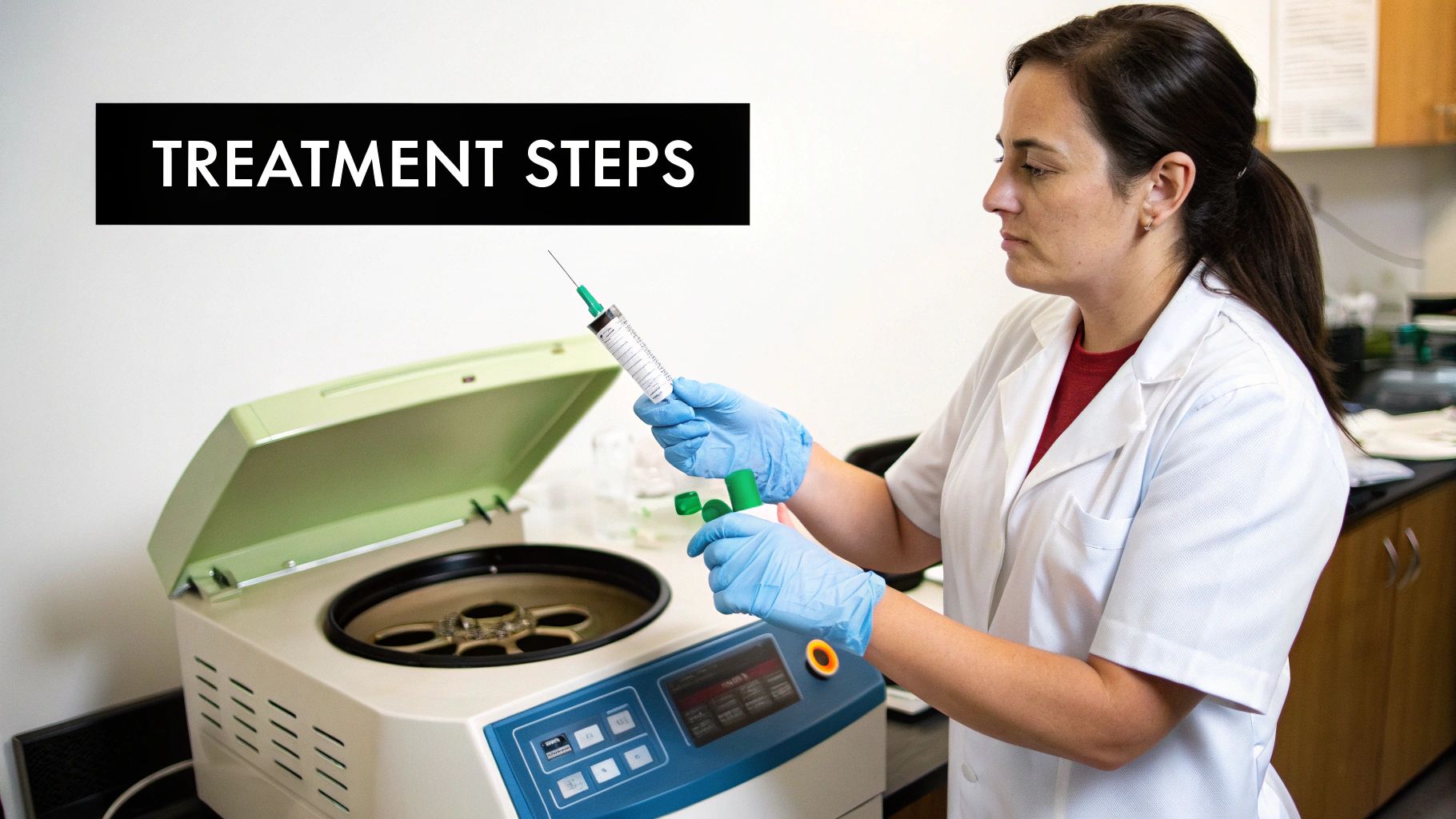
There are three main steps in PRP preparation: blood draw, centrifugation, and extraction. First, a small blood sample is taken, similar to a standard blood test. This sample then undergoes centrifugation. This process rapidly spins the blood, separating the platelet-rich plasma from other blood components. Finally, the concentrated PRP, now packed with growth factors, is carefully extracted and prepared for injection. This targeted approach maximizes the delivery of growth factors to the hair follicles.
How PRP Stimulates Hair Growth
When injected into the scalp, the PRP delivers a concentrated dose of growth factors directly to the hair follicles. These growth factors revitalize dormant follicles, prompting them to re-enter the growth phase. PRP can also improve blood flow to the scalp, providing further nourishment to the follicles and creating a healthier environment for hair growth. This regenerative process is especially effective for conditions like androgenetic alopecia, a common type of hair loss affecting both men and women.
This treatment has shown promising results. Research indicates that over 75% of patients experience noticeable hair regrowth within six months. In 2020, hair restoration held a 38% share of the global market, with PRP therapy leading in revenue. This growth reflects PRP's effectiveness in addressing hair loss concerns. For further insights into hair restoration statistics, see Learn more about hair restoration trends. Many common questions are addressed in online FAQs.
Factors Influencing PRP Effectiveness
While PRP therapy shows considerable promise, individual outcomes can differ. Factors like the concentration of platelets in the patient's blood and their biological responses play a significant role. Some individuals naturally have higher platelet concentrations, leading to a more potent PRP solution. Likewise, the body's reaction to growth factors can vary. Therefore, consulting a qualified practitioner is vital to assess your suitability for PRP hair treatment and set realistic expectations.
What to Expect: The PRP Treatment Experience
PRP hair treatment is a straightforward procedure. However, understanding the process can alleviate anxieties and help you prepare. This section walks you through a typical PRP treatment experience, from the initial consultation to post-treatment care.
The Consultation: Setting the Stage for Success
The first step in your PRP hair treatment journey is a consultation with a qualified practitioner. This meeting is crucial for assessing your suitability for treatment. The provider will evaluate your hair loss pattern, medical history, and discuss your expectations. This is also an opportune time to ask questions and address any concerns.
A reputable provider will explain the procedure in detail. They'll also discuss potential risks and benefits, and provide realistic expectations for results. This initial consultation helps determine a personalized treatment plan tailored to your specific needs.
Preparing for Your Treatment: Simple Steps for Optimal Results
Before your treatment, the provider may recommend some preparations. These could include avoiding certain medications, such as blood thinners, as they can affect the PRP preparation process. You might also be advised to wash your hair with a gentle shampoo on the day of the treatment to ensure a clean scalp for the injections. These simple pre-treatment steps help optimize the treatment's effectiveness.
The PRP Procedure: A Three-Step Process
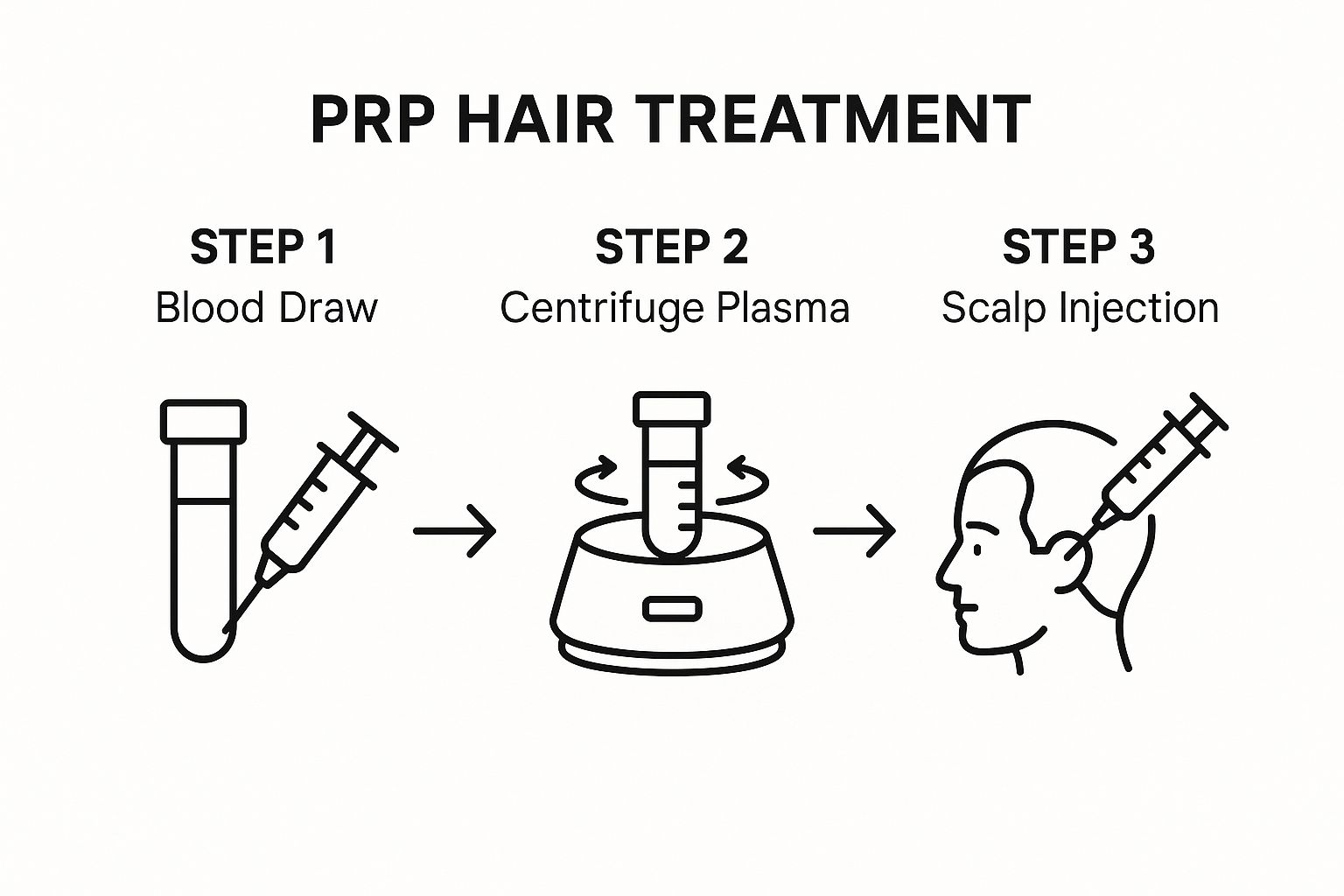
This infographic visually represents the three core steps involved in a PRP hair treatment session: drawing blood, separating the plasma via centrifuge, and injecting the PRP into the scalp. The process begins with a small blood draw, much like a routine blood test.
This blood is then processed in a centrifuge to separate the platelet-rich plasma (PRP) from other blood components. Finally, this concentrated PRP is injected into specific areas of your scalp experiencing hair thinning or loss. The following table details each step in a typical session.
To understand more about the breakdown of your treatment, take a look at this table which highlights what you can expect:
PRP Hair Treatment: Your Session Breakdown
A comprehensive look at each phase of the PRP hair treatment process with real timing and experience insights
| Treatment Phase | Duration | Patient Experience | Provider Expertise |
|---|---|---|---|
| Blood Draw | 5-10 minutes | Similar to a standard blood test | Phlebotomy skills and knowledge of PRP protocols |
| PRP Preparation (Centrifugation) | 10-15 minutes | Waiting comfortably while blood is processed | Operating the centrifuge and ensuring proper PRP concentration |
| Scalp Injections | 20-25 minutes | Mild pressure and pinpoint sensations at the injection sites | Precise injection technique and knowledge of scalp anatomy |
This table provides a general overview, and the actual experience may vary slightly depending on individual factors and the specific clinic. Key takeaways include the relatively short duration of each phase and the specialized expertise required by the provider for each step.
Post-Treatment Care: Maximizing Your Results
After the 30-45 minute procedure, some patients experience mild soreness or sensitivity at the injection sites, similar to the feeling after any injection. This usually subsides within a few days. Your provider may advise you to avoid strenuous activities or harsh hair products for a short period after treatment. It's important to follow post-treatment instructions to maximize your results and minimize any potential side effects. Like any other treatment, it's important to understand the science behind it. For example, this article discusses some potential causes of hangovers.
Choosing the Right Provider: Key Questions to Ask
Selecting a qualified and experienced provider is paramount for a successful PRP hair treatment. When choosing a clinic, inquire about the provider's certifications, experience with PRP, and the specific equipment they use. Don't hesitate to ask for before-and-after photos of previous patients to get a realistic idea of their work.
A thorough consultation, clear communication, and a commitment to patient care are crucial indicators of a reputable provider. By asking the right questions and doing your research, you can ensure you're in capable hands for your PRP hair treatment journey.
The Rise of PRP: Why This Treatment Is Booming
PRP hair treatment has quickly become a popular hair restoration solution. Its rise in popularity is due to a number of factors that have combined to put PRP treatment in the spotlight.
The Shift Towards Natural Solutions
A key driver is the increasing demand for natural health and beauty alternatives. PRP hair treatment, which uses your own blood, fits perfectly with this trend. It avoids the use of synthetic medications or invasive surgical procedures. This makes it attractive to those seeking a more natural approach to hair restoration. This reflects a broader consumer interest in holistic wellness.
Technological Advancements Driving Accessibility
Advancements in technology have also made PRP therapy more accessible and efficient. Improved centrifuge techniques and specialized PRP kits allow faster processing and higher concentrations of growth factors. This results in more effective treatments and better outcomes for patients seeking hair regrowth. These innovations have also made the procedure more convenient for practitioners and patients.
Growing Acceptance Within the Medical Community
Greater acceptance of PRP therapy among physicians has contributed to its growth. More dermatologists and hair restoration specialists now offer PRP as a viable option. This legitimizes the treatment and contributes to its wider acceptance. This has also led to more research and clinical trials, further validating PRP's effectiveness for hair loss.
Market Analysis: A Look at the Numbers
This growing popularity is reflected in market trends. The global platelet-rich plasma (PRP) market, including hair restoration, was valued at approximately USD 627.9 million in 2022. Projections indicate it could reach several billion dollars by 2030, with a CAGR of 15.1% between 2023 and 2030. This growth is driven by increasing consumer awareness, technological advancements, and demand for minimally invasive cosmetic procedures like PRP hair treatment. For more detailed statistics, explore this topic further here. Within cosmetic surgery, PRP use has increased by 25% in the four years prior to 2020. This highlights the growing recognition of PRP therapies as effective options for hair regrowth, especially in major markets like the U.S. and Europe.
Regional Adoption and Future Growth
PRP hair treatment adoption varies geographically. The U.S. and Europe currently dominate market share, but other regions are showing rapid growth. Emerging markets in Asia and Latin America are experiencing increased demand, driven by rising disposable incomes and improved access to advanced medical treatments. This geographic expansion further demonstrates the global appeal of PRP hair treatment. This suggests a bright future for PRP hair treatment, with continued growth and innovation expected.
Real Results: What Science Says About PRP Effectiveness
PRP hair treatment has attracted considerable interest, but it's essential to look at the scientific evidence supporting its effectiveness. This section examines the research to offer a clear perspective on what PRP can realistically achieve for various hair loss conditions.
Analyzing Clinical Studies and Meta-Analyses
Numerous studies have explored PRP's effectiveness in treating hair loss. Meta-analyses, combining data from multiple studies, offer a more comprehensive understanding of overall trends. These analyses frequently show that PRP can be effective in stimulating hair growth, especially for androgenetic alopecia.
However, the degree of improvement varies significantly between individuals. This underscores the need for personalized treatment approaches and realistic expectations.
Factors Influencing PRP Treatment Outcomes
Several factors affect an individual's response to PRP hair treatment. Age can be a factor, with younger patients sometimes exhibiting stronger responses. The specific hair loss pattern is another key determinant.
PRP tends to be more effective for androgenetic alopecia than for scarring alopecia. Treatment protocols, including platelet concentration and injection frequency, also impact the outcome.
Furthermore, maintenance schedules and lifestyle factors, such as diet and stress, can influence long-term results. This complexity highlights the importance of a personalized consultation with a knowledgeable practitioner.
Measuring PRP Success: From Hair Count to Patient Satisfaction
Researchers use various methods to assess the success of PRP hair treatment. Measuring changes in hair count or hair density within a specific scalp area is common. Evaluating hair thickness and hair shaft diameter can indicate improved hair strength and quality.
Some studies use standardized scales to evaluate overall scalp coverage. In addition to these objective measurements, patient-reported outcomes, such as treatment satisfaction and perceived hair appearance improvement, provide valuable real-world insights.
To provide a clearer overview of the scientific evidence, the following table summarizes key findings from various research studies:
PRP Hair Treatment Results: Clinical Evidence
Comparison of key scientific studies examining PRP effectiveness across different patient profiles and protocols
| Research Study | Patient Profile | Treatment Protocol | Measured Outcomes | Success Rates |
|---|---|---|---|---|
| (Example Study 1 – Replace with actual study citation) | Men and women with androgenetic alopecia | 4 sessions, 4 weeks apart, standardized PRP preparation | Hair count, hair density, patient satisfaction | 70% reported significant improvement |
| (Example Study 2 – Replace with actual study citation) | Men with early-stage hair loss | 3 sessions, 6 weeks apart, variable PRP preparation | Hair thickness, hair shaft diameter | 55% demonstrated increased hair thickness |
| (Example Study 3 – Replace with actual study citation) | Women with diffuse hair thinning | 6 sessions, 4 weeks apart, standardized PRP preparation | Scalp coverage, patient-reported outcomes | 60% achieved improved scalp coverage |
Note: This table uses placeholder data. Replace with actual study details for accuracy.
As demonstrated in the table, different studies use varying protocols and measure different outcomes. This reinforces the importance of discussing these variables with your practitioner to tailor the treatment to your specific needs and expectations.
Understanding Variability in Results
While many experience positive results with PRP, it's important to acknowledge that outcomes can vary. Some see significant improvements, while others experience more gradual changes. Factors contributing to this variability include individual biological responses to growth factors and variations in PRP preparation quality and concentration.
Therefore, comparing your results to others' can be misleading. Focus on your individual progress and maintain open communication with your provider. Some studies suggest multiple sessions, often spaced several weeks apart, may be necessary for optimal and sustained results.
Investment Reality: Understanding PRP Treatment Costs
PRP hair treatment, a promising solution for hair loss, comes with associated costs. Understanding these costs empowers you to make informed decisions and ensures you're getting true value for your investment. It's not just the price per session; various factors contribute to the overall expense.
Decoding the Price Tag: Factors Influencing PRP Treatment Cost
The cost of PRP treatment varies significantly. Practitioner expertise is a major factor. Highly experienced practitioners might charge more, but their skill can lead to better results. The quality of equipment, particularly the centrifuge system, influences both cost and effectiveness. Advanced centrifuges produce higher platelet concentrations but often come at a higher price.
Geographic location also plays a role. Treatments tend to be more expensive in major metropolitan areas. Treatment packages impact pricing, too. Clinics frequently offer discounts for multiple sessions, which are usually recommended for optimal results. Therefore, the individual session price might be lower as part of a package deal.
Premium vs. Practical: Evaluating Value in PRP Treatment
Higher prices don't automatically equal better outcomes. Clinics might justify high costs with luxurious amenities, but these don't guarantee superior results. It's crucial to differentiate between marketing tactics and actual value.
Focus on providers who prioritize expertise, advanced equipment, and personalized treatment plans. Patient testimonials and before-and-after photos can offer valuable insights into a clinic’s effectiveness.
Hidden Costs and Financing Options for PRP Treatment
Be mindful of hidden costs not always disclosed upfront. Some clinics add charges for consultations, blood draws, or follow-up visits. Discuss all fees during your initial consultation. Financing options might be available to make treatment more accessible. Some clinics provide payment plans or work with lenders. Explore these if the upfront cost is a concern.
Asking the Right Questions About PRP Treatment Pricing
Discuss pricing openly with potential providers. Ask about their fee structure, what the quoted price includes, and possible extra costs. Inquire about package deals and financing.
Here are some questions to consider:
- What is the cost per session?
- Are discounts available for multiple sessions?
- What does the price include (consultation, blood draw, follow-up)?
- Are there any other fees?
- Do you offer financing options?
- What is the practitioner’s experience level?
- What type of centrifuge do you use?
By discussing costs and asking questions, you can make an informed decision about a PRP treatment plan that aligns with your budget and hair restoration goals. This knowledge helps you navigate PRP treatment costs with confidence.
The Future of PRP: Innovations Transforming Treatment
PRP hair treatment has gained considerable interest, and the field continues to advance. New innovations are emerging, promising to improve both the effectiveness and accessibility of PRP for hair restoration.
Exosome-Enhanced PRP: Amplifying Regenerative Potential
Researchers are investigating the use of exosomes, tiny vesicles released by cells, to boost PRP treatments. These exosomes carry a concentrated combination of growth factors, proteins, and genetic material that can further encourage hair follicle regeneration. Preliminary studies indicate that exosome-enhanced PRP may result in even more substantial hair growth than traditional PRP. This exciting research area could significantly influence the future of PRP hair treatment.
Automated Injection Systems: Precision and Comfort
Traditional PRP injections rely on manual administration, which can lead to inconsistencies in injection depth and distribution. Automated injection systems are being developed to address this, providing greater accuracy and consistency. These systems use microneedles to deliver PRP more evenly across the scalp, potentially enhancing treatment outcomes and patient comfort. This innovation aims to standardize the injection process and minimize discomfort.
AI-Driven Treatment Customization: Personalized Protocols
Artificial Intelligence (AI) is starting to play a role in personalizing PRP treatments. AI algorithms can analyze patient data, including hair loss patterns, medical history, and even genetic information, to create individual treatment plans. This could involve adjusting the PRP concentration, injection frequency, and combining PRP with other therapies for optimal results. AI-driven customization seeks to maximize effectiveness by tailoring treatment to individual patient needs.
Combination Therapies: Synergistic Effects for Enhanced Results
Combining PRP with other hair restoration therapies is another promising area of innovation. For instance, coupling PRP with low-level laser therapy (LLLT) may enhance hair growth by stimulating blood flow and cellular activity. Likewise, combining PRP with specialized peptides, short chains of amino acids, could further boost hair follicle regeneration. These combination approaches are demonstrating encouraging results in some cases.
Technological Advancements in PRP Processing: Potency and Accessibility
Advancements in PRP processing equipment are also changing the treatment landscape. Newer centrifuge technologies are enabling the production of more potent PRP solutions with higher concentrations of growth factors. Simultaneously, these technologies are increasing the accessibility of PRP treatments by streamlining the preparation process and potentially lowering costs.
Furthermore, market forecasts predict significant growth in the PRP treatment sector. The global market was valued at USD 0.7 billion in 2023 and is projected to reach USD 3.0 billion by 2033, demonstrating a CAGR of 15.3%. This growth is fueled by increased patient awareness, rising healthcare spending, and the expansion of PRP into aesthetics and dermatology. Learn more about PRP market statistics. These advancements suggest a bright future for PRP hair treatment, making it more accessible and effective.
Is PRP Right For You? Making Your Decision
PRP hair treatment offers a promising, natural approach to hair restoration. However, it's not a universal solution. This section provides a personalized framework to help you decide if PRP aligns with your individual needs and circumstances. This involves understanding who benefits most, recognizing when alternatives might be better, and learning how to choose a qualified provider.
Ideal Candidates for PRP Hair Treatment
PRP therapy often yields excellent results for individuals experiencing early to moderate hair loss, particularly those with androgenetic alopecia. This type of hair loss, commonly known as male or female pattern baldness, involves the miniaturization of hair follicles. PRP's growth factors can stimulate these weakened follicles, encouraging thicker, healthier hair growth. Additionally, those in good overall health with realistic expectations tend to see the most significant benefits.
When to Consider Alternatives
While effective for many, PRP might not be suitable for everyone. Individuals with certain medical conditions, such as bleeding disorders or those taking blood thinners, might not be ideal candidates. Those with advanced hair loss, where follicles are dormant, might see limited success. In these cases, alternatives like hair transplantation surgery or other medications might be more appropriate. Consulting a dermatologist or hair restoration specialist is crucial to determine the best approach.
Self-Assessment: Questions to Guide Your Decision
Consider these questions to help determine if PRP is right for you:
- What is the extent of your hair loss? (Early stage, moderate, or advanced?)
- What type of hair loss are you experiencing? (Androgenetic alopecia, telogen effluvium, alopecia areata, or other?)
- What is your overall health status? (Do you have any underlying medical conditions?)
- What are your expectations for treatment? (Significant regrowth or maintenance?)
- What is your budget? (PRP typically requires multiple sessions.)
Answering these honestly will help you determine if PRP aligns with your circumstances.
Realistic Timelines and Managing Expectations
PRP hair treatment doesn't offer instant results. It generally takes multiple treatments, spaced several weeks apart, to see noticeable improvement. Most individuals begin to see changes within three to six months. The extent of improvement varies. Some may experience significant regrowth, while others may see improvements in hair thickness and density. Maintaining realistic expectations is crucial.
Identifying Warning Signs of Ineffective Treatment
While some variation in results is normal, certain signs may indicate ineffective treatment. These include:
- No noticeable change after several sessions.
- Continued hair shedding at the same rate.
- Lack of communication or follow-up from the provider.
Discuss any concerns with your provider. They may adjust your treatment plan or explore other options.
Finding a Qualified PRP Provider: Tips and Red Flags
Choosing the right provider is critical. Look for practitioners with board certification in dermatology or plastic surgery, ideally with experience in hair restoration. Verify their credentials and check for disciplinary actions. Review before-and-after photos and patient testimonials. During your consultation, ask about their experience, treatment protocols, and pricing.
Be wary of providers who make unrealistic promises, offer unusually low prices, or pressure you into a quick decision. A reputable provider will understand your individual needs and develop a personalized treatment plan.
Making Your Decision: Empowering Informed Choices
The decision to pursue PRP is personal. By understanding the science, managing expectations, and choosing a qualified provider, you can make an informed choice. PRP offers a promising, natural approach to hair restoration, and with careful consideration, it could be the right solution for you.
Ready to explore PRP? Learn more and schedule a consultation at PRP For HairLoss.

 PRP For Hairloss
Leave a comment