The Science Behind Your PRP Hair Restoration Journey
PRP hair treatment has grown in popularity for its potential to encourage hair growth. But what exactly makes it effective? Understanding the science behind PRP’s interaction with hair follicles is key to starting your journey. This knowledge helps set realistic expectations for your PRP hair treatment timeline and potential results.
Understanding Platelet-Rich Plasma (PRP)
Platelet-Rich Plasma (PRP) is derived from your blood. It involves isolating the platelet-rich portion from other blood components. These platelets are vital due to their high concentration of growth factors. Growth factors act as messengers, signaling the body to repair and regenerate tissue.
Originally, PRP was used in wound healing and orthopedics. Its use has since broadened to include aesthetic treatments, notably hair restoration. This expansion stems from the understanding that growth factors can also stimulate hair follicles, promoting hair growth.
The Role of Growth Factors in Hair Restoration
When injected into the scalp, growth factors go to work. They stimulate dormant hair follicles into the growth phase, essentially revitalizing inactive cells. PRP also boosts blood flow to the scalp. This delivers vital nutrients and oxygen to the follicles, fostering a healthier environment for hair growth. The result is thicker hair shafts and improved overall hair quality.
Individual responses to PRP vary. Just as healing rates differ, hair growth with PRP depends on factors like overall health and the extent of hair loss. Maintaining your progress is essential, and understanding burnout recovery stages can help.
Activated vs. Non-Activated PRP
Two primary types of PRP are used in hair restoration: activated PRP (AA-PRP) and non-activated PRP (A-PRP). Activated PRP involves adding a substance that triggers the release of growth factors. This creates a concentrated dose at the injection site.
Both types can be effective. However, research suggests activated PRP may offer more significant improvements in hair density and count. PRP therapy for hair loss has a documented history of at least 70 years, with substantial development over the last two decades. Initially used for muscle tissue healing, PRP’s cosmetic and dermatological applications have grown since 2010.
For hair growth, A-PRP and AA-PRP are widely used, with studies indicating that activated PRP injections yield better results in hair density and count. You can learn more here. Understanding the science behind PRP can help you navigate the various PRP treatment timeline options and make informed decisions.
From Consultation to Results: Your Complete Timeline
Considering PRP hair treatment? Understanding the entire process, from initial consultation to visible results, is key for preparation and managing expectations. This guide walks you through each stage of the PRP hair treatment timeline.
The Initial Consultation: Assessing Your Candidacy
Your journey starts with a consultation with a qualified professional. This involves a comprehensive evaluation of your hair and scalp health, a review of your medical history, and an assessment of your hair loss. This determines PRP suitability and allows the specialist to create a personalized treatment plan.
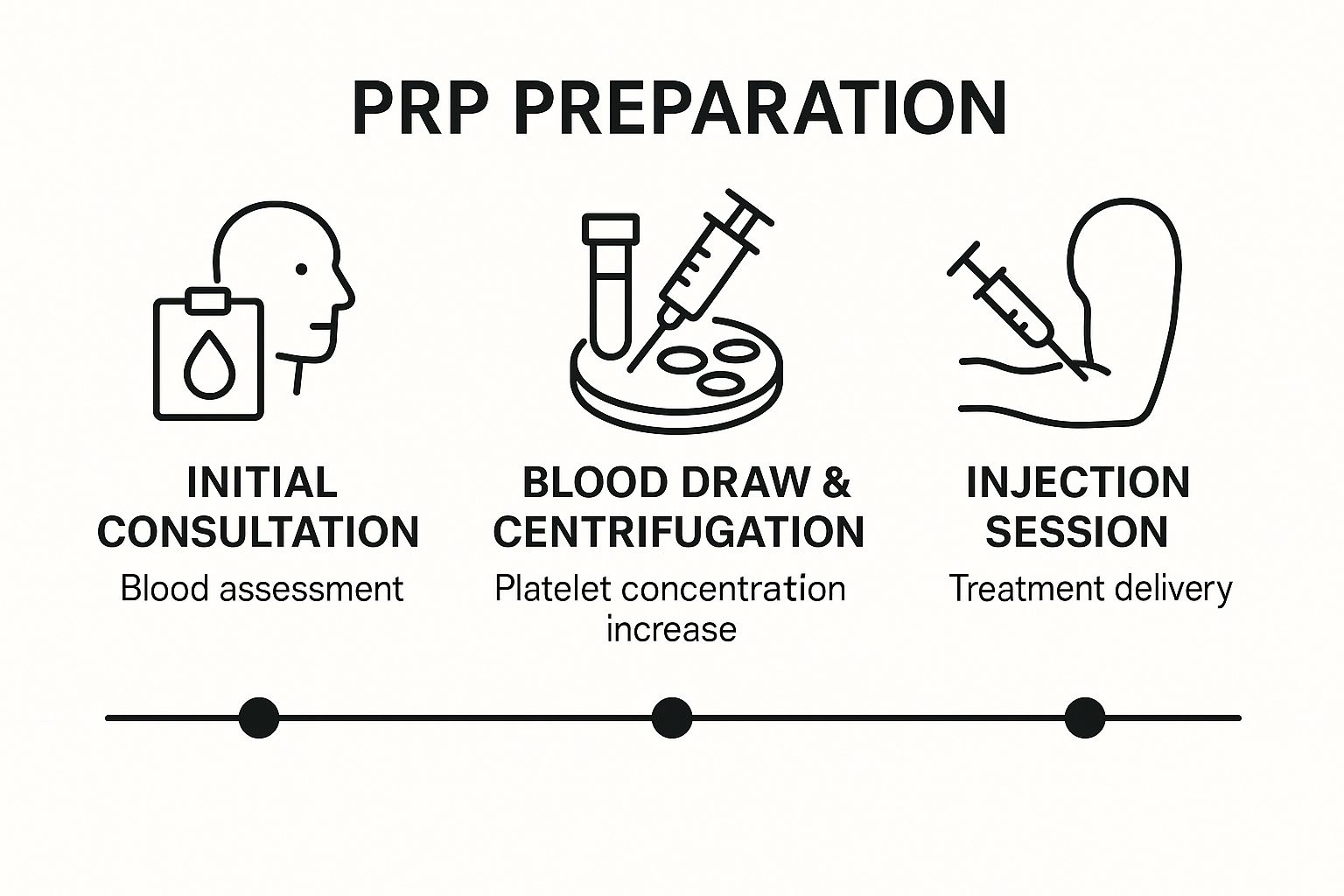
This infographic shows the three main stages of PRP preparation: Initial Consultation with blood assessment, Blood Draw and Centrifugation to concentrate platelets, and the Injection Session where PRP is administered.
The infographic illustrates the process from assessment to injection, emphasizing each step's importance in optimizing PRP effectiveness. This preparation is fundamental to the overall treatment timeline.
The Treatment Process: A Three-Step Approach
Once you’re deemed a suitable candidate, the treatment process involves three key steps: blood draw, PRP preparation, and injection. A small blood sample is taken, much like a standard blood test. The blood is then processed in a centrifuge to isolate the platelet-rich plasma (PRP). Finally, the concentrated PRP is precisely injected into targeted scalp areas.
Your PRP Hair Treatment Timeline and What to Expect
Setting realistic expectations hinges on understanding the typical PRP hair treatment timeline. Clinical timelines for visible results usually span 6 to 12 months. Patients typically undergo 2 to 3 treatment sessions, spaced 4 to 6 weeks apart, to see noticeable hair growth improvements. This schedule allows PRP to stimulate hair follicles during the natural hair growth cycle, promoting regeneration and thickening. Maintenance sessions might be needed to sustain results, as PRP enhances the follicular environment temporarily, rather than permanently changing hair biology. More detailed statistics on PRP hair treatment timelines can be found here.
To help you visualize the process and expected outcomes, let's examine a typical PRP hair treatment timeline:
The following table outlines a general timeline for PRP hair treatment. Individual results may vary.
PRP Hair Treatment Timeline Breakdown: A detailed timeline showing what happens at each stage of the PRP treatment process and when patients can expect to see different types of results
| Treatment Phase | Timeline | What Happens | Expected Results |
|---|---|---|---|
| Initial Consultation | Day 1 | Hair and scalp assessment, medical history review, discussion of expectations. | Determination of PRP candidacy and personalized treatment plan. |
| Treatment Session 1 | Day 1 (or shortly after consultation) | Blood draw, PRP preparation, and injection into the scalp. | Mild redness or swelling at the injection site. |
| Treatment Session 2 | 4-6 weeks after Session 1 | Blood draw, PRP preparation, and injection. | Gradual improvement in hair thickness and texture. |
| Treatment Session 3 | 4-6 weeks after Session 2 | Blood draw, PRP preparation, and injection. | Noticeable hair growth improvement. |
| Maintenance Sessions | Every 6-12 months (as needed) | Blood draw, PRP preparation, and injection. | Sustained results. |
This table provides a general overview of what to expect during a typical PRP hair treatment journey.
Post-Treatment Care and Follow-Up Appointments
After each session, specific post-treatment instructions should be followed. This might include avoiding certain medications or activities briefly. Follow-up appointments are crucial to monitor progress and adjust the treatment plan if necessary. These assessments ensure the best possible outcome.
Addressing Common Questions and Concerns
Patients often have questions about pain, recovery time, and potential side effects. The injections might cause slight discomfort, but they are generally well-tolerated. Recovery is typically quick, with most people resuming normal activities immediately. Side effects, such as minor redness or swelling, are usually mild and temporary. These details will be discussed during your initial consultation.
The First Month: What's Happening Below the Surface

The initial weeks after a PRP hair treatment can feel like a waiting game. You might be eager to see changes, but remember, noticeable hair growth requires time. This first month is a crucial foundational period. Beneath the surface of your scalp, significant changes are taking place, setting the stage for the visible results you'll see later in your PRP hair treatment timeline.
Understanding the Cellular Activity
Think of it like planting a seed: you don't see a sprout the next day. Similarly, the injected platelets are actively working, even though the effects aren't immediately apparent. These platelets release growth factors. These growth factors act as messengers, signaling dormant hair follicles to reactivate. This stimulation triggers cellular regeneration, preparing the scalp for new hair growth.
Why Shedding Can Be Positive
Some people experience temporary shedding during the first month. While this may seem concerning, it can actually be a positive indicator. The growth factors stimulate hair follicles, which can cause older, weaker hairs to shed, making way for new, healthier growth. It's like clearing out the old to make room for the new.
Microscopic Changes, Noticeable Results
While you might not see dramatic changes in the mirror right away, the injected PRP is working diligently at a microscopic level. The growth factors increase blood flow to the scalp. This nourishes the hair follicles and creates a healthier environment for growth. This revitalization is essential for long-term improvement in hair density and quality.
Supporting First Month Progress
Following post-treatment instructions is crucial during this initial phase. This may include avoiding certain medications or harsh hair products that could hinder the healing process. Supporting your overall follicle health with proper nutrition, stress management, and gentle scalp care can also maximize the treatment's effectiveness. Documenting your progress with photos can help you track subtle changes you might otherwise miss. This creates a visual record of your progress, even before it becomes readily apparent. These initial steps are crucial for maximizing the effectiveness of the PRP hair treatment timeline.
Months 2-3: First Signs of the Transformation
After the initial month of foundational changes, months two and three of your PRP hair treatment timeline mark a noticeable shift. This is where the groundwork laid in the first month begins to show results. You'll start to see encouraging changes, hinting at the full transformation to come.
Reduced Shedding and Early Hair Growth
One of the first visible changes you may see is a reduction in shedding. This is a positive indicator that the hair follicles are moving into a more stable growth phase. Some patients also begin to notice the appearance of new, fine hairs, sometimes called "baby hairs." These represent the first wave of new growth stimulated by the PRP treatment.
Distinguishing Fluctuations from Progress
It's important to understand that hair growth isn't always a straight line. You might experience periods of seemingly slower progress or even temporary changes in shedding. This is perfectly normal and not necessarily a cause for concern. The key is to focus on the overall trend over time, rather than daily variations. Regularly taking photographs can be extremely helpful in monitoring progress and providing reassurance during these times.
The Compounding Effect of the Second Treatment
The second PRP treatment session typically takes place around the two- to three-month mark. This second injection plays a crucial role in maximizing the results. The initial treatment prepares the scalp by activating dormant follicles and improving overall scalp health. The second treatment builds on this, providing another dose of growth factors to further stimulate the follicles and promote continued growth.
Hair Type and Individual Response
The speed and degree of visible changes during months two and three can differ based on individual factors, including hair type. People with finer hair may see changes sooner than those with thicker hair. Some individuals also naturally respond more rapidly to PRP treatment than others. It's essential to discuss your personal expectations with your healthcare provider and keep in mind that variations in the PRP hair treatment timeline are common.
Subtle Signs of Follicle Reactivation
Besides reduced shedding and new hair growth, other, more subtle signs often indicate successful follicle reactivation. These can include improved hair texture, an increase in hair shaft diameter, and a healthier-looking scalp. While these changes may be less obvious, they are important markers of progress and suggest continued improvement in the following months.
Months 4-6: Witnessing Peak Improvements
Months four, five, and six of your PRP hair treatment timeline are often when you'll see the most dramatic changes. This period is sometimes called the "transformation zone," as the initial subtle changes give way to significant improvements. You'll begin to see the real impact of the therapy on your hair density, overall quality, and coverage.
The Cumulative Effect of Multiple Treatments
The power of PRP therapy lies in its cumulative effect. Each injection builds upon the previous one, stimulating dormant follicles and encouraging consistent new growth. By months four to six, you've typically completed three treatments. The combined effect of these treatments is what creates such noticeable improvements.
Visible Improvements: Density, Quality, and Coverage
During this time, you’re likely to see a real difference in your hair density. The finer hairs from the earlier months will become thicker and longer, filling thinning areas more visibly. You’ll also notice improvements in hair quality, with stronger and more resilient hair shafts contributing to a fuller, healthier look. These combined changes lead to better coverage in the treated areas.
Understanding Variations in Growth
It's important to remember that hair growth patterns are unique. Certain areas of the scalp might respond faster than others due to differences in blood flow and follicle sensitivity. This can sometimes result in uneven growth, which usually balances out over time. Patience is essential during this phase. This period has also seen a significant rise in the use of PRP therapy globally. For example, one group of researchers has conducted over 4,000 PRP procedures on patients from more than 30 countries in just six years, demonstrating the treatment’s increasing popularity. Learn more about this growing trend here.
Assessing Your Progress and Managing Expectations
Evaluating your progress effectively requires more than just glancing in the mirror. Regularly taking photos in consistent lighting offers a more objective view of the changes. Comparing these photos side-by-side can highlight subtle improvements that you might not notice otherwise. Managing expectations is also key. While months four through six often show the most significant changes, individual responses to PRP can differ. Factors such as age, genetics, and your general health all play a role in how quickly and dramatically your results will appear. Comparing your progress to others can be misleading. It’s best to focus on your individual journey and maintain open communication with your provider. This dialogue allows your provider to personalize your treatment plan and set realistic expectations.
Beyond Six Months: Maintaining Your Transformation
Your PRP hair treatment journey isn't over after the initial injections. It transitions into a maintenance phase to preserve the health and vitality of your rejuvenated follicles. This stage focuses on sustaining the gains you've achieved.
Long-Term Results and Maintenance
Tracking your progress becomes essential in the later months. Tools like a product performance dashboard can help visualize your improvements. Maintaining results requires a proactive approach. This includes understanding how your hair loss pattern and its progression influence your personalized maintenance schedule.
Some individuals might need more frequent "booster" sessions. Those with aggressive hair loss may benefit from treatments every 6 months, while others might only need them annually.
Recognizing When It’s Time for a Refresh
How do you know when it's time for another session? Several signs can indicate the need for a PRP refresh. These include increased shedding, decreased hair thickness, or a noticeable slowdown in growth. Consulting with your specialist is crucial to assess your individual needs and adjust your maintenance schedule. They can help recognize these subtle shifts and address them proactively.
Combining PRP with Complementary Therapies
PRP can be combined with other hair loss treatments for a synergistic effect. Some individuals find that combining PRP with minoxidil or low-level laser therapy enhances and prolongs results. This approach can be especially beneficial for those with more advanced hair loss or slower responses to PRP alone.
Realistic Expectations for Different Individuals
It's essential to have realistic expectations based on individual factors like age, hair loss type, and overall health. Younger individuals with early-stage hair loss often see more dramatic and longer-lasting results than older individuals with more advanced thinning. This is due to the greater potential for follicle reactivation in younger scalps.
Lifestyle and At-Home Care
Lifestyle choices and at-home care influence the longevity of your PRP results. A healthy diet, stress management techniques, and a consistent hair care routine can significantly extend the time between professional treatments. Avoiding harsh chemicals and excessive heat styling can protect your hair and maintain scalp health.
To help you understand the varying maintenance needs, the following table offers a general comparison based on hair loss type, severity, and potential complementary treatments.
PRP Maintenance Schedule Comparison:
| Hair Loss Type | Recommended Maintenance Frequency | Expected Longevity | Complementary Treatments |
|---|---|---|---|
| Early-stage thinning | Yearly | 12-18 months | Minoxidil, at-home laser therapy |
| Moderate thinning | Every 9 months | 9-12 months | Minoxidil, hair growth supplements |
| Advanced thinning | Every 6 months | 6-9 months | Hair transplant, low-level laser therapy |
Keep in mind that these are general guidelines. Your specific needs will be determined in consultation with your hair loss specialist. They can provide personalized recommendations tailored to your individual circumstances.
Ready to learn more about PRP hair restoration? Schedule a consultation at PRP For HairLoss.

 PRP For Hairloss
Leave a comment