Understanding the True Cost of PRP Hair Restoration
Platelet-rich plasma (PRP) hair restoration offers a potential solution for hair loss, using your own blood's platelets to encourage hair follicle growth. However, figuring out the cost can be confusing. This section clarifies the factors influencing the price of PRP hair restoration, helping you make informed choices.
Decoding the Price Tag: What Influences PRP Cost?
Several elements contribute to the final price of PRP hair restoration. The provider's experience and location are significant factors. Clinics with highly specialized doctors or those located in major cities often have higher fees due to increased operating costs and greater demand. For instance, a clinic in New York City will likely charge more than a clinic in a smaller town.
The technology and equipment employed also play a vital role. Advanced PRP systems that offer more precise platelet separation and activation might have a higher price than standard centrifuges. Think of it like choosing between a basic coffee maker and a high-end espresso machine—both brew coffee, but the quality and features affect the cost.
The number of sessions needed depends on individual circumstances and the extent of hair loss. Most patients require multiple sessions, typically spaced a month apart, with maintenance treatments every few months. Therefore, the final cost depends on the duration of your personalized treatment plan.
Due to rising popularity, the cost of PRP treatments has become a key concern. In 2021, studies showed the average cost of a single PRP injection to be around $717.67. However, depending on the location and specific provider, prices can range from $500 to $2,000 per session. Learn more about PRP hair loss cost statistics. This variation underscores the importance of discussing costs directly with healthcare providers to understand the expenses involved in your particular treatment plan. Despite the cost, PRP has shown promising results in hair growth and density improvement, making it a valuable option for those struggling with hair loss.
Added Costs to Consider
Besides the session fees, other expenses can affect your overall investment. Some clinics charge for initial consultations or follow-up appointments. Also, supplementary treatments, like microneedling or specialized serums, can increase the total price.
Don't forget to account for travel costs and the value of your time for each session. These often overlooked expenses can accumulate, especially if you need numerous treatments. A comprehensive understanding of the cost breakdown helps you budget effectively and prevent unexpected financial strain.
Choosing Value Over Price
While price is certainly a consideration, focusing on value rather than simply the lowest price is essential. A more expensive treatment utilizing advanced technology and administered by a highly skilled provider might yield better results compared to a cheaper option. The best approach involves evaluating the provider's credentials, the technology used, and the overall treatment plan to identify the optimal value for your specific needs. This investment in research and due diligence can ultimately save you money and disappointment in the long run.
Breaking Down PRP Hair Loss Treatment Pricing
Understanding the cost of PRP (Platelet-Rich Plasma) hair loss treatment can be confusing. This section breaks down the factors that influence pricing, helping you make informed decisions about this investment in your hair.
Clinic Type and Location: Understanding the Differences
The type of clinic you choose significantly affects the cost. Options include med spas, dermatology practices, and specialized hair restoration centers. Specialized centers often invest in advanced technology and highly trained staff, which can result in higher prices. Location also plays a role. Major metropolitan areas typically have higher overhead, leading to increased treatment fees.
Where you live can also impact pricing, due to differences in cost-of-living and regional market factors. It is helpful to get an idea of what other procedures, such as micro-needling, cost in your city to establish a baseline for comparison.
Provider Expertise and Credentials: Evaluating Experience
The provider's experience and credentials are also essential factors to consider. A board-certified dermatologist specializing in hair restoration may charge more than a general practitioner offering PRP. However, a higher price doesn't always guarantee better results. Researching the provider's track record and patient testimonials offers valuable insights into their expertise and the potential value they offer. Look for providers with specific training and experience in PRP hair restoration techniques.
Payment Options: Packages Versus Individual Sessions
Many clinics offer package deals for multiple PRP sessions, often at a discounted rate compared to individual treatments. This can be a cost-effective option for those committed to a longer-term treatment plan. However, pay-as-you-go offers flexibility, allowing you to assess your progress after each session before committing to more. This approach empowers you to make informed decisions based on your individual response to the treatment.
The average cost of a PRP treatment is around $1,638, with some sessions reaching $3,000. Learn more about PRP treatment cost. In some areas, procedures like PRP micro-needling can exceed the cost of standard micro-needling due to the added PRP extraction process.
To help illustrate regional cost variations, let's examine the following table:
PRP Hair Loss Treatment Cost Comparison by Region
| Region/City | Average Single Session Cost | Average 3-Session Package | Additional Fees |
|---|---|---|---|
| New York City | $800 – $1,500 | $2,000 – $4,000 | Consultation, blood work |
| Los Angeles | $700 – $1,200 | $1,800 – $3,200 | Follow-up appointments |
| Chicago | $600 – $1,000 | $1,500 – $2,800 | Anesthesia |
| Miami | $750 – $1,300 | $1,900 – $3,500 | Topical medications |
| Toronto | $650 – $1,100 | $1,700 – $3,000 | Facility fees |
This table presents estimated average costs and may not reflect the exact pricing in every clinic.
As shown in the table, the cost of PRP treatments can vary significantly depending on location. Larger cities like New York and Los Angeles tend to have higher prices than smaller metropolitan areas. Additional fees also contribute to the overall cost.
Additional Costs: Factoring in All Expenses
Beyond the advertised session price, be aware of potential additional costs that can influence your total investment. These may include consultation fees, follow-up appointments, blood work, or additional therapies recommended alongside PRP. Some clinics charge based on the treatment area size, while others use flat rates. Understanding these potential extra expenses upfront provides a clearer picture of the total cost.
Value Proposition: Balancing Cost and Results
The most critical factor is the value received for your investment. A higher price doesn't always equate to better outcomes. Thoroughly research providers, compare pricing structures, and consider the long-term cost of maintenance treatments. This proactive approach helps you differentiate between premium pricing that delivers genuine value and inflated costs without necessarily better results. Consider factors like the provider's experience, the technology used, and patient testimonials when evaluating the overall value.
The Hidden Factors That Drive Your PRP Treatment Cost

While the general price range for PRP hair loss treatment has been discussed, several less obvious factors can significantly affect your final cost. Understanding these nuances allows you to make informed decisions and potentially save money without compromising results.
Extraction Method: Manual Vs. Automated
The method used to extract and concentrate platelets from your blood plays a significant role in determining the cost of PRP hair loss treatment. Manual "double-spin" techniques are generally less expensive. However, they may not yield the same platelet concentration as automated systems. These automated systems, while often more expensive, use advanced technology to isolate a higher concentration of growth factors. This difference in concentration can impact the treatment's effectiveness and the total number of sessions required.
This concentration difference can affect treatment efficacy and the number of sessions needed to achieve the desired results. Therefore, understanding the extraction method is crucial for evaluating the cost-effectiveness of different PRP treatment options.
Physician Specialization: Hair Restoration Expertise Matters
A physician's specialization significantly impacts the price, beyond general experience. A board-certified dermatologist specializing in hair restoration will likely charge more than a general practitioner offering PRP. This specialized expertise often translates to a deeper understanding of hair loss patterns and refined injection techniques, potentially leading to better results. The higher consultation fees reflect their advanced skills and specialized knowledge.
Treatment Protocols and Session Frequency: Understanding The Variations
Treatment protocols vary significantly among providers, influencing both the PRP hair loss cost and the overall treatment duration. Some clinics follow a standardized protocol, while others tailor the treatment based on individual hair loss patterns and needs. The size of the treatment area, for instance, and the required injection density impacts the amount of PRP needed and the time for each session.
Pricing Models: Per Zone or Flat Rate?
Understanding clinic pricing models is vital for comparing costs between different providers. Some clinics charge per zone, with costs increasing according to the treatment area's size. Others charge a flat rate per session, irrespective of the treatment area’s size. Additionally, the recommended session frequency, based on your individual hair loss progression, directly affects the total treatment cost. More frequent sessions might yield quicker results, but also lead to higher overall expenses. Beyond the treatment itself, factor in potential unexpected costs. Consider potential complications or the need for additional sessions, as well as related expenses. This is similar to considering factors like Storage Insurance Cost when planning for storage.
Premium Vs. Affordable: Evaluating the Trade-Offs
Understanding these hidden factors helps you assess whether premium-priced PRP treatments provide real benefits over more affordable alternatives. Consultations with multiple providers, combined with thorough research, helps determine the best value for your hair loss needs and budget. Remember, the most expensive option isn't necessarily the most effective. Finding the right balance between cost and quality is key.
PRP vs. Alternative Hair Loss Solutions: Real Cost Analysis
Choosing a hair loss treatment requires careful consideration of many factors, and cost is a major one. While the initial price of PRP therapy may seem high, it's essential to compare it with other hair loss solutions, considering both upfront and long-term expenses. This comprehensive analysis will help you determine the most cost-effective approach for your individual needs.
PRP Cost: A Breakdown
The infographic below shows the typical price range for a single PRP session.
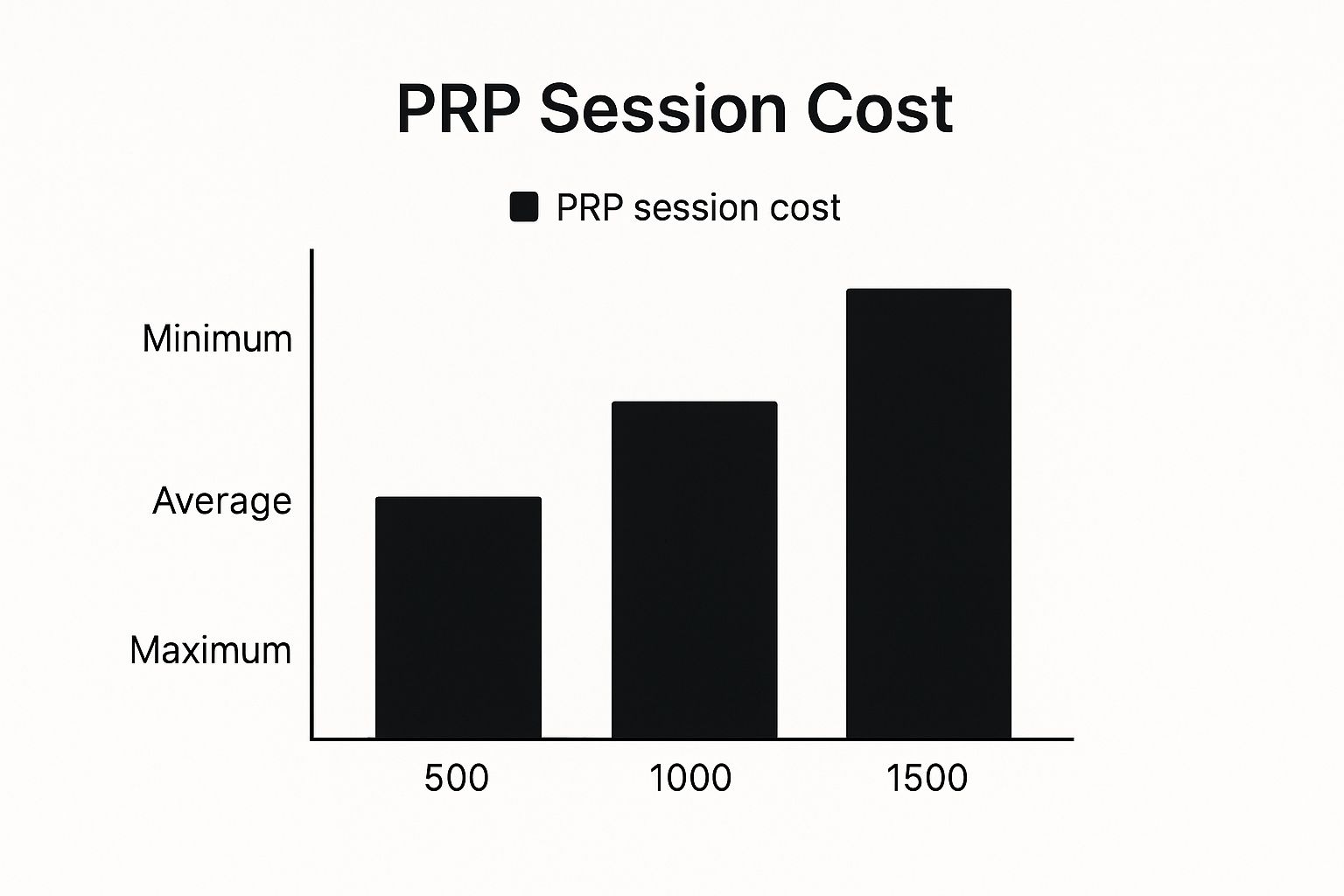
As the infographic shows, the average cost is around $900, but individual sessions can vary from $500 to $1500 depending on factors like location and the specific provider. This price variability underscores the need to get personalized quotes from multiple clinics.
Comparing PRP With Other Treatments
To understand the relative cost of PRP, let's compare it with other popular hair loss treatments like minoxidil, finasteride, laser therapy, and hair transplants. The following table provides a detailed cost comparison to help you make an informed decision.
Hair Loss Treatment Options Cost Comparison: Comprehensive comparison of initial and long-term costs across different hair loss treatment methods
| Treatment Type | Initial Cost | Annual Maintenance Cost | Expected Duration of Results | Invasiveness Level |
|---|---|---|---|---|
| PRP | $1,500 – $4,500 (3 sessions) | $600 – $1,800 (maintenance) | 12-18 months | Minimally invasive |
| Minoxidil (topical) | $20 – $50/month | $240 – $600/year | Ongoing use required | Non-invasive |
| Finasteride (oral) | $20 – $70/month | $240 – $840/year | Ongoing use required | Non-invasive |
| Laser Therapy Cap | $500 – $800 | Minimal | Varies, ongoing use often recommended | Non-invasive |
| Hair Transplant | $4,000 – $15,000+ | Minimal | Potentially permanent | Invasive surgery |
This table clearly shows that while the initial cost of PRP can be greater than some other options, its maintenance costs are often less than those of ongoing medications like minoxidil and finasteride. Furthermore, PRP offers more durable results compared to topical or oral solutions. While hair transplants offer potentially permanent results, they come with a substantially higher initial investment and the inherent risks of surgery.
Combination Therapies and Long-Term Costs
Many practitioners recommend combination therapies, frequently integrating PRP with other treatments like minoxidil or finasteride. Combining treatments can often improve overall effectiveness. One study showed that using minoxidil with PRP resulted in cost-effective treatment at willingness-to-pay thresholds of $100,000 and $200,000. This indicates that although PRP might not be the cheapest option on its own, it can provide considerable value when used in conjunction with other methods. The overall cost of PRP micro-needling treatments can vary from $2,200 to $4,000 for multiple sessions, demonstrating the investment needed for best outcomes. Despite these costs, PRP's minimally invasive nature and high patient satisfaction rates contribute to its continued popularity. Explore this topic further. Ultimately, the actual cost of any hair loss solution will depend on individual factors such as the extent of hair loss, the desired results, treatment duration, and the cost of long-term maintenance.
Real Patient Examples and Cost Progression
Let's consider a patient who undergoes three initial PRP sessions at a total cost of $3,000, followed by maintenance treatments twice a year at $800 each. Over two years, their total investment would be approximately $4,600. In contrast, someone using minoxidil alone at $40 per month would spend around $960 over two years, but they would need to continue using it indefinitely to maintain results. Comparing these scenarios emphasizes the importance of factoring in long-term costs and anticipated results when making treatment decisions. Factors such as the patient's current stage of hair loss, desired outcomes, and budget will all influence the final decision. Each patient's experience is unique, and understanding the overall cost landscape enables them to make informed choices and maximize the value of their investment.
Maximizing ROI on Your PRP Hair Treatment Investment
Selecting the right provider is the first step in your PRP hair restoration journey. Numerous factors influence treatment outcomes relative to the PRP hair loss cost. This section explores strategies to maximize your investment, ensuring optimal hair regrowth.
Timing is Everything: Optimizing Treatment Schedules
Proper timing between PRP sessions is vital for stimulating follicle growth. While frequent treatments might seem appealing, they can hinder progress and be costly. Leading practitioners suggest one month between treatments. This timeframe allows the injected platelets to stimulate follicles and promote new growth. Rushing the process prevents your body from fully responding to the treatment, potentially necessitating more sessions and increasing the overall PRP hair loss cost.
Amplifying Results: The Power of At-Home Protocols
Beyond in-clinic procedures, a consistent at-home protocol significantly amplifies PRP treatment results. This might involve prescribed topical solutions, a nutrient-rich diet supporting hair growth, or stress-reduction techniques. These practices create a synergistic effect, enhancing clinical treatment efficacy and maximizing your return on investment. A balanced diet, for instance, can improve platelet quality, potentially leading to better outcomes.
Choosing the Right Provider: Beyond Basic Certification
When selecting a provider, look beyond basic certifications. Ask about their PRP hair restoration experience, the technology used, and their personalized approach. A provider who assesses your individual hair loss pattern and tailors a treatment plan is more likely to deliver positive results. This due diligence ensures your investment translates into effective, long-term hair restoration.
Red Flags and Verification: Ensuring Authentic PRP
Be wary of providers promising unrealistic results or unusually low prices. These could indicate diluted PRP or subpar protocols. Inquire about the platelet concentration achieved during preparation. Higher concentrations are generally associated with better outcomes. Ask to see the PRP before injection to verify its quality and consistency. A transparent provider will readily address these concerns.
Financing and Insurance: Making Treatment Accessible
The cost of PRP hair loss treatment can be a concern. Several financing options can make quality treatment more accessible. Some clinics offer payment plans or accept financing through third-party lenders. A Health Savings Account (HSA) might cover some expenses. Strategic timing around your insurance deductible can also minimize out-of-pocket costs. Exploring these options allows you to prioritize the best treatment plan without compromising quality.
Practical Tips for Managing PRP Hair Loss Cost
- Compare prices: Contact multiple providers and compare pricing structures, including additional fees.
- Negotiate discounts: Inquire about package deals or discounts for multiple sessions.
- Prioritize long-term value: Consider long-term maintenance treatment costs.
- Maintain realistic expectations: While PRP can be effective, have realistic expectations about results and associated costs.
By implementing these strategies, you can maximize your PRP treatment ROI and achieve optimal hair restoration. Informed decision-making is key to achieving your hair goals within your budget.
Is PRP Hair Treatment Worth the Investment?
Deciding whether to invest in PRP (Platelet-Rich Plasma) hair treatment requires careful consideration of its value. This means looking beyond the initial price tag and understanding the potential long-term benefits, as well as the experiences of other patients. This section explores the factors that contribute to a successful PRP journey and helps you determine if it's the right choice for you.
Different Hair Loss Patterns and PRP
PRP therapy isn't a one-size-fits-all solution. Its effectiveness varies depending on the individual's hair loss pattern and overall health. Individuals in the early stages of hair loss or those experiencing thinning hair tend to see more noticeable improvements than those with significant bald patches. Some clinics even combine PRP with stem cells to potentially boost results. This highlights the importance of a thorough consultation with a qualified provider to assess your specific situation and determine realistic expectations.
Realistic Timelines and Additional Treatments
While some individuals notice improvements within a few months, achieving optimal results with PRP often requires patience. It’s common for patients to need 3 to 6 initial sessions, followed by maintenance treatments every few months. This phased approach impacts the overall cost, making it crucial to factor in long-term expenses when evaluating the investment. Individual responses to treatment vary; some may require additional treatments beyond the initial recommendation, further impacting the final cost. Understanding this potential need for ongoing maintenance helps manage expectations and budget accordingly.
Beyond the Marketing: Psychological Benefits
While marketing materials often focus on the physical improvements of PRP, the psychological benefits can be equally significant. Regaining hair can improve self-esteem and confidence, positively impacting overall well-being. These less tangible benefits are often overlooked but contribute significantly to the overall value of PRP treatment. The emotional boost from a fuller head of hair can be truly meaningful for many patients. This added value makes PRP more than just a cosmetic procedure.
Patient Experiences and Satisfaction Rates
Examining the experiences of other patients provides a valuable perspective. Patient satisfaction rates with PRP are generally high, with many reporting improved hair density and reduced shedding. However, individual results vary, and not everyone experiences dramatic transformations. While one patient might see significant regrowth, another might experience only stabilization of hair loss. Hearing candid perspectives from a range of patients provides a balanced view, helping you realistically evaluate whether PRP aligns with your expectations. Managing your overall finances is also key to maximizing your PRP investment. Consider following these smart tips to control your budget.
Evaluating the Complete Financial Picture
Assessing the true cost of PRP requires considering not only the session prices but also the total investment over time. This includes initial consultations, follow-up appointments, potential additional sessions, and long-term maintenance treatments. Understanding the complete financial commitment empowers you to make an informed decision based on your budget and expected outcomes. Factors such as the provider's expertise, clinic location, and treatment protocol all contribute to the overall PRP hair loss cost. By carefully evaluating these factors, you can make a well-informed decision about the value of PRP for your individual situation.
Are you ready to explore the potential of PRP for your hair restoration journey? Visit PRP for HairLoss today to learn more and discover how PRP can help you achieve your hair goals.
 PRP For Hairloss
Leave a comment