Is Your Hair Actually Growing? Look for These Telltale Signs
Concerned about hair loss and want to know if your treatments are working? This list details seven signs hair is growing, helping you monitor progress and understand your hair's health. Whether you're using PRP for hair loss or other methods, recognizing these indicators is crucial for tracking effectiveness. From new growth at the hairline to changes in texture and density, these signs offer valuable insight into your hair follicle activity. Let's get to the list.
1. Visible New Growth at Hairline
One of the most encouraging signs hair is growing is the appearance of new growth along the hairline. This new hair often presents as fine, short hairs, commonly called "baby hairs" or "vellus hairs." These hairs are a direct indication that your hair follicles are active and producing new strands. This new growth signifies a positive shift in the hair growth cycle, potentially reversing hair loss or indicating a healthy scalp environment conducive to growth. These baby hairs may appear lighter or slightly different in texture than your mature hair, often appearing wispy or fuzzy and generally measuring between 0.5-1 cm in length. This is a particularly important sign for men experiencing hair loss, as a receding hairline is often one of the first noticeable symptoms. Seeing these new hairs sprout can offer hope and confirm that the follicles are still capable of producing hair.
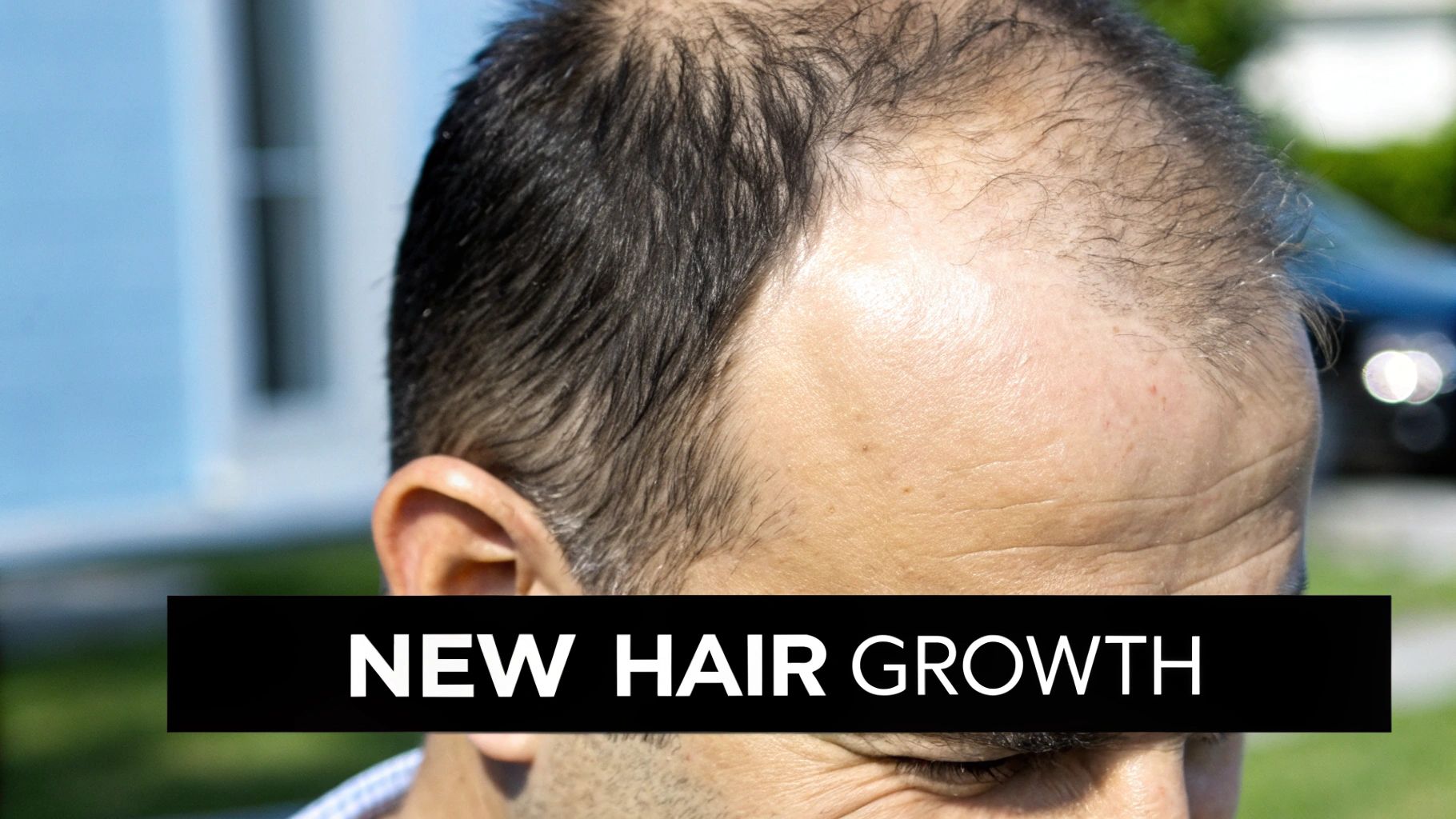
This method of identifying hair growth deserves its place on the list because it's a readily observable, often early indicator of progress. Spotting these baby hairs, especially along the hairline or temple area, provides clear visual confirmation of renewed follicle activity. For men concerned about a receding hairline, this is invaluable evidence that treatments or lifestyle changes might be working. Examples of when this sign might be particularly noticeable include postpartum hair regrowth in women, which typically occurs 3-6 months after childbirth, and after discontinuing certain medications known to cause hair loss, where new growth also often appears within 3-6 months.
Pros:
- One of the most reliable visible indicators of new growth.
- Easy to spot, especially along the hairline or temple area.
- Provides clear visual confirmation of follicle activity.
Cons:
- Can sometimes be confused with hair breakage. Broken hairs will typically have blunt ends, while new growth will be tapered.
- May take a few weeks to become noticeable, requiring patience and observation.
- Not always uniformly distributed across the scalp, so focus on the hairline and temples, common areas for male pattern baldness.
Tips for Identifying and Supporting New Growth:
- Examine your hairline in good lighting: Natural daylight is best. Use a mirror and possibly a magnifying glass for closer inspection.
- Take progress photos monthly: This allows you to track new growth over time and provides tangible evidence of improvement, which can be especially motivating for men dealing with hair loss.
- Avoid over-styling baby hairs: These new hairs are fragile. Minimize manipulation, harsh styling products, and heat styling to avoid damage.
- Be patient: Baby hairs will gradually thicken and mature into full-grown strands. This process takes time, so consistency with any hair growth treatments is key.
By paying close attention to your hairline and following these tips, you can effectively monitor this vital sign of hair growth and gain confidence in your journey toward a fuller head of hair.
2. Reduced Hair Shedding
One of the most encouraging and often earliest signs that your hair is growing back is a noticeable reduction in daily shedding. While it's normal to lose some hair every day, a significant decrease in the amount you're finding in your brush, shower drain, or on your pillow can indicate that your hair growth cycle is shifting in a positive direction. This is especially relevant for men experiencing hair loss, as excessive shedding is a common symptom. The average person sheds between 50 and 100 hairs per day. This occurs as hair follicles cycle through different phases, including the telogen (shedding) phase. When hair growth is stimulated, more follicles enter the anagen (growth) phase, and fewer enter the telogen phase, resulting in less shedding.
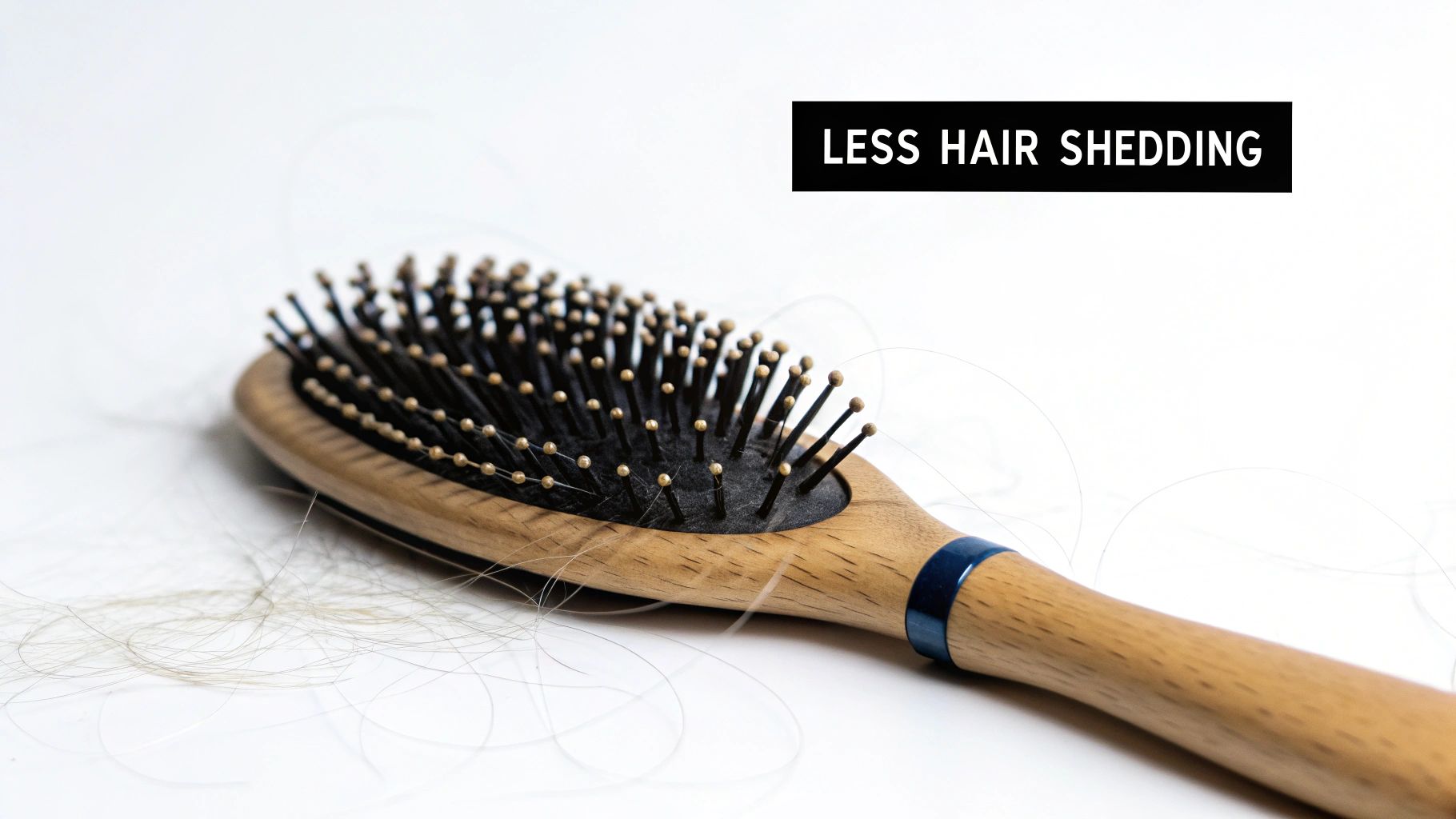
This reduced shedding deserves a prominent place on this list of signs hair is growing because it’s often one of the first noticeable changes, offering hope and reassurance before visible regrowth appears. Specific features of reduced shedding include fewer hairs on your brush, in the shower drain, or on your pillowcase. You’ll also notice less hair falling out when you run your fingers through your hair. For men accustomed to seeing a substantial amount of hair fall out daily, this decrease can be significant and encouraging. The benefit? It signifies healthier follicle activity and a shift towards a more active growth phase.
However, it's important to understand both the pros and cons of using reduced shedding as a gauge. On the positive side, it’s frequently the first indicator of an improved hair growth cycle, offering encouragement even before visible new growth. It also indicates healthier follicle activity overall. On the downside, assessing shedding can be subjective without using specific counting tools. Remember, natural shedding fluctuates seasonally, making it potentially difficult to notice gradual changes.
For instance, men starting a minoxidil treatment often experience reduced shedding before seeing actual regrowth. Similarly, seasonal shedding typically decreases as winter transitions to spring. To accurately track changes in your shedding, try counting the hairs lost during shampooing. Taking photos of your hairbrush or shower drain regularly can also provide a visual record. Keeping a hair journal where you note your estimated daily hair fall can also be helpful. Consider using a hair catcher for your shower drain to better monitor shedding. These tips can help you objectively assess changes in shedding and provide further evidence that your hair is indeed growing.
3. Increased Scalp Itching or Tingling
Experiencing a strange tingling or itching sensation across your scalp? Don't reach for the anti-dandruff shampoo just yet! This seemingly irritating feeling could actually be one of the more subtle signs hair is growing. This phenomenon, often described as a mild to moderate tingling or "pins and needles" sensation, arises from increased blood flow to the hair follicles during the anagen (growth) phase. This increased activity stimulates nerve endings in the scalp, resulting in the itchy or tingly feeling. While it might be slightly uncomfortable, it’s often a positive sign that dormant hair follicles are waking up and becoming active again. This sensation is typically intermittent and not accompanied by visible irritation like redness or scaling.
This sign deserves its place on the list because it can provide an early indication of hair growth, often preceding visible changes by several weeks. For men experiencing hair loss, this can be a particularly encouraging sign that treatments or lifestyle changes are starting to work. The tingling is a direct result of the biological processes involved in hair growth and offers a glimpse into the activity happening beneath the skin's surface. For example, recipients of hair transplants often report tingling sensations 2-3 weeks before the transplanted follicles start producing visible hair. Similarly, many men using minoxidil report scalp tingling as an early sign of the medication's effectiveness.
Pros:
- Early Indicator: Can provide an early warning system that hair growth is occurring, even before you see it.
- Precedes Visible Growth: Often occurs weeks before new hair becomes visible.
- Typically Benign: Usually happens without skin irritation or inflammation.
Cons:
- Potential for Confusion: Can be mistaken for other scalp conditions like dandruff, dermatitis, or allergic reactions.
- Subjectivity: The sensation is subjective and varies greatly between individuals, making it difficult to definitively link to hair growth in every case.
- Discomfort: May be uncomfortable for some, although usually mild.
Tips for Men Experiencing Scalp Tingling:
- Differentiate: Learn to distinguish between growth-related tingling and dandruff/irritation. Growth-related tingling is usually without visible flakes, redness, or excessive dryness.
- Resist the Scratch: Avoid scratching, as this can damage hair follicles and impede healthy growth.
- Soothe the Scalp: If the sensation is uncomfortable, consider using a soothing scalp treatment containing ingredients like aloe vera or tea tree oil.
- Seek Professional Advice: If the itching is severe, persistent, or accompanied by redness, scaling, or hair loss, consult a dermatologist to rule out other scalp conditions.
This phenomenon has been popularized by experts like Dr. Alan Bauman, a hair restoration physician who has documented this sensation in his hair transplant patients. It's also frequently discussed within online hair growth communities, offering further anecdotal evidence of its connection to hair growth. While not a guaranteed sign of new hair growth in every individual, scalp tingling can be a valuable and encouraging indicator for many men on their hair growth journey.
4. Changes in Hair Texture or Thickness
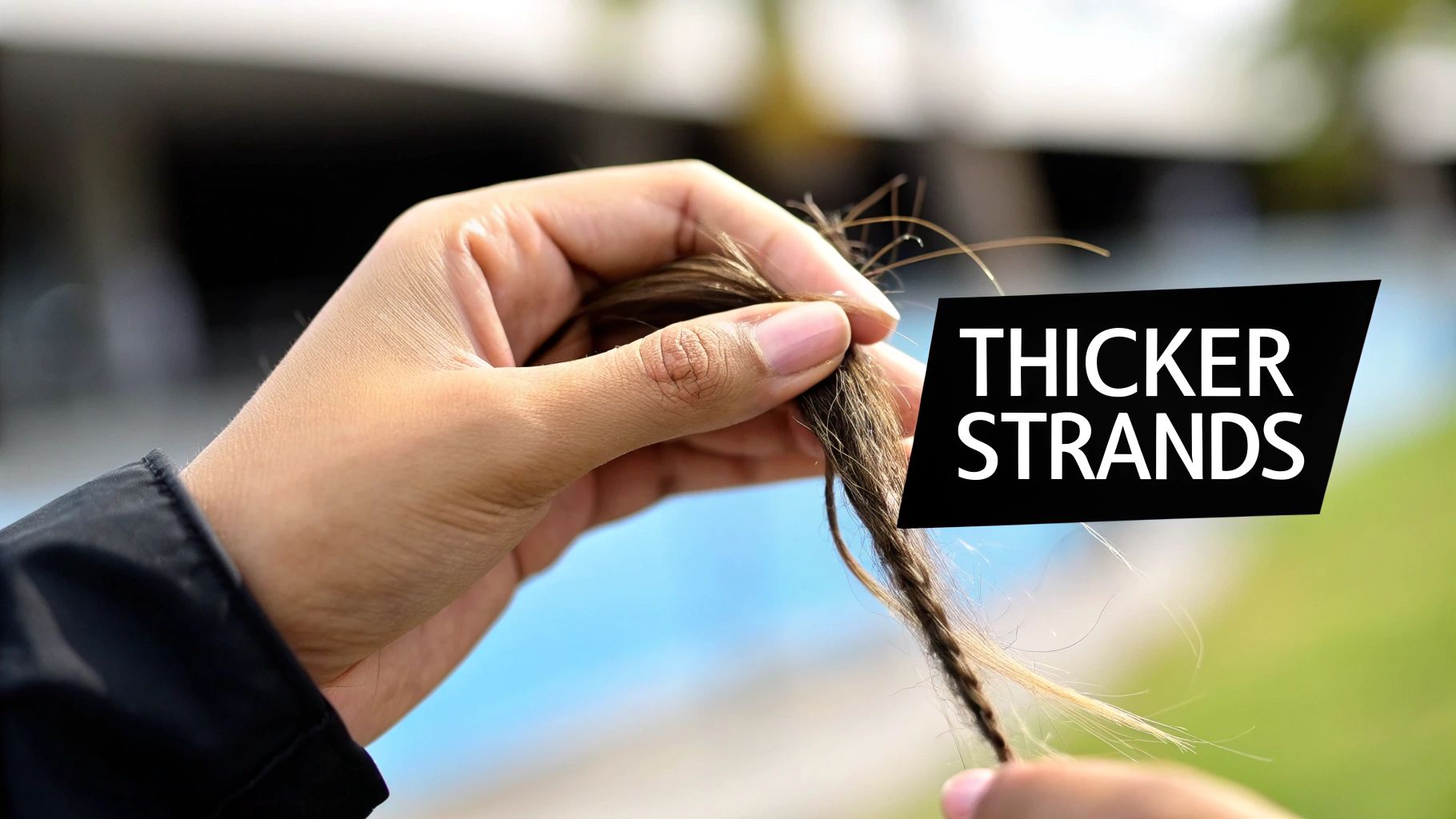
One of the most encouraging signs hair is growing, especially for men experiencing hair loss, is a noticeable change in hair texture or thickness. This signifies improvement beyond simply new growth, indicating healthier follicles capable of producing more robust strands. As new hair emerges, you might observe individual hairs feeling thicker or coarser than before. This occurs because revitalized follicles, often due to improved nutrition, increased blood flow, or a more balanced hormonal profile, generate hair with stronger shafts. Previously thin or wispy areas can start to feel denser, and your hair may feel more substantial overall when gathered in your hand.
This sign deserves a place on this list because it’s a tangible indicator of improved follicle health, a key concern for men with hair loss. Instead of just seeing more hairs, you’ll feel a difference in the quality of each strand. Specifically, you might notice individual strands feeling thicker when rolled between your fingers, previously wispy patches becoming denser, and your hair feeling more substantial overall. Sometimes, this change in thickness is also accompanied by a shift in curl pattern or wave.
Pros:
- Indicates improved follicle health, crucial for sustained hair growth.
- Results in visually fuller, thicker-looking hair.
- Often leads to easier styling and manageability.
Cons:
- Changes are gradual and can be subtle, requiring patience.
- Noticeable changes can take 3-6 months to appear.
- Thickness may not improve uniformly across all areas of the scalp.
Examples:
- Men addressing nutritional deficiencies, like low iron, often report thicker hair strands within a few months.
- After beginning a hair loss treatment, like minoxidil or finasteride, some men observe an increase in hair shaft diameter.
Tips for Men:
- The Roll Test: Regularly roll a hair strand between your thumb and forefinger to gauge changes in thickness.
- Photographic Evidence: Take close-up photos of specific hair sections monthly to track progress visually.
- Product Performance: Pay attention to how styling products perform – changes in thickness can affect how your hair reacts to them.
- Lighting Matters: Be aware that different lighting conditions can influence how hair thickness appears. Try to maintain consistent lighting when assessing your hair.
By paying close attention to these subtle changes and utilizing the tips provided, men can gain valuable insights into the effectiveness of their hair growth efforts. This sign provides a crucial measure of follicle health and signals positive changes beyond simply the appearance of new hairs, offering hope for a fuller, healthier head of hair.
5. Increased Hair Length
One of the most obvious signs hair is growing, though surprisingly easy to overlook, is increased hair length. This might seem self-evident, but actively tracking your hair's length provides concrete evidence of growth and can be incredibly motivating, especially for men experiencing hair loss or thinning. Seeing tangible progress can reaffirm that your hair follicles are active and healthy. This sign deserves its place on the list because it's a fundamental indicator of hair growth and offers a measurable way to track progress.
The basic principle is simple: hair extends beyond its previous length. On average, hair grows about half an inch (1.25 cm) per month. However, this rate can vary significantly between individuals due to factors like genetics, age, diet, and overall health. For men specifically, growth rates can fluctuate depending on hormonal levels and the presence of conditions like male pattern baldness. Observing consistent lengthening over time confirms ongoing, healthy follicle activity, a key concern for men worried about hair loss.
Features of Increased Hair Length as a Growth Indicator:
- Extension beyond previous checkpoints: You'll notice your hair reaching lengths it hasn't before. This could be as simple as needing more frequent trims to maintain a certain style, or changes in how your hair sits or styles due to the added length.
- Average growth rate of ~0.5 inches (1.25 cm) monthly: While individual rates vary, this provides a benchmark. If your hair is growing slower than this, it's not necessarily a cause for alarm, but it might be worth investigating potential underlying issues.
- Changes in style and maintenance: Longer hair might require different styling products or techniques. For men, this could mean switching from a short, cropped style to something that allows for more length on top.
Pros:
- Objective and measurable: Length provides a concrete metric for tracking progress, which can be especially encouraging for men dealing with hair loss.
- Trackable with tools: You can use photos, measuring tapes, or even specialized hair growth tracking apps to precisely monitor growth.
- Direct correlation with follicle activity: Consistent length increase is a direct sign of healthy, functioning follicles.
Cons:
- Slow process: Hair growth is inherently slow, and noticing significant changes in length requires patience. This can be frustrating for men eager to see results.
- Split ends and breakage: Damage can mask actual growth, making it seem like your hair isn't growing as fast as it is. Regular trims and proper hair care are crucial for men, especially those with longer styles.
- Variable growth rates: Comparing your growth rate to others can be misleading. Focus on your personal progress and consult a dermatologist if you have concerns.
Examples:
Many people participating in "hair growth challenges" meticulously measure their progress monthly, often focusing on specific sections of their hair to get a clearer picture. Numerous hair growth tracking apps are available, and they often show average growth rates of 0.5-0.7 inches monthly for healthy individuals.
Tips for Tracking Hair Growth:
- Mark a strand: Use a small dot of temporary hair color at the root of a specific strand to track its growth over time. This provides a clear visual marker.
- Monthly photos: Take photos each month with a consistent hairstyle. This allows for easy side-by-side comparison to visualize progress.
- Measuring tape: Use a measuring tape against a specific section of your hair monthly for precise measurements.
- The "pull test": Gently pulling on a section of hair can help determine if it's grown beyond a certain point, but use caution to avoid pulling out hairs unnecessarily.
By actively monitoring and measuring increased hair length, men can gain valuable insights into their hair health and the effectiveness of any hair growth treatments they might be using. This simple yet powerful sign offers objective evidence that your hair is growing, providing motivation and reassurance on your journey to healthier, fuller hair.
6. Increased Hair Density
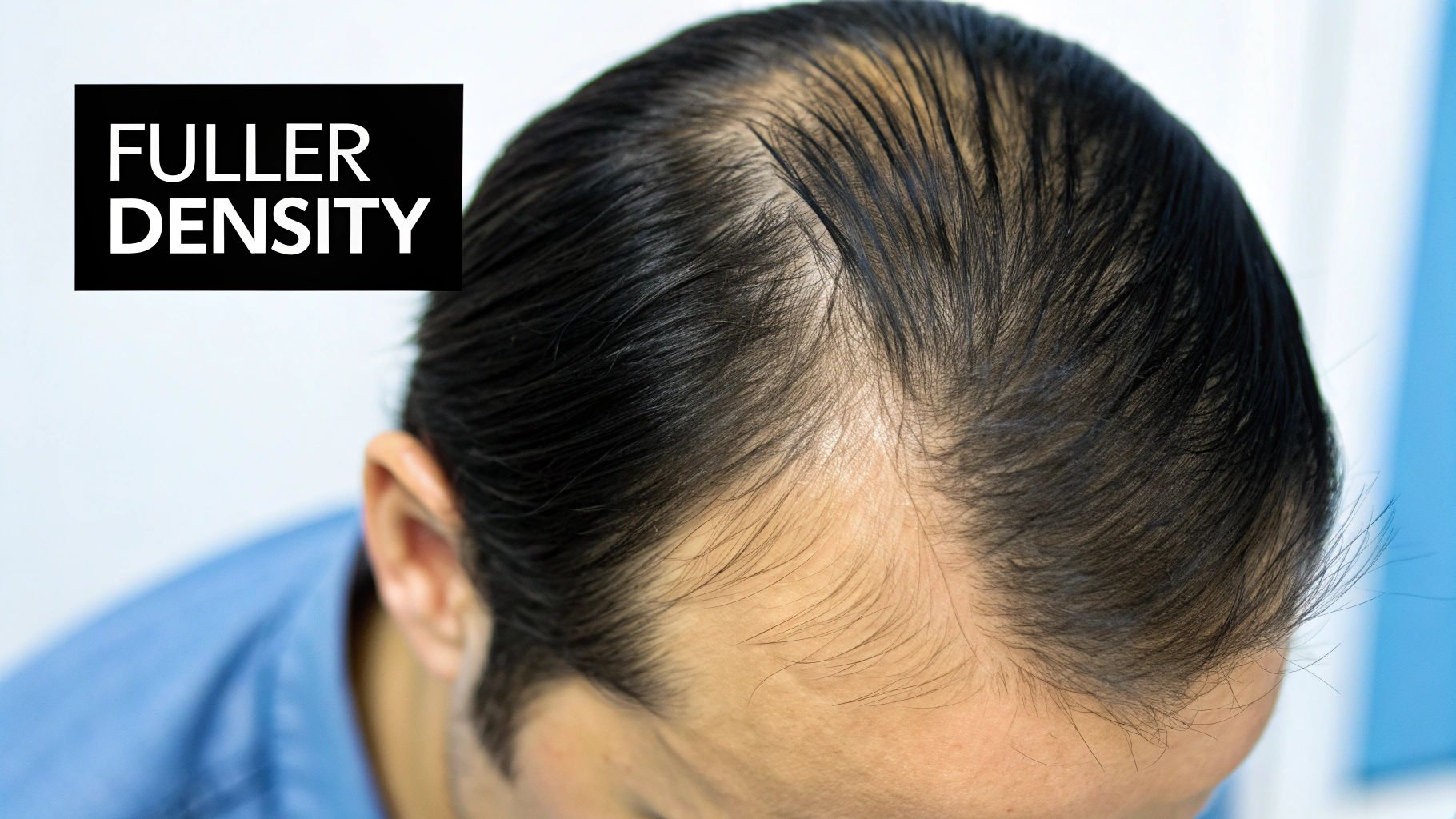
One of the most encouraging signs hair is growing, especially for men experiencing hair loss, is an increase in hair density. Hair density refers to the number of individual hairs growing per square inch on your scalp. When dormant follicles reactivate and begin producing new hair, the overall density increases. This is a key indicator of genuine hair growth and often leads to a visibly fuller head of hair.
This increase isn't just about length; it's about having more hairs overall. You'll likely notice this as reduced scalp visibility, especially at the crown or along your part lines. Even before you see significant length gains, your hair will likely appear thicker and fuller overall. For men concerned about thinning hair, this can be a truly significant and confidence-boosting sign.
Features of Increased Hair Density:
- Less visible scalp: You'll see less of your scalp peeking through your hair.
- Filled-in areas: Areas that were previously sparse will start to fill in.
- Thicker ponytails or buns: If your hair is long enough, your ponytails or buns will feel and appear thicker.
- Narrower part lines: The width of your part line will decrease as more hairs grow in.
Pros:
- Visibly fuller hair: This results in a noticeable improvement in the appearance of your hair.
- Early visual improvement: You can see positive changes even before significant length is achieved.
- Confidence booster: Increased density often has a greater impact on confidence than other growth signs.
Cons:
- Slower to develop: Density increases can take longer to notice than some other signs of hair growth.
- Difficult to measure precisely: Accurate measurement often requires professional tools.
- Uneven development: Density may increase more rapidly in some areas of the scalp than others.
Examples:
- Many men using rosemary oil treatments report measuring smaller part lines after about 6 months of consistent application.
- Patients undergoing PRP (platelet-rich plasma) therapy often experience measurable density increases of 15-30% after 3-6 treatments. This treatment is becoming increasingly popular among men seeking hair restoration.
Tips for Tracking Hair Density:
- Monthly photos: Take close-up photographs of the same scalp areas every month under consistent lighting conditions to track progress.
- Part width comparison: Regularly measure the width of your part line in the same location and lighting.
- Product usage: Notice any changes in the amount of styling product you need. You might find you need less product to achieve the desired look as your hair density increases.
- Ponytail circumference test: If your hair is long enough, measure the circumference of your ponytail regularly to track changes in thickness.
Why This Matters for Men:
Hair loss and thinning can be particularly distressing for men. Increased hair density is a powerful indicator that hair restoration efforts are working and provides a tangible, visual sign of progress. It directly addresses the core concern of thinning hair, leading to a fuller, more youthful appearance and a significant boost in self-esteem.
Popularized By:
Increased hair density as a key metric for hair growth has been popularized by hair restoration specialists like Dr. Ken Williams, who utilize standardized density measurement techniques. Brands like HairMax also market their products based on the ability to improve hair density metrics. While we don't endorse specific products or treatments, these examples highlight the growing recognition of hair density as a critical indicator of hair growth success.
7. Healthier Scalp Appearance: A Foundation for Hair Growth
A healthy scalp is the bedrock of healthy hair growth, making "healthier scalp appearance" a crucial sign that your hair follicles are thriving. This isn't just about aesthetics; a vibrant scalp creates the optimal environment for hair to grow thicker, stronger, and potentially even faster. If you're looking for signs hair is growing, focusing on your scalp can offer valuable clues.
So, what exactly does a healthy scalp look like, particularly for men experiencing hair loss or thinning? It boils down to a few key features:
- Balanced Sebum Production: A healthy scalp isn't excessively oily or dry. Sebum, your natural oil, is essential for hair health, but an overproduction (often linked to DHT in male pattern baldness) or underproduction can hinder growth. Balance is key.
- Reduced Flakiness and Dandruff: Flakes, itchiness, and redness are often signs of inflammation or an imbalance in the scalp's microbiome. A healthier scalp will show a significant reduction in these issues.
- Even Skin Tone: A healthy scalp will have a more uniform color, without excessive redness or irritation, indicating a reduction in inflammation.
- Smaller, Less Visible Pores: While not always easy to observe, smaller pores can suggest that hair follicles are less congested and functioning more efficiently.
- Fresher Appearance: Overall, a healthy scalp simply looks and feels "fresher," reflecting the improved environment for hair growth.
Why This Matters for Men Experiencing Hair Loss:
For men dealing with hair loss, a healthier scalp can be a game-changer. Addressing underlying scalp issues, like inflammation or sebum imbalances, often creates a more conducive environment for existing hair follicles to thrive and potentially even stimulate new growth. It also improves the effectiveness of other hair loss treatments you might be using.
Examples of Scalp Improvement Leading to Growth:
- Microbiome Balancing: Specialized shampoos that balance the scalp's microbiome can lead to visible improvements within weeks, often followed by enhanced hair growth.
- Addressing Seborrheic Dermatitis: After treating conditions like seborrheic dermatitis, men frequently report new hair growth in previously affected areas within a few months.
Pros and Cons:
Pros:
- Creates an optimal environment for sustained hair growth.
- Often indicates systemic health improvements or hormone balance.
- Frequently accompanied by less scalp discomfort and itching.
Cons:
- Subtle changes can be difficult to notice or photograph initially.
- Improvements might fluctuate with seasons or hormone cycles.
- May require specific products to maintain scalp health long-term.
Actionable Tips for Men:
- Regular Scalp Examination: Use a handheld mirror and your phone's camera to track changes in your scalp's appearance over time.
- Monitor Wash Frequency: Note how often you need to wash your hair. A healthier scalp often requires less frequent washing.
- Scalp Scrubs: Consider incorporating a gentle scalp scrub to remove product buildup and dead skin cells that can mask improvements.
- Correlation Tracking: Keep a journal to track any correlation between changes in your scalp health and new hair growth areas.
Popularized By:
Trichologists like Philip Kingsley have long emphasized the importance of scalp health for hair growth. Brands like Briogeo and Aveda have also incorporated scalp-focused products into their lines, recognizing the critical link between scalp health and hair growth.
By paying attention to your scalp's health and implementing these tips, you can gain valuable insights into your hair growth journey and create a healthier foundation for thicker, fuller hair.
7 Key Signs of Hair Growth Comparison
| Sign / Indicator | Implementation Complexity 🔄 | Resource Requirements 💡 | Expected Outcomes 📊 | Ideal Use Cases 💡 | Key Advantages ⭐ |
|---|---|---|---|---|---|
| Visible New Growth at Hairline | Low – Simple visual inspection | Minimal – Good lighting, progress photos | Clear visual confirmation of new hair formation | Early detection of follicle activity | Reliable, easy to spot, direct growth evidence |
| Reduced Hair Shedding | Medium – Requires tracking and counting | Moderate – Hair journal, hair catcher | Early indication of improved growth cycle | Monitoring treatment effectiveness early on | First sign before visible growth, indicates follicle health |
| Increased Scalp Itching or Tingling | Medium – Subjective symptom tracking | Low – Observation and differentiation skills | Early follicle reactivation signal | Hair transplant or medication response tracking | Early, non-visual signal, precedes growth |
| Changes in Hair Texture or Thickness | Medium – Requires tactile and visual checks | Minimal – Close-up photos, finger tests | Fuller, thicker hair strands | Assessing follicle health and hair quality | Shows follicle health beyond growth |
| Increased Hair Length | Low – Measurable with standard tools | Low – Measuring tape, photos | Objective growth measurement | General hair growth tracking | Precise, quantifiable indicator |
| Increased Hair Density | High – Requires consistent photo tracking | Moderate – Regular photos, measuring tools | Fuller scalp appearance, reduced scalp visibility | Improving thinning areas or post-treatment | Visible fullness increase, boosts confidence |
| Healthier Scalp Appearance | Medium – Needs detailed scalp observation | Moderate – Mirror, camera, specialized products | Improved scalp environment supporting growth | Scalp health maintenance alongside growth efforts | Foundation for growth, systemic health indicator |
Understanding Your Hair Growth Journey with PRP and Other Treatments
Recognizing the seven signs of hair growth we've covered—from visible new growth at the hairline to a healthier scalp appearance—is crucial for monitoring progress on your journey to fuller hair. Whether you’re embracing natural remedies or considering professional treatments, understanding these indicators allows you to effectively track the impact of your chosen approach. Mastering the ability to spot these signs hair is growing empowers you to make informed decisions and stay motivated. This knowledge is invaluable as you strive to achieve your hair restoration goals, providing tangible evidence of your progress and confirming the effectiveness of your efforts. By paying attention to these subtle yet significant changes, you'll gain a deeper understanding of your hair's health and its response to various treatments. Remember, consistency in your chosen method and diligent observation are key factors in achieving long-term success.
Are you ready to take control of your hair growth journey and explore the potential of PRP? Discover how PRP For HairLoss can stimulate hair follicles and contribute to the positive signs of growth discussed above. Visit PRP For HairLoss today to learn more and schedule a consultation.
 PRP For Hairloss
Leave a comment