Understanding PRP for Male Pattern Baldness
Losing your hair can be a distressing experience. For millions of men experiencing male pattern baldness, also known as androgenetic alopecia, Platelet-Rich Plasma (PRP) therapy offers a potential solution. This treatment uses your body's own resources to combat hair loss. Unlike other treatments, PRP harnesses the power of your own blood plasma, enriched with growth factors and healing platelets, to revitalize dormant hair follicles. But is PRP just a cosmetic procedure, or does it offer real medical benefits? How does it compare to traditional hair loss medications like finasteride and minoxidil? Let's explore the science behind PRP for male pattern baldness.
What Is PRP and How Does It Work?
PRP therapy begins with a simple blood draw, much like a routine blood test. This blood is then processed in a centrifuge to separate the platelet-rich plasma. This concentrated plasma, rich in growth factors such as Vascular Endothelial Growth Factor (VEGF) and Platelet-Derived Growth Factor (PDGF), is then injected into the scalp in areas experiencing thinning. These growth factors nourish the hair follicles, encouraging them to re-enter the growth phase. This can lead to increased hair density and thickness, combating the follicle miniaturization characteristic of androgenetic alopecia.
The Science Behind PRP's Effectiveness
PRP's efficacy for male pattern baldness stems from its ability to counteract the effects of dihydrotestosterone (DHT), the hormone primarily responsible for this type of hair loss. DHT shrinks hair follicles, resulting in thinner, weaker hair. The growth factors in PRP help counteract this miniaturization by stimulating cellular activity and promoting blood flow to the follicles. PRP also helps extend the anagen phase, the active growth phase of the hair cycle. This allows hair to remain on the head longer, creating a fuller appearance.
Clinical Evidence for PRP
A 2017 meta-analysis of seven clinical studies provided compelling evidence for PRP’s benefits. The study, which included 194 patients, demonstrated that PRP injections significantly increased hair density. Results showed an average increase of 14.38 hairs per cm² compared to control groups. The analysis also indicated a measurable improvement in hair thickness. You can explore this research further here.
Is PRP Right for Everyone?
While PRP is promising, individual responses can vary. Factors like age, extent of hair loss, overall health, and genetics can influence outcomes. Some men find PRP to be an effective standalone treatment, while others combine it with finasteride or minoxidil for a synergistic effect. A consultation with a qualified dermatologist is crucial to determine if PRP is suitable for your specific situation and to discuss realistic expectations. This consultation will also help create a personalized treatment plan, addressing any underlying medical conditions and other factors that might affect your results.
The Science Behind How PRP Transforms Hair Follicles
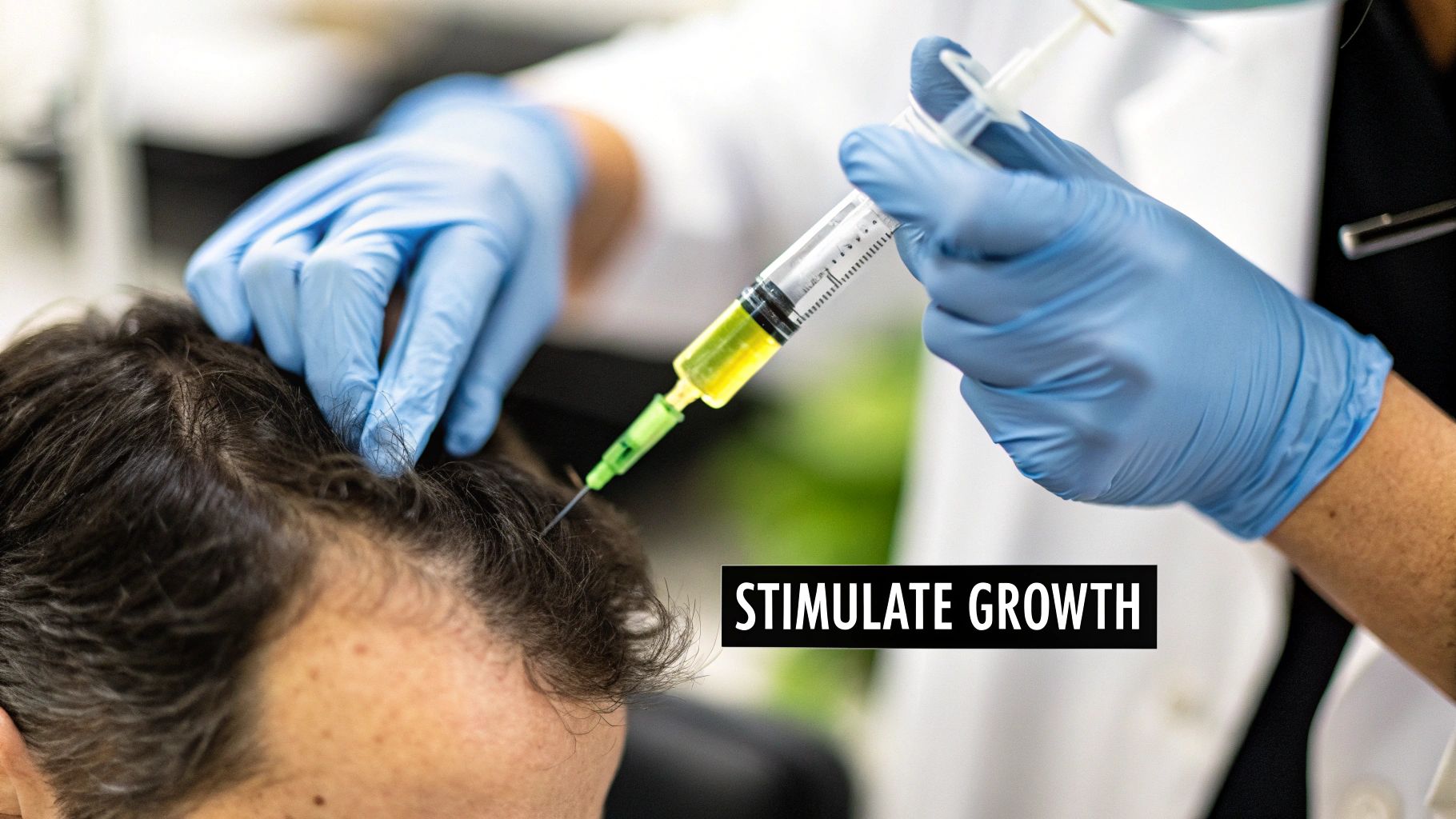
As we’ve discussed, PRP for male pattern baldness uses your body's natural healing power. But how does it work at a cellular level? This section explores the science behind PRP's transformation of hair follicles.
The Role of Growth Factors
Platelet-rich plasma (PRP) contains a potent mixture of growth factors. These proteins signal cells to grow, repair, and regenerate. For hair follicles affected by male pattern baldness, two growth factors are particularly important: PDGF (Platelet-Derived Growth Factor) and VEGF (Vascular Endothelial Growth Factor).
PDGF stimulates the growth and division of follicle cells. VEGF promotes the formation of new blood vessels, supplying nutrients and oxygen to the follicles. Together, they help reverse the miniaturization process caused by DHT (dihydrotestosterone), the hormone responsible for male pattern hair loss.
Combating DHT’s Impact
DHT shrinks hair follicles, leading to thinner, weaker hair. Eventually, this causes the follicle to become dormant. The growth factors in PRP counteract this by stimulating the follicles back into the growth phase (the anagen phase).
This reactivation leads to thicker, healthier hair growth. PRP also helps prolong the anagen phase, so hair remains on the head longer. This contributes to the overall improvement in hair density and fullness often seen with PRP therapy.
Platelet Concentration: A Critical Factor
The concentration of platelets in the injected PRP is crucial for treatment effectiveness. A higher concentration means more growth factors are available to stimulate hair follicles.
Different preparation methods yield varying platelet concentrations. Choosing a provider who uses proven methods to ensure a therapeutic platelet concentration is essential. This optimized concentration maximizes the chances of successful hair follicle transformation.
To further understand the key growth factors in PRP and their impact on hair follicles, take a look at the table below:
Key Growth Factors in PRP and Their Effects on Hair Follicles
| Growth Factor | Primary Function | Effect on Hair Follicles |
|---|---|---|
| PDGF (Platelet-Derived Growth Factor) | Stimulates cell growth and division | Promotes follicle cell proliferation and growth |
| VEGF (Vascular Endothelial Growth Factor) | Promotes the formation of new blood vessels (angiogenesis) | Increases blood supply to hair follicles, delivering essential nutrients and oxygen |
| TGF-β (Transforming Growth Factor Beta) | Regulates cell growth and differentiation | Modulates hair follicle cycling and promotes the anagen (growth) phase |
| FGF (Fibroblast Growth Factor) | Stimulates cell growth and differentiation | Contributes to hair follicle development and growth |
| EGF (Epidermal Growth Factor) | Promotes cell growth and differentiation | Supports the growth and maintenance of hair follicle cells |
This table summarizes the vital roles of various growth factors found within PRP and how they specifically contribute to hair follicle regeneration. As you can see, the combined action of these growth factors provides a comprehensive approach to promoting hair growth.
Preparation Methods and Treatment Outcomes
Different providers use various PRP preparation methods. Some produce a higher concentration of platelets and growth factors than others. This can significantly affect treatment outcomes.
For example, some clinics use double-spinning techniques for higher platelet concentrations. Others use leukocyte-poor PRP, removing white blood cells that can cause inflammation and reduce effectiveness. Discussing your provider’s preparation method is crucial for informed decisions about your treatment. Understanding PRP preparation allows you to make informed choices on your hair restoration journey.
What to Expect: Your Complete PRP Treatment Journey
Considering PRP for male pattern baldness but unsure about the process? This section guides you through the entire experience, from the initial consultation to the anticipated results and long-term maintenance.
Initial Consultation and Assessment
Your PRP journey begins with a thorough consultation with a qualified provider. This crucial step allows the provider to assess your hair loss, discuss your medical history, and determine your suitability for PRP. They'll carefully examine your scalp, discuss your hair loss history, and evaluate your overall health. This assessment allows for personalized treatment planning and helps set realistic expectations.
The PRP Procedure: A Step-by-Step Breakdown
The PRP procedure itself is relatively straightforward. It involves a few key steps, which are visualized in the process flow below:
- Blood Draw: A small blood sample is taken, similar to a routine blood test.
- Centrifugation: The drawn blood is processed in a centrifuge to separate the platelet-rich plasma (PRP) from other blood components. This process concentrates the growth factors essential for stimulating hair follicles.
- PRP Injection: The concentrated PRP is then precisely injected into the targeted areas of your scalp experiencing thinning or hair loss.
This process flow illustrates the key steps in the PRP procedure:
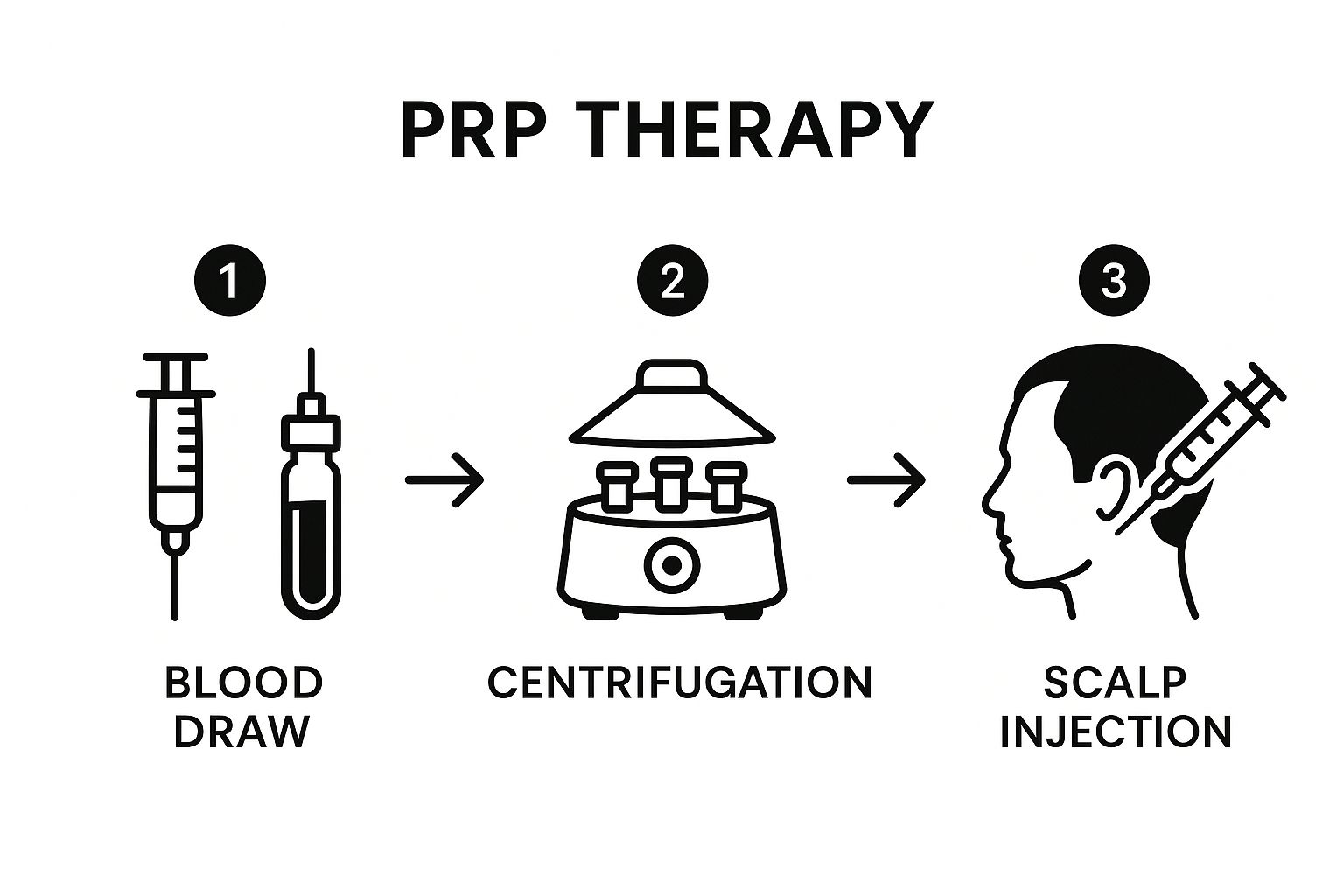
The infographic clearly shows how the PRP is derived from a small blood sample and then re-injected into the scalp to stimulate hair growth.
Post-Treatment and Follow-Up
After the PRP injections, there's minimal downtime, allowing you to return to your regular activities immediately. Your provider will schedule follow-up appointments to monitor your progress and administer further treatments. The initial treatment typically involves 3-4 sessions spaced 4-6 weeks apart. Discomfort during the injections is minimal; most patients report a mild prickling sensation. Providers often use topical numbing agents to enhance comfort.
A 2015 clinical trial highlighted PRP’s potential, with participants experiencing improvements in hair density and shaft diameter after biweekly injections over three months. Peak results were seen around six months. However, some participants later experienced renewed hair loss, emphasizing the importance of maintenance. Learn more about PRP treatment success rates here. Maintenance sessions are generally recommended every 6-12 months following the initial series.
To help understand the typical PRP treatment timeline, refer to the table below:
To help you understand what to expect throughout your PRP treatment journey, here's a detailed timeline:
Typical PRP Treatment Timeline for Male Pattern Baldness: A comprehensive breakdown of what to expect during the PRP treatment journey, from initial consultation to long-term maintenance
| Treatment Phase | Timing | What to Expect | Post-Treatment Care |
|---|---|---|---|
| Initial Consultation | Before starting treatment | Scalp examination, medical history review, discussion of expectations, personalized treatment plan development | N/A |
| Initial Treatment Phase | 3-4 sessions, 4-6 weeks apart | Blood draw, PRP preparation via centrifugation, PRP injections into scalp | Minimal downtime, resume normal activities, follow post-injection care instructions |
| Follow-Up and Monitoring | Regular intervals as determined by the provider | Progress assessment, potential adjustments to treatment plan | Continued adherence to post-injection care |
| Maintenance Treatments | Every 6-12 months after initial treatment phase | Repeat PRP injections to maintain results | Same as post-treatment care for initial sessions |
This table provides a clear overview of the different stages of PRP treatment for male pattern baldness, from initial consultation to long-term maintenance. The table highlights the importance of regular maintenance treatments to preserve achieved results.
Maximizing Results: Preparation and Aftercare
While PRP offers promising results for male pattern baldness, maximizing its effectiveness requires proper preparation and aftercare. Your provider will provide specific instructions, including avoiding certain medications (such as blood thinners) before treatment and adhering to post-injection guidelines to minimize any risk of complications. Following these guidelines is crucial for a successful outcome. A proactive approach, combined with realistic expectations and open communication with your provider, contributes to a positive PRP treatment experience.
Real Results: Success Rates and Patient Experiences

While the science behind PRP therapy for male pattern baldness is fascinating, it's the real-world results that truly matter. This section explores what patients can realistically expect from PRP treatment, including timelines, degrees of improvement, and factors influencing success. We'll also delve into patient experiences, both positive and negative, to provide a balanced perspective.
Realistic Timelines and Degrees of Improvement
It's important to have realistic expectations when considering PRP for male pattern baldness. Visible improvements typically emerge within 3-6 months. However, this timeframe can vary, and individual responses differ. Some men may see subtle thickening, while others experience more noticeable increases in hair density. Factors like age, the extent of hair loss, and overall health can all play a role.
PRP therapy isn't a quick fix. Patience and consistency are key to achieving optimal results. Furthermore, maintenance treatments are often necessary to sustain the improvements.
Factors Influencing PRP Success
Several factors can influence the effectiveness of PRP for male pattern baldness. Men in the early stages of hair loss often experience better outcomes compared to those with more advanced thinning. This is because dormant hair follicles in the early stages still possess the potential for reactivation. Age is also a factor, with younger patients often demonstrating a better response to PRP due to more active cellular processes. Overall health is crucial, as a healthy body supports cellular regeneration and healing more effectively.
A personalized consultation with a qualified medical professional is essential. This consultation allows the provider to assess individual circumstances, evaluate the likelihood of success with PRP, and discuss alternative treatments if necessary.
PRP Success Rates and Patient Testimonials
PRP therapy for male pattern baldness has gained significant popularity, especially after 2015. This rise is partly attributed to studies demonstrating its mid-term efficacy. Optimal platelet concentrations (1–1.5 million/μL) and techniques like injectable platelet-rich fibrin (I-PRF) have shown promise in improving outcomes for patients with androgenetic alopecia. Learn more about this at Johns Hopkins Medicine.
While some studies report hair density improvements of 30–50% in responders, the absence of large-scale randomized trials has led to ongoing discussion about precise success rates. As of 2023, PRP often serves as a complementary treatment alongside hair transplants or medications like minoxidil or finasteride to maximize results. Insurance coverage can be limited due to PRP’s classification as a cosmetic procedure. Patient experiences with PRP vary. Some report significant improvements in hair density and thickness, leading to increased confidence. Others see more modest results, while some may be disappointed. Honest testimonials, reflecting both positive and negative experiences, are crucial for setting realistic expectations.
Setting Realistic Expectations
Reviewing before-and-after photos and reading diverse patient stories can help prospective patients develop realistic expectations. It’s important to remember that PRP is not a guaranteed cure for baldness. It can be a valuable tool for slowing hair loss and promoting some regrowth in certain individuals. For others, alternatives like hair transplantation or medication may be more suitable.
A balanced and informed approach is paramount. Understanding the realistic potential and limitations of PRP empowers individuals to make well-informed decisions about their hair restoration journey, ultimately leading to more satisfying outcomes.
PRP vs. Other Treatments: Finding Your Best Option

With so many hair loss treatments available today, choosing the right one can be daunting. This section compares PRP therapy for male pattern baldness with other popular options, including medications, laser therapy, microneedling, and surgical procedures. This comparison will help you understand where PRP fits within the broader spectrum of hair restoration.
PRP vs. Finasteride and Minoxidil
Finasteride and minoxidil are commonly prescribed medications for male pattern baldness. Finasteride is taken orally and works by blocking DHT, a hormone linked to hair loss. Minoxidil, applied topically, increases blood flow to the scalp, encouraging hair growth. Both require daily use and can have potential side effects. Finasteride may cause decreased libido, while minoxidil can lead to scalp irritation.
PRP offers a different approach. It uses your own growth factors to stimulate hair follicles directly. Administered via injections every 4-6 weeks, PRP eliminates the need for daily medication. Side effects are generally minimal, typically limited to minor discomfort or bruising at the injection site. For many men, PRP presents a compelling alternative or complement to these medications.
PRP vs. Low-Level Laser Therapy (LLLT)
Low-Level Laser Therapy (LLLT) utilizes low-powered lasers or LEDs to stimulate hair follicles. Treatment involves multiple sessions per week over several months. Some studies indicate LLLT can improve hair density, but the results may be less significant than those observed with PRP. While LLLT is non-invasive and generally safe, its effectiveness can vary. Therefore, PRP might be a more suitable option for individuals seeking more noticeable improvements.
PRP vs. Microneedling
Microneedling involves creating tiny punctures in the scalp to encourage hair growth. It is often combined with topical minoxidil or even PRP itself. This technique can enhance treatment effectiveness, especially when paired with PRP. Studies have shown improved outcomes when microneedling precedes PRP injections, as the combination increases the absorption and effectiveness of the growth factors within the PRP.
PRP vs. Hair Transplantation
Hair transplantation surgically relocates hair follicles from a donor area, typically the back of the head, to the areas experiencing hair loss. This is a more invasive procedure than PRP, requiring longer recovery time. While transplantation can provide permanent results, it represents a significant investment financially and in terms of recovery. PRP offers a valuable non-surgical alternative for those seeking less invasive options. It can also be used in conjunction with transplantation to enhance healing and potentially improve graft survival, either before or after the procedure.
Combination Therapies: Maximizing Results
Many hair restoration specialists advocate combining therapies to achieve synergistic effects. PRP can be used alongside finasteride, minoxidil, or microneedling to maximize results. This multifaceted approach tackles hair loss from multiple angles, offering a more comprehensive solution with potentially superior outcomes compared to any single treatment alone.
Choosing the Right Path: Personalizing Your Hair Restoration Journey
Navigating the various hair loss treatments can be complex. Each option has its own set of benefits, drawbacks, and considerations. PRP presents a unique approach, harnessing the body's natural regenerative abilities to address hair loss. Understanding your specific hair loss pattern, medical history, and lifestyle preferences is crucial for selecting the most appropriate treatment. Consulting with a qualified dermatologist or hair restoration specialist is essential for developing a personalized plan and achieving the best possible outcome. They can help you weigh the advantages of PRP against other available treatments and determine the ideal solution, or combination of therapies, to meet your individual hair restoration goals.
Making the Investment: PRP Costs and Long-Term Value
Understanding the cost of PRP (Platelet-Rich Plasma) therapy for male pattern baldness is crucial for making an informed decision. This section provides transparency regarding PRP costs, exploring the factors influencing price and analyzing the long-term value proposition compared to other hair loss solutions.
Understanding the Price Range
PRP therapy for hair restoration typically costs between $500 and $2,000 per session. This wide range depends on several factors:
- Geographic Location: Costs often reflect the overall cost of living in a particular area. Metropolitan areas tend to have higher prices than smaller towns.
- Provider Expertise: Highly experienced dermatologists or specialized hair restoration clinics may charge more.
- Specific Protocol: The type of PRP preparation, platelet concentration methods, and additional therapies used (like microneedling) can influence the overall cost.
Initial Investment vs. Long-Term Costs
The initial investment for PRP usually involves a series of 3-4 treatments spaced 4-6 weeks apart. This means the upfront cost can range from $1,500 to $8,000. However, PRP is not a one-time solution. Maintenance treatments are usually recommended every 6-12 months to sustain results. These ongoing costs must be factored into the overall financial commitment.
Deciphering Price Differences
The price difference between providers can be significant. While a higher price doesn’t always guarantee superior results, certain quality indicators can justify premium pricing:
- Specialized Equipment: Advanced centrifugation techniques and platelet concentration systems can enhance PRP quality and, therefore, results.
- Provider Experience: Extensive experience in performing PRP for hair restoration, along with a strong understanding of hair loss patterns, is essential.
- Personalized Approach: A tailored treatment plan that considers your individual hair loss pattern, overall health, and goals is a sign of a quality provider.
On the other hand, unusually low prices might indicate compromises in quality or the use of less effective protocols. It’s important to thoroughly research providers, comparing their experience, techniques, and patient testimonials before making a choice.
Insurance Coverage and Financing
Most insurance plans do not cover PRP for hair loss, considering it a cosmetic procedure. This means patients generally pay out-of-pocket. However, some clinics offer financing options, making treatment more accessible. These options might include payment plans or medical loans, allowing you to spread the cost over time. Discussing financing with your chosen provider is important for budgeting and planning your treatment journey.
Cost-Benefit Analysis: PRP’s Value Proposition
Evaluating PRP’s value requires comparing it to the lifetime cost of other hair loss solutions. Consider the ongoing expense of daily medications like finasteride or minoxidil. While these can be effective, the costs accumulate over years. Similarly, topical solutions and other non-prescription products also represent a continuous expense.
PRP, while requiring an upfront investment, may offer a better long-term value proposition, particularly for individuals who respond well to treatment. The reduced frequency of treatments compared to daily medications, along with the potential for sustained results, can make PRP a worthwhile investment.
Beyond the Numbers: Quality of Life
Beyond the purely financial considerations, the impact of hair loss on your quality of life is a crucial factor. Improved self-confidence, reduced anxiety about hair loss, and a more positive self-image can significantly enhance your overall well-being. These quality-of-life improvements should be considered when assessing the value of PRP therapy. By weighing the financial investment against the potential benefits to your self-esteem and confidence, you can make a fully informed decision about whether PRP represents a worthwhile investment in your personal hair restoration journey.
Ready to learn more about how PRP could help restore your hair and confidence? Visit PRP for HairLoss today to explore the possibilities.

 PRP For Hairloss
Leave a comment