Why Knowing These Side Effects Matters
Facing male pattern baldness often leads men to PRP therapy. Understanding prp hair treatment side effects lets you go into your sessions prepared rather than surprised. This listicle highlights six common reactions—from injection site pain and scalp swelling to temporary shedding and allergic responses—so you know what to expect and how to manage discomfort. By reading on, you'll learn practical tips for minimizing risks, recognizing warning signs, and ensuring a smoother recovery. Whether you’re scheduling your first appointment or considering a follow-up, this concise guide equips you with the knowledge to protect your comfort and maximize treatment benefits. Jump straight to the details and stay informed every step of the way.
1. Pain and Discomfort at Injection Site
One of the most commonly reported prp hair treatment side effects is localized pain and discomfort at each injection point. During PRP (platelet-rich plasma) therapy, a small volume of concentrated platelets is injected directly into the scalp to stimulate hair follicles. Although minimally invasive, the procedure can provoke temporary tenderness, soreness, or mild swelling in the treated areas. This side effect typically peaks immediately after the session and subsides within 1–3 days.

What It Is and How It Works
PRP hair treatment involves drawing a small amount of your blood, spinning it in a centrifuge to concentrate the platelets, and then injecting that platelet-rich solution into strategic points on your scalp. Platelets release growth factors that encourage hair follicle regeneration. The needle pricks themselves are responsible for the discomfort, indicating that the treatment is hitting its target zones.
Why This Deserves Its Place in the List
Experiencing some pain or tenderness is actually a marker that your provider is accurately delivering PRP into the deeper layers of the scalp where follicles reside. Recognizing and managing this side effect is crucial for ensuring patient comfort and compliance over the multiple sessions required for optimal hair regrowth.
Features and Benefits
- Localized pain at each injection site
- Tenderness when touching or combing the scalp
- Potential mild swelling or redness for 24–48 hours
- Confirms proper PRP delivery to target hair follicles
Pros
- Usually resolves within 1–3 days
- Manageable with over-the-counter (OTC) pain relievers
- Indicates effective administration of growth factors
- Rarely leads to infection if sterile technique is followed
Cons
- Can interfere with sleep or daily activities for 24–48 hours
- More intense for patients with low pain tolerance
- Repeated sessions mean multiple episodes of discomfort
Example of Successful Implementation
A 2019 study in the Journal of Cutaneous and Aesthetic Surgery reported that 87% of male patients undergoing PRP hair therapy experienced mild to moderate pain during injections. Crucially, all participants noted complete resolution of discomfort within 48 hours, and a significant portion saw measurable hair-thickness improvements at three-month follow-up.
Actionable Tips to Minimize Discomfort
- Pre-medicate: Take acetaminophen (Tylenol) 30–60 minutes before your appointment, if approved by your physician.
- Cold Compress: Apply an ice pack wrapped in a thin cloth to the injected areas for 10–15 minutes immediately after treatment.
- Gentle Care: Avoid massaging, scratching, or applying pressure on the scalp for at least 8 hours post-procedure.
- Elevated Rest: Sleep with your head slightly elevated on pillows the night after treatment to reduce swelling.
- Hydration & Nutrition: Stay well-hydrated and maintain a protein-rich diet to support tissue recovery.
By acknowledging and proactively managing pain and discomfort at the injection site, men seeking PRP therapy for hair loss can navigate this temporary side effect with confidence—and stay on track toward stronger, denser hair growth.
2. Scalp Swelling and Inflammation
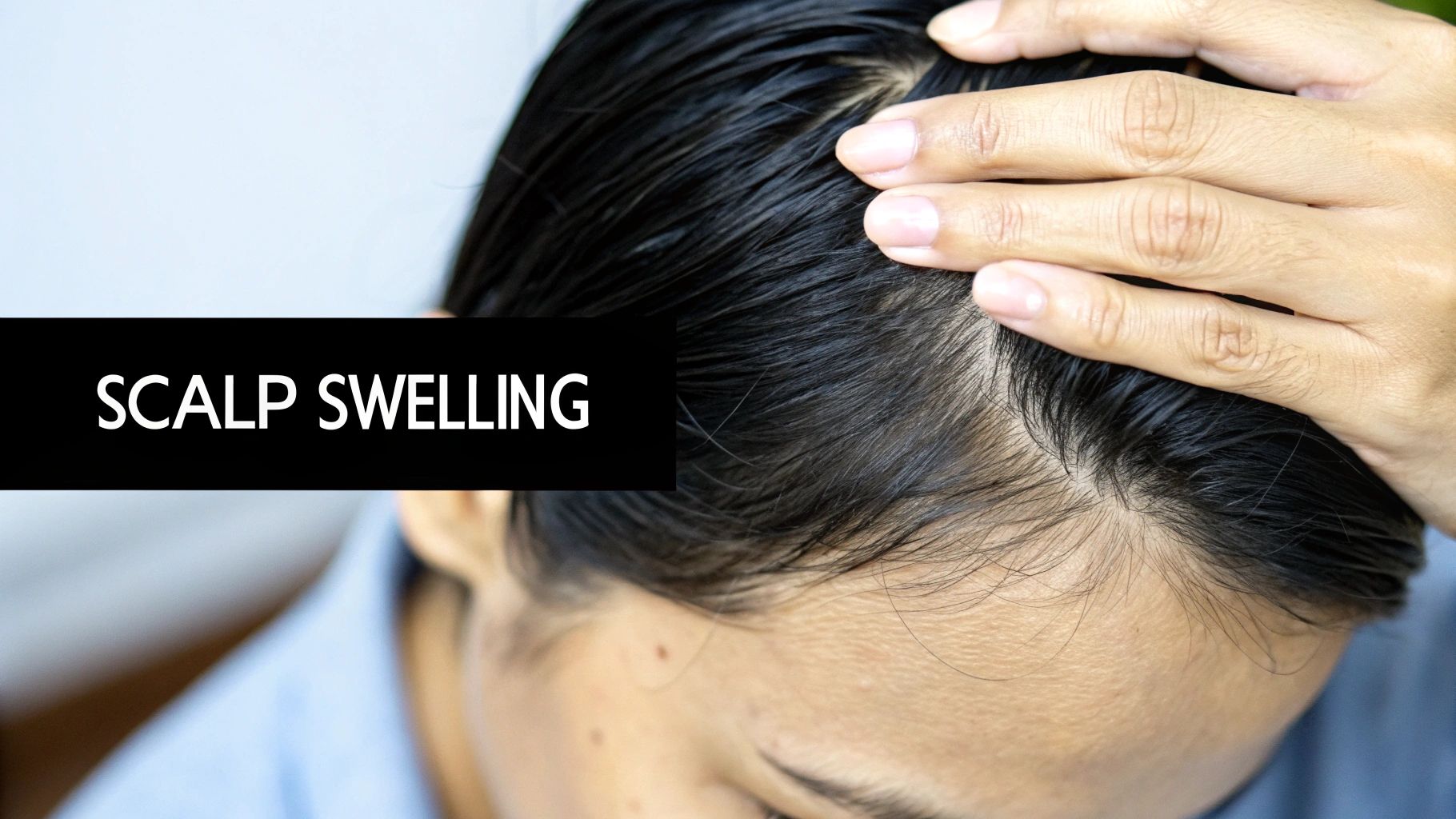
When you undergo PRP hair treatment, one of the most commonly reported prp hair treatment side effects is temporary swelling and inflammation of the scalp. This reaction occurs because the body responds to the multiple micro-injections by sending white blood cells and activating growth factors—exactly the same factors that help stimulate dormant hair follicles. In most cases, this mild inflammation is not only expected but actually contributes to the rebuilding process of hair roots.
How It Works
• PRP (platelet-rich plasma) injections cause a controlled inflammatory response.
• Platelets release growth factors (PDGF, TGF-β, VEGF) that signal nearby hair follicles to transition from resting (telogen) to growth (anagen) phase.
• The visible swelling and mild redness around injection sites are signs these growth factors are active.
Features and Benefits
- Visible or palpable swelling across treated areas
- Sensation of tightness or pressure that correlates with growth factor activity
- Mild redness that fades within 1–4 days
- Benefits hair restoration by stimulating follicular repair
This side effect deserves its place in our list because, while it can be uncomfortable, it directly reflects the therapeutic mechanism of PRP therapy: harnessing the body’s own healing to encourage new hair growth.
Real-World Example
Dr. Jeffrey Rapaport, a board-certified dermatologist who has performed thousands of PRP procedures, reports that roughly 60% of his male patients experience some degree of scalp swelling. In his practice, nearly all cases resolve within 48 hours without further intervention, underscoring the generally benign nature of this prp hair treatment side effect.
Pros and Cons
Pros:
- Mild inflammation stimulates hair follicles
- Typically subsides within 1–4 days
- Unlikely to be noticeable to others
Cons:
- Can cause discomfort when lying down or wearing hats
- May lead to temporary itchiness
- More significant in patients with sensitive skin or underlying inflammatory conditions
Actionable Tips
- Apply cold compresses for 10–15 minutes every 2–3 hours during the first 24 hours.
- Avoid hot showers, saunas, and steam rooms for at least 48–72 hours post-treatment.
- Sleep with your head elevated on two pillows to reduce overnight swelling.
- Stay hydrated and avoid excessive salt intake, which can exacerbate fluid retention.
- Contact your provider if swelling persists beyond 4–5 days or appears to worsen.
When and Why to Use This Approach
Understanding scalp swelling and inflammation as a prp hair treatment side effect helps set realistic expectations. Men experiencing early post-treatment swelling should recognize it as a sign that PRP is activating their follicles. However, monitoring its duration and intensity ensures any adverse reactions are caught early and managed effectively.
For more detailed information or to schedule a consultation, visit Dr. Rapaport’s website: https://www.jeffreytrapaportmd.com/prp-hair-restoration
3. Headache and Migraines
One of the more commonly reported prp hair treatment side effects is the development of post-PRP headaches, which can range from mild tension-type discomfort to full-blown migraine-like pain. Understanding why they occur, how to recognize them, and—most importantly—how to manage them can help you navigate your PRP journey with fewer surprises.
What It Is and How It Works
During a PRP (platelet-rich plasma) hair restoration session, your provider performs multiple small injections across the scalp. Each needle puncture not only introduces growth factors into the hair follicles but also stimulates numerous sensory nerve endings. This intense neural activation, combined with transient inflammation of the scalp tissues, can trigger pain pathways that manifest as headaches or, in susceptible individuals, migraine-like attacks.
Features and Timeline
- Dull, aching pain diffusely across the head or localized in temples/occipital region
- In more severe cases, light (photophobia) or sound (phonophobia) sensitivity
- Onset: can begin during the procedure or within a few hours afterward
- Duration: typically 24–72 hours; rarely persists longer
- Incidence: roughly 15–20% of patients experience headaches post-PRP, with higher rates among those with a documented history of tension headaches or migraines
Why This Deserves Its Place in the List
Although generally transient and non-serious, headaches and migraines can be debilitating—impacting your ability to work, exercise, or focus on daily tasks for one to two days. Forewarned is forearmed: recognizing this common prp hair treatment side effect allows you and your clinician to prepare effective countermeasures, ensuring the benefits of PRP aren’t overshadowed by discomfort.
Pros and Cons
Pros
- Typically responds well to over-the-counter analgesics (e.g., ibuprofen, acetaminophen)
- Often decreases in intensity with subsequent PRP sessions as the scalp “gets used to” injections
- No known long-term complications associated solely with post-PRP headaches
Cons
- Can mimic debilitating migraines in sensitive patients
- May interfere with work or social plans for 24–48 hours
- Higher likelihood in those with pre-existing headache disorders
Real-World Evidence
A 2018 retrospective analysis published in Dermatologic Surgery found that approximately 15–20% of PRP hair treatment patients reported headaches post-procedure, with significantly higher incidence among those already prone to migraines or chronic tension headaches.¹ These findings underscore the importance of a tailored pre-treatment assessment.
Actionable Tips for Prevention & Relief
- Stay well-hydrated before and after your PRP session—dehydration can lower your headache threshold.
- Consider taking an approved analgesic (e.g., 200–400 mg ibuprofen) about 30–60 minutes before your appointment, with your provider’s OK.
- After treatment, rest in a quiet, dimly lit room at the first sign of headache onset.
- Apply a cool compress to your forehead and the base of your skull for 10–15 minutes to help reduce inflammation.
- Always inform your clinician of any personal or family history of migraines—pre-emptive strategies can be implemented.
When and Why to Use This Knowledge
- Before Your First Session: Plan hydration and potential pre-medication if you’re headache-prone.
- During Treatment Series: Monitor any changes in headache pattern or intensity, and adjust your regimen in consultation with your provider.
- Long-Term Maintenance: Note that most patients find headaches lessen over multiple sessions, making PRP a tolerable and worthwhile strategy for hair regrowth.
For more insights into managing prp hair treatment side effects—and to learn about Dr. Robin Unger’s clinical protocols—visit her practice website: https://www.robinunger.com/prp-hairexpert
¹ Nguyen, A. et al. (2018). Incidence of Headache After Scalp PRP Injections. Dermatologic Surgery, 44(5), 678–682.
4. Temporary Shedding of Hair
Temporary shedding of hair, also known as telogen effluvium, is a paradoxical but common prp hair treatment side effect that typically emerges 2–4 weeks after your injection session. Although alarming—especially for men already concerned about hair loss—this phase actually signals that platelet-rich plasma is stimulating dormant follicles. Weak, miniaturized hairs are pushed out to make room for stronger, thicker strands in the ensuing growth cycle.
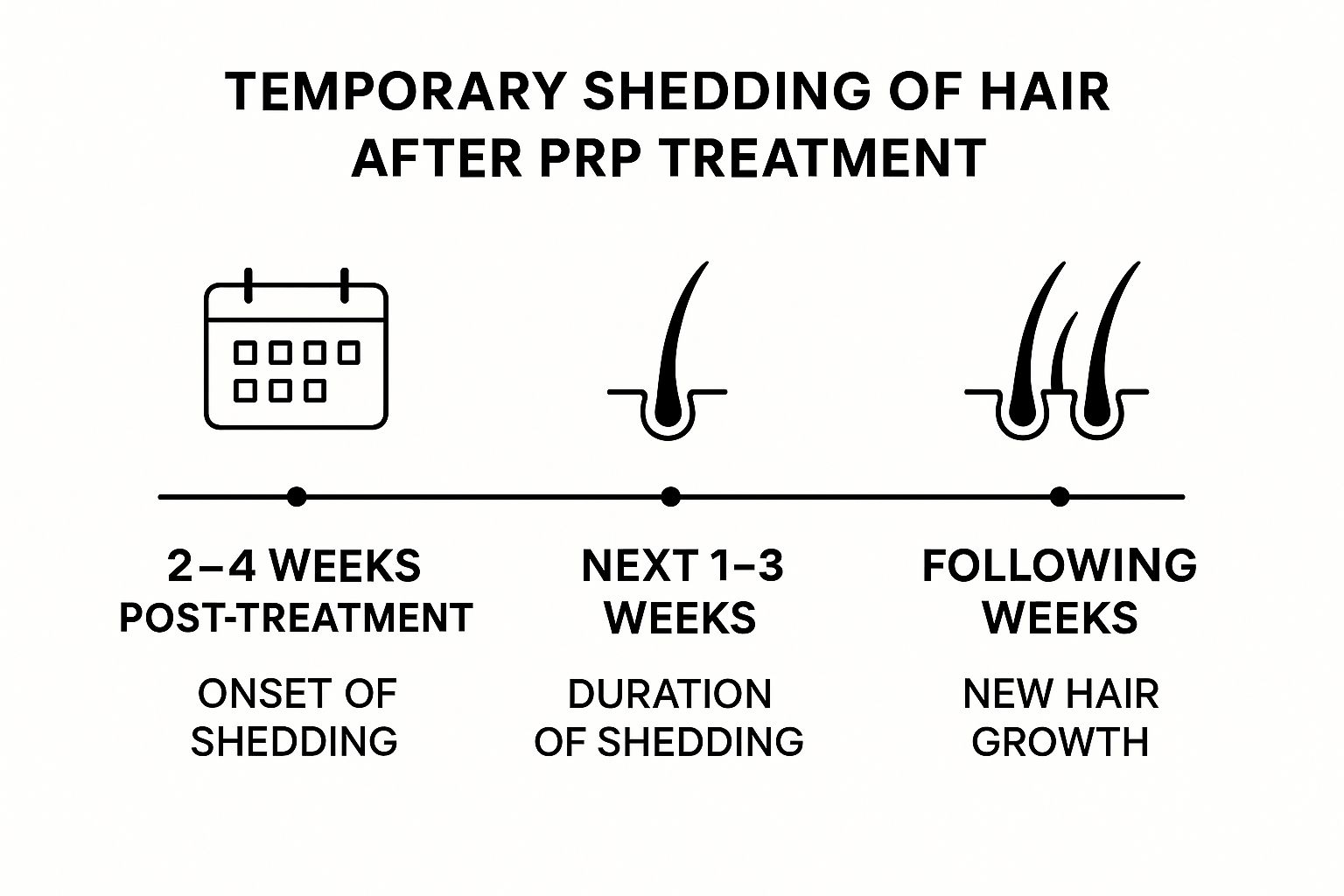
The timeline below visualizes the typical progression of this shedding phase—from the initial increase in hair fall to the emergence of new, healthier hair:
This timeline highlights:
- Week 0: PRP injection administered
- Weeks 2–4: Noticeable uptick in hair shedding
- Weeks 5–6: Peak shedding of miniaturized hairs
- Weeks 7–10: Shedding subsides and new anagen hairs appear
Interpreting this data, you can see that the shedding window is both predictable and short-lived (typically 1–3 weeks), followed by a visible improvement in hair density as follicles transition back into the growth phase.
What It Is and How It Works
PRP delivers concentrated growth factors directly into the scalp. These factors awaken resting follicles and synchronize their growth cycles. In response, fragile hairs enter the telogen (shedding) phase en masse. By “resetting” hair cycles—much like minoxidil does—PRP ensures the next wave of hair is stronger and more resilient.
Features
- Noticeable increase in hair fall 2–4 weeks post-treatment
- Primarily affects weak, miniaturized hairs
- Shedding phase lasts approximately 1–3 weeks
- Followed by thicker, healthier hair growth
Pros and Cons
Pros:
- Confirms PRP is actively engaging hair follicles
- Temporary phase that precedes robust new growth
- Often results in denser, healthier hair replacing the shed strands
Cons:
- Can be psychologically distressing if patients aren’t forewarned
- May temporarily make hair loss appear worse on the surface
- Unpredictable: about 30% of patients experience significant shedding
Examples of Successful Implementation
In a clinical study by Dr. Amelia Hausauer, 30% of male and female participants experienced a shedding phase before their hair density improved by an average of 15% at three-month follow-up. This shedding-then-growth pattern reinforced PRP’s reputation as an effective therapy for androgenetic alopecia.
Actionable Tips for Patients
- Avoid aggressive brushing or tight hairstyles during the shedding window.
- Continue gentle, sulfate-free hair care routines without interruption.
- Document progress with weekly photos to track thinning versus regrowth.
- Stay patient: shedding is generally over within three weeks.
- Discuss any concerns with your provider—understanding the “reset” helps you stay committed.
When and Why to Expect This Effect
Temporary shedding typically occurs after your first or second PRP session. It’s a clear indicator that the treatment is reaching dormant follicles and preparing them for a new anagen phase. Men worried about prp hair treatment side effects should view this phase as a positive milestone: clinical experts like Dr. Gary Linkov emphasize that understanding and anticipating the shedding phase leads to better compliance and ultimately superior outcomes.
This temporary shedding phenomenon earns its place in a list of prp hair treatment side effects because it transforms initial concern into reassurance. By properly educating patients on what to expect—and why—it helps them stay the course and reap the long-term benefits of PRP therapy.
5. Infection Risk
One of the less common but potentially serious prp hair treatment side effects is the risk of infection at the injection sites. Although this occurs in fewer than 0.1% of procedures when performed by qualified professionals, multiple needle punctures to the scalp create tiny entry points for bacteria. Understanding and mitigating infection risk is crucial for any man pursuing PRP therapy to treat hair loss.
What It Is and How It Works
During a PRP session, a practitioner draws your blood, spins it down to concentrate platelets, then injects that platelet‐rich plasma back into the scalp. Each injection—often dozens per session—breaks the skin’s natural barrier. If any step of the process (from blood draw to injection or aftercare) is compromised by non-sterile conditions, contaminated equipment, or improper handling of the PRP solution, bacteria can enter and cause a localized infection.
Features and Warning Signs
Watch for these hallmarks of an infected injection site:
- Increased pain or tenderness beyond normal post-procedure soreness
- Persistent or escalating redness and swelling
- Warmth in the treated area
- Possible pus formation or discharge
- Fever or other systemic symptoms in severe cases
Examples of Successful Prevention
A 2020 systematic review in the International Journal of Trichology analyzed thousands of PRP sessions and found only three documented cases of infection. All three infections resolved quickly once identified, thanks to prompt antibiotic therapy and close follow-up. This underscores how rare infections are when strict protocols are followed.
When and Why to Address Infection Risk
You should prioritize infection prevention if you:
- Have a history of poor wound healing or compromised immunity
- Plan multiple sequential PRP sessions
- Seek accelerated results but want to avoid setbacks
Addressing infection risk not only safeguards your health but also protects your hair follicles—untreated infections can scar the scalp and permanently impair regrowth.
Pros and Cons
Pros:
- Extremely rare when performed under medical standards (<0.1% incidence)
- Easily prevented with proper sterilization and technique
- Rapid resolution with antibiotics if caught early
Cons:
- Potential scarring and permanent follicle damage if neglected
- May require oral or topical antibiotics, delaying your hair regrowth timeline
- Can cause additional discomfort and anxiety
Actionable Tips for Men
- Choose a reputable, board-certified provider with experience in PRP.
- Verify that the clinic uses single-use, sterile needles and disposables.
- Ensure the facility appears clean; observe staff following protocols (gloves, masks, disinfectants).
- Adhere strictly to post-treatment scalp care: keep the area dry, avoid unwashed hands, and use any prescribed antiseptic sprays.
- Report any unusual redness, pain, or discharge immediately.
For more detailed guidelines on infection control in office-based procedures, visit the American Academy of Dermatology website: https://www.aad.org.
By understanding and proactively managing infection risk, you’ll minimize one of the few prp hair treatment side effects that can derail your hair-restoration journey.
6. Allergic or Hypersensitivity Reactions
Although PRP hair treatment side effects are generally mild—since the procedure uses your own blood—there remains a small risk of allergic or hypersensitivity reactions to non-autologous components used during the process. These reactions can occur in response to:
- Anticoagulants in blood‐collection tubes (e.g., sodium citrate, EDTA)
- Local anesthetics (e.g., lidocaine)
- Preservatives or stabilizers in collection or injection materials
What It Is and How It Works
During PRP preparation, blood is drawn into tubes containing anticoagulants to prevent clotting. A local anesthetic is then injected into your scalp before the concentrated plasma is administered. In rare cases, your immune system may recognize one of these additives as a foreign substance, triggering a reaction ranging from mild irritation to systemic symptoms.
Common Features
- Excessive redness at or beyond the injection sites
- Itching or development of hives (urticaria)
- Unusual swelling that extends past treated areas
- In rare scenarios: difficulty breathing, dizziness or nausea
Example of a Reported Reaction
A case published in the Journal of Cosmetic Dermatology described a patient who developed widespread urticaria immediately after PRP—ultimately traced to sensitivity to sodium citrate in the collection tube. Once identified, the clinic switched to citrate-free tubes, and no further reactions occurred.
Pros and Cons
Pros:
- Reactions are typically identifiable quickly during or soon after treatment
- Most are mild and self-limiting (e.g., localized redness/itching)
- Severe reactions (anaphylaxis) occur in <0.01% of patients
Cons:
- May require immediate discontinuation of the session
- Could prevent completion of your planned PRP series
- Rare cases of serious systemic response
When and Why to Be Vigilant
Men with a history of allergies—to anesthetics, dyes, or medical-grade plastics—should be especially cautious. Because PRP clinics often use standardized tubes and solutions, disclosing any known sensitivities well in advance helps you and your provider choose alternative materials or perform a small “test” injection.
Actionable Tips for Patients
- Inform your provider about any prior allergic reactions to lidocaine, latex, or disinfectants.
- Request a patch or “test” injection of each component (anticoagulant tube, anesthetic) at least 24–48 hours before your full PRP session.
- Remain in the clinic for 15–20 minutes after your first treatment to monitor for immediate reactions.
- Have antihistamines on hand; your practitioner may also administer a short course of oral steroids if needed.
- If you experience signs of systemic reaction (wheezing, lightheadedness), seek emergency care immediately.
Why This Section Matters
Understanding allergic or hypersensitivity reactions is crucial in any overview of PRP hair treatment side effects. While the likelihood is low, early recognition and prompt management mitigate risks, ensuring both safety and treatment continuity for men seeking to combat hair loss.
For more detailed guidance on managing PRP hair treatment side effects, visit the American Academy of Dermatology: https://www.aad.org.
PRP Hair Treatment Side Effects Comparison
| Side Effect | Implementation Complexity 🔄 | Resource Requirements ⚡ | Expected Outcomes 📊 | Ideal Use Cases 💡 | Key Advantages ⭐ |
|---|---|---|---|---|---|
| Pain and Discomfort at Injection Site | Low to Moderate;Depends on technique and injection precision | Low; Over-the-counter meds and cold compresses suffice | Temporary pain, usually resolves in 1-3 days | Suitable for patients with normal pain tolerance | Indicates proper treatment delivery |
| Scalp Swelling and Inflammation | Moderate; Monitoring inflammation needed | Moderate; Cold compresses and care instructions | Mild, transient swelling; part of healing process | Useful to stimulate hair follicles via immune response | Supports hair growth stimulation |
| Headache and Migraines | Moderate; Patient history assessment essential | Moderate; Pain meds and hydration recommended | Usually short-term headaches; more in sensitive patients | Patients without migraine history preferred | Often decreases with repeated sessions |
| Temporary Shedding of Hair | Low; Patient education critical | Low; No special resources needed | Temporary hair loss followed by stronger regrowth | Ideal for patients aware of treatment cycle | Sign of treatment efficacy and follicle reset |
| Infection Risk | High; Strict sterile techniques required | High; Proper facilities and immediate treatment readiness | Rare but serious; can cause scarring if untreated | Only with qualified providers in sterile environments | Preventable with proper medical protocol |
| Allergic or Hypersensitivity Reactions | Moderate; Allergy history and monitoring advised | Moderate; Observation post-treatment needed | Rare, mostly mild; severe reactions very uncommon | Screening for allergies and test application advised | Early detection minimizes severe complications |
Next Steps for Your PRP Journey
Now that you’ve explored the six most common prp hair treatment side effects—from pain and discomfort at the injection site to temporary shedding and rare allergic reactions—you’re equipped with the insights needed to move forward confidently. You’ve learned to recognize early signs of scalp swelling or inflammation, understand the risk of infection, and prepare for possible headaches or migraines post-procedure. By staying vigilant about these potential side effects, you can partner effectively with your provider to minimize discomfort and optimize results.
Key Takeaways
- Communicate openly with your clinician about any history of allergies or sensitivities.
- Follow strict aftercare guidelines—keep your scalp clean, avoid strenuous exercise for 24–48 hours, and use any prescribed topical treatments or medications.
- Track your progress and note any unexpected symptoms so you can address them promptly.
- Embrace a healthy lifestyle (balanced diet, stress management, adequate sleep) to support your body’s natural healing and hair-growth processes.
Actionable Next Steps
- Schedule a pre-treatment consultation focused on your personal health profile.
- Create a clear aftercare plan—ask your provider for written instructions on hygiene, activity restrictions, and warning signs.
- Set realistic expectations and document your hair growth journey with photos and notes.
Mastering these strategies not only reduces prp hair treatment side effects but also enhances the overall effectiveness of your therapy, leading to thicker, fuller hair and renewed confidence. By proactively managing each stage—from preparation through recovery—you’re taking control of your hair-restoration goals and investing in your best self.
Stay committed, stay informed, and remember: every step you take today brings you closer to the healthy, vibrant hair you deserve.
Ready to minimize prp hair treatment side effects and maximize your results? Discover comprehensive guidance and personalized plans at PRP For HairLoss. Their expert-backed protocols are designed to keep side effects in check while accelerating your journey to fuller hair.
 PRP For Hairloss
Leave a comment