The Science Behind PRP Hair Treatment Success

PRP hair treatment, short for Platelet-Rich Plasma treatment, uses the body's natural healing power to combat hair loss. This treatment utilizes a concentrated solution derived from your own blood. This solution, rich in growth factors, works to revitalize inactive hair follicles, much like nourishing your scalp with its own natural fertilizer.
Understanding the Power of Platelets
Platelets are small blood cells essential for clotting and healing wounds. They also contain proteins called growth factors. These growth factors signal cell growth and regeneration. For instance, platelet-derived growth factor (PDGF) promotes cell division, while vascular endothelial growth factor (VEGF) boosts blood flow to the hair follicles.
This increased blood flow provides vital nutrients and oxygen. It creates an ideal environment for healthy hair growth. Understanding overall health often involves learning about other bodily systems, such as the gut microbiome.
Because PRP uses your own body’s resources, it's generally a well-tolerated treatment with minimal side effects. Studies support its effectiveness in stimulating hair follicles and promoting a healthy scalp. One study even revealed a mean increase of 33.6 hairs in the treated area and a density increase of 45.9 hairs/cm² after three treatments. You can find more information on the effectiveness of PRP hair treatment.
From Wound Healing to Hair Restoration
PRP therapy was initially known for accelerating wound healing after surgery. This medical background provides a strong scientific basis for its application in hair restoration. Furthermore, its use now includes treating various types of hair loss, including androgenetic alopecia.
This indicates that PRP isn't a quick fix. It addresses the underlying biological causes of hair loss. By stimulating inactive follicles and enhancing scalp health, PRP creates a supportive environment for sustained hair regrowth. For those seeking a natural, effective solution for thinning hair, PRP offers a promising way to achieve fuller, healthier hair.
Your PRP Hair Treatment Journey: What Really Happens
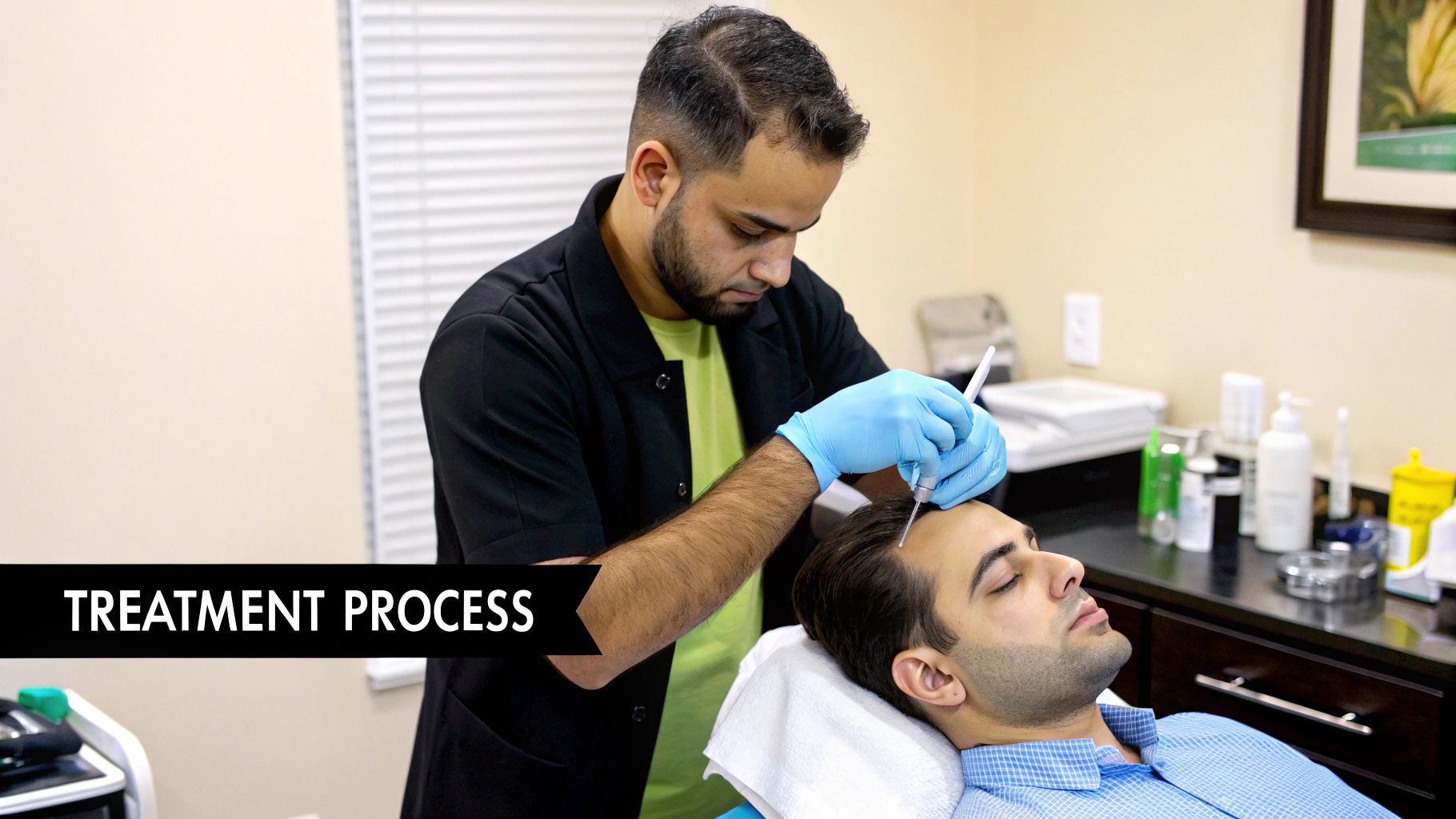
Considering PRP hair treatment? This section details what a typical session involves, from initial consultation to post-treatment. Understanding the process can ease any worries and build your confidence.
The Initial Consultation and Preparation
Your journey starts with a consultation. Your practitioner will assess your hair loss, discuss your medical history, and explain the PRP procedure. This is the ideal opportunity to ask questions and voice any concerns. Preparing for treatment is simple. You may be advised to stop taking certain medications, such as blood thinners, beforehand.
The PRP Extraction Process
The PRP treatment begins with a standard blood draw, similar to a routine blood test. This usually takes only a few minutes. Your blood is then placed in a centrifuge. A centrifuge is a specialized machine that spins the blood at high speed to separate the platelet-rich plasma (PRP) from other blood components. This concentrates the platelets, creating the PRP solution for your treatment.
The Injection Process and What To Expect
The concentrated PRP is then injected into your scalp, focusing on areas with thinning or hair loss. Fine needles are used for the injections. While some mild discomfort is possible, the procedure is generally well-tolerated. Many practitioners use numbing cream to increase comfort. A typical session takes between 60-90 minutes, depending on the size and complexity of the treatment area.
To help you understand the process step-by-step, we've provided a detailed breakdown below:
PRP Hair Treatment: Procedure Breakdown
This table outlines each step of the PRP hair treatment process with associated timeframes.
| Procedure Step | Time Required | What Happens | Sensation/Discomfort Level |
|---|---|---|---|
| Consultation & Assessment | 15-30 minutes | Discussion of hair loss concerns, medical history review, and procedure explanation. | None |
| Blood Draw | 2-5 minutes | Small blood sample is taken from your arm. | Similar to a regular blood test. |
| Centrifugation | 10-15 minutes | Blood is spun in a centrifuge to separate PRP. | None |
| Preparation of Injection Site | 5-10 minutes | Scalp is cleaned and optionally numbed. | None or mild cooling sensation from numbing cream. |
| PRP Injection | 20-40 minutes | PRP is injected into targeted areas of the scalp. | Mild pricking sensation, generally well-tolerated. |
| Post-Treatment Instructions & Follow-Up Scheduling | 5-10 minutes | Aftercare guidelines are provided, and future appointments are scheduled. | None |
This table provides a general overview. Actual times may vary based on individual needs and clinic practices.
Post-Treatment Care and Recovery
Your scalp may be slightly tender or sensitive right after the treatment. This is temporary and usually fades within a few days. You can typically resume normal activities immediately. Your practitioner will give you specific aftercare instructions, such as avoiding harsh hair products for a short time. Follow-up appointments will be scheduled to track your progress and determine a maintenance schedule for the best long-term results. This usually means additional treatments several months apart. Knowing what to expect during and after PRP treatment is key for a positive experience and empowers you on your journey to healthier, fuller hair.
PRP Hair Treatment for Women: Beyond Male Pattern Baldness
While often associated with male pattern baldness, PRP hair treatment is gaining recognition as an effective solution for women experiencing hair thinning or loss. Women's hair loss presents distinct challenges compared to men's hair loss.
Understanding the Differences in Hair Loss Patterns
Unlike the receding hairline or crown thinning seen in men, women typically experience diffuse thinning across the entire scalp. This can be triggered by various factors, including hormonal shifts, stress, nutritional deficiencies, and certain medical conditions. The emotional impact of hair loss can be particularly significant for women.
Hormonal fluctuations during pregnancy, menopause, or thyroid issues can disrupt hair growth cycles. This is where PRP offers a unique advantage. The growth factors present in PRP can help normalize hair growth cycles and stimulate inactive follicles. This can lead to improved hair density and thickness, addressing even hormonally-driven hair loss.
The Benefits of PRP for Women
PRP offers several benefits for women. It's a minimally invasive procedure with minimal downtime, making it easy to fit into a busy schedule. The treatment utilizes the body's own resources, reducing the risk of allergic reactions or side effects. The results from PRP appear natural, gradually restoring volume and thickness.
A significant study showed that PRP therapy can considerably improve hair density and thickness with minimal side effects. You can learn more about the effectiveness of PRP hair treatment for women.
Combining PRP with Other Therapies
Combining PRP with other therapies can yield even better results for many women. Low-level laser therapy (LLLT), for example, can further stimulate hair follicles and boost the effects of PRP. Incorporating specialized hair care routines focused on scalp health creates an optimal environment for new hair growth. These combined approaches provide a comprehensive strategy to address the multifaceted causes of female hair loss.
Restoring Confidence and Well-Being
The benefits of PRP extend beyond physical changes. As hair regains its fullness, women often report increased confidence and self-esteem. The gradual, natural-looking results can be significant, helping women feel more comfortable and confident in their appearance.
Real PRP Hair Treatment Results: A Month-by-Month Guide

Let's discuss the realistic results you can expect from PRP hair treatment over time. This month-by-month guide, based on patient experiences and clinical observations, provides a transparent roadmap for your PRP journey.
The First Few Weeks: Early Signs of Progress
In the initial 4-6 weeks after your first PRP hair treatment, you might notice a decrease in shedding. This is often the first encouraging sign. This reduction in hair loss indicates the treatment is starting to work, stabilizing your existing hair.
It's like stopping a slow leak before refilling a tank. The focus is on preservation before actively promoting new growth.
Months 3-4: Visible Improvements Emerge
Around months 3-4, many patients begin to see visible new hair growth. These fine, new hairs, often called "baby hairs," are a sign that the PRP is actively stimulating your hair follicles.
This stage is comparable to seeing the first sprouts after planting seeds – a clear indication of growth and progress. The treatment is taking root, and tangible results are starting to show.
Months 6-12: Reaching Fuller Results
The most significant results from PRP hair treatment typically appear between months 6-12. This is when you'll likely see the most new hair growth and improvement in hair density.
It's important to remember that hair growth is a gradual process. Much like nurturing a plant to its full potential, PRP treatment requires time and patience to achieve optimal results.
Factors Influencing Your Timeline
Individual timelines can vary based on factors like age, hair loss pattern, and overall health. Younger patients with less extensive hair loss sometimes see results faster than older individuals with more advanced thinning. This can be attributed to factors like a more robust blood supply and more responsive follicles in younger scalps.
Maintaining a healthy lifestyle with proper nutrition and stress management can also positively influence the results. Just as a well-nourished plant thrives, a healthy body provides an ideal environment for hair growth.
To help visualize the typical progression, let's look at a timeline:
To understand what to expect during your PRP hair treatment journey, take a look at the following timeline:
PRP Hair Treatment Results Timeline
This table shows what results to expect at different stages after beginning PRP hair treatment.
| Timeframe | Typical Results | What's Happening Biologically | Maintenance Needed |
|---|---|---|---|
| 4-6 Weeks | Reduced Shedding | Treatment begins to stabilize hair follicles, slowing down hair loss. | None |
| 3-4 Months | New Hair Growth ("Baby Hairs") | PRP stimulates hair follicles, promoting the growth of new hairs. | None |
| 6-12 Months | Significant Improvement in Hair Density | Full effects of PRP become visible, with increased hair growth and thickness. | Discuss with your practitioner |
| Beyond 12 Months | Continued Maintenance | Ongoing PRP treatments help maintain results and encourage further growth. | Regular maintenance treatments as recommended |
This timeline offers a general overview. Individual results can vary, and it's always best to consult with a qualified practitioner for personalized advice.
The Importance of Maintenance Treatments
To maintain your achieved results, your practitioner will likely recommend maintenance sessions. These treatments, typically spaced several months apart, help ensure your hair follicles continue receiving the necessary growth factors.
Think of maintenance treatments as booster sessions to support long-term hair health. Consistent upkeep can be key to preserving the progress you've made. By continuing to stimulate the follicles, these sessions help sustain and enhance your results.
Powering Up Your PRP Hair Treatment Results
Many people find that combining PRP hair treatment with other therapies maximizes their results. This combined approach creates a synergistic effect, leading to more robust and lasting improvements. Let's explore some of these powerful combinations.
PRP and Hair Transplantation: A Powerful Duo
Combining PRP with hair transplantation is a particularly effective strategy. PRP can significantly improve graft survival and accelerate healing after the transplantation procedure. The growth factors present in PRP create an ideal environment for the transplanted follicles to thrive. This leads to denser hair growth and a faster recovery period. One study indicated that patients receiving PRP during their hair transplant experienced over 75% hair regrowth after six months. This contrasts sharply with the control group, which saw only 20% regrowth. You can find more detailed statistics on the success rates of PRP treatments here.
Complementary Therapies for Enhanced Results
Several other therapies complement PRP hair treatments well. Microneedling, for instance, creates small channels in the scalp. This allows the PRP growth factors to penetrate deeper and be absorbed more effectively. Low-level laser therapy (LLLT) can also stimulate hair follicles, further boosting the effectiveness of PRP. Used in conjunction with PRP, these therapies offer a more comprehensive approach to hair restoration.
Combining PRP with Medications
Some medications can also work synergistically with PRP hair treatment. Certain medications address underlying hormonal imbalances that contribute to hair loss, while PRP stimulates new growth. This multi-pronged approach targets the issue from different angles, leading to more well-rounded results. However, it is essential to consult with your doctor before combining any medications with PRP treatment. This ensures both compatibility and safety.
Determining the Right Combination for You
The optimal combination of therapies will vary based on individual factors. These factors include your hair loss pattern, overall health, and desired outcomes. Someone experiencing early-stage hair thinning might benefit from PRP combined with microneedling and LLLT. On the other hand, someone with more advanced hair loss considering transplantation might see best results by incorporating PRP during and after the procedure.
A consultation with a hair restoration specialist is vital for determining the most effective personalized strategy. They can assess your unique needs and recommend an ideal combination of therapies to help you achieve your hair restoration goals. This personalized approach ensures the most appropriate and effective treatment plan, maximizing your chances of achieving significant and lasting improvements in hair growth.
Is PRP Hair Treatment Worth Your Investment?
Investing in hair restoration can be a significant decision. This section explores the financial aspects of PRP hair treatment, helping you determine if it's a worthwhile investment for your individual circumstances.
Understanding the Costs of PRP Hair Treatment
The cost of PRP hair treatment can vary, typically ranging from $500 to $2,000 per session. Several factors influence this price, including your location, the provider's expertise, and the number of sessions needed. Major metropolitan areas often have higher prices, while experienced specialists may also charge more.
Understanding what constitutes a fair price for quality treatment is crucial. Thorough research and comparing prices among different providers will help you assess the market value and identify any unusually high or low prices.
Long-Term Economics: PRP vs. Alternatives
When considering the cost of PRP, it's important to compare it to the long-term expenses of other hair restoration methods. Ongoing medications for hair loss can accumulate significant costs over time.
Hairpieces require regular replacements and upkeep, also leading to substantial recurring expenses. Surgical procedures, while potentially very effective, often involve a much higher upfront investment than PRP.
Evaluating the total cost – including initial treatment and long-term maintenance – will help you make a well-informed decision. For instance, while PRP may require multiple initial sessions, the cost of maintenance treatments is typically lower than the ongoing expenses of medications or hairpieces. This can make PRP a potentially more cost-effective solution over time.
Ensuring Value and Avoiding Red Flags
To ensure you're receiving good value for your investment, ask potential providers specific questions about their experience, the PRP preparation process, and the anticipated outcomes. Inquire about the platelet concentration in the PRP solution, as higher concentrations often correlate with better results.
Be cautious of unusually low prices, which might suggest subpar equipment or a lack of properly trained staff. This careful approach protects your investment and increases the likelihood of a successful outcome.
Exploring Financing Options
If the initial cost of PRP seems challenging, explore available financing options. Some clinics offer payment plans that allow you to spread the cost over several months, making the treatment more manageable.
Additionally, consider checking your insurance coverage. While most insurance plans don't cover PRP for cosmetic purposes, some might cover it for specific medical conditions that contribute to hair loss. This could potentially lessen your out-of-pocket costs.
Making an Informed Decision
Ultimately, the decision of whether PRP is a worthwhile investment depends on your personal hair restoration goals and financial situation. Weigh the costs against the potential benefits and compare it to the long-term costs of alternative treatments.
Ready to learn more? Visit PRP For HairLoss for comprehensive information and resources.
 PRP For Hairloss
Leave a comment