Understanding Your Hair's Story: Types and Causes
Before effectively styling thinning hair, it’s essential to understand the underlying causes and your specific hair type. This knowledge is the foundation for choosing the right styling techniques and products. Just like a detective working a case, you need to gather information about your hair’s history to address the issue of thinning. This section will give you the tools to do just that.
Common Culprits Behind Thinning Hair
Several factors can contribute to thinning hair. Genetics plays a significant role, often predetermining hair loss patterns. Hormonal changes, such as those that occur during pregnancy or menopause, can also trigger temporary or permanent thinning. Stress, nutritional deficiencies, and certain medical conditions can impact hair health. Identifying the root cause is the first step toward effective solutions. For more information, exploring innovations in regenerative medicine may be beneficial.
Identifying Your Thinning Pattern
Thinning hair presents differently in individuals. Some experience overall volume loss, where the hair appears less dense everywhere. Others notice a receding hairline or crown thinning, concentrated on the top of the head. Understanding your unique thinning pattern is vital for choosing hairstyles and products that maximize coverage and create the appearance of fullness. This targeted approach helps address your specific concerns for the best styling results.
The Role of Hair Growth Cycles
Hair growth follows a cyclical pattern. Each strand progresses through phases of growth, rest, and shedding. As we age, the growth phase shortens, resulting in thinner hair. Understanding these changes is crucial for styling thinning hair. For instance, avoid harsh styling techniques if your hair is shedding more than usual, as this could worsen the problem. This knowledge guides you toward gentler practices and suitable products. Globally, hair loss and thinning are widespread concerns. The alopecia treatment market is projected to reach USD 30.5 billion by 2035, up from USD 12.5 billion in 2025. Find more statistics here.
Building a Foundation for Styling Success
Understanding the causes of thinning hair and identifying your thinning pattern empowers you to make informed styling decisions. The information in this section will guide you as we explore haircuts, products, and styling techniques. This understanding will ensure your choices contribute to achieving your desired look.
Finding Your Perfect Cut: Transformative Hairstyles
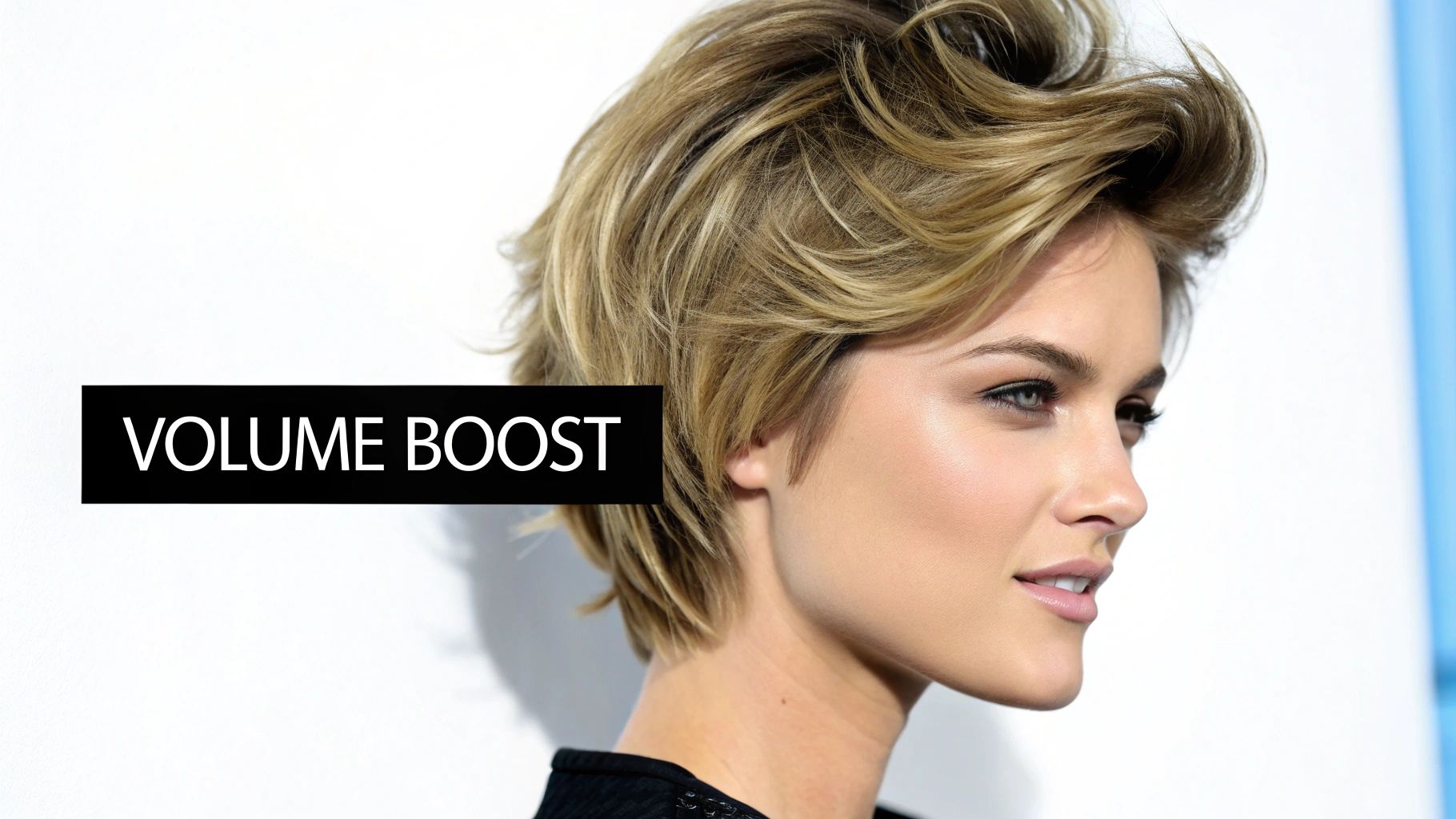
The right haircut forms the foundation for styling thinning hair. It's not just about looking good; it's about creating volume, dimension, and the illusion of fullness. This section explores how specific cuts and styling techniques can dramatically improve your look.
Choosing the Right Cut for Your Thinning Pattern
Different thinning patterns benefit from different haircutting strategies. If you're noticing overall thinning, a layered cut can introduce volume and movement. Layers remove weight, allowing the hair to appear fuller.
Shorter styles, like pixie cuts or bobs, can also be effective. They create a more compact shape, making fine hair appear thicker. If your thinning is concentrated at the crown, a longer cut with layers can be a good solution. This allows the hair to fall more naturally, camouflaging the thinner area.
Layering Techniques for Fine Hair
Layering is a key technique for thinning hair. Internal layers, cut beneath the surface, add volume without shortening the overall length. Think of them as creating an internal structure to support the hair and create lift.
Texturized layers, cut at varying lengths, enhance movement and prevent the hair from looking flat. This creates the illusion of fullness while maintaining your desired style.
Communicating With Your Stylist
Clear communication with your stylist is essential. Use precise terms like "thinning at the crown" or "lack of volume at the roots." This ensures your stylist understands your specific concerns.
Bringing reference photos is helpful, but remember to be realistic about what's achievable with your hair type and texture. This helps your stylist create a cut that addresses your individual needs.
To help you choose the perfect cut, we've compiled a table outlining recommendations for various thinning patterns.
To help you choose the perfect cut, we've compiled the table below outlining recommendations for various thinning patterns. This table provides a clear guide to matching haircuts with specific needs.
Best Haircuts for Different Thinning Patterns
| Thinning Pattern | Recommended Haircuts | Styles to Avoid |
|---|---|---|
| Overall Thinning | Layered cuts, bobs, pixie cuts | Long, one-length styles |
| Receding Hairline | Soft, feathered bangs, short layers around the face | Slicked-back styles |
| Crown Thinning | Longer layers, textured cuts | Tight ponytails, high buns |
By understanding these recommendations, you can work with your stylist to choose the most flattering cut for your hair.
Maintenance and At-Home Styling
Maintaining your hairstyle between salon appointments is crucial. Use volumizing products designed for thinning hair and avoid heavy products that weigh hair down. A lightweight mousse applied to the roots before blow-drying, for example, can create lift and body.
Learning simple blow-drying techniques, such as lifting the hair at the roots with a brush, can significantly improve your style's volume. These small adjustments can help you maintain that fresh-from-the-salon look.
Finally, consider incorporating scalp massages into your routine. Scalp massages can help stimulate blood flow, which may promote healthy hair growth. These efforts, combined with the right haircut and styling techniques, can greatly improve the appearance of thinning hair.
Product Arsenal: What Actually Works for Volume
Choosing the right products is just as crucial as the right haircut when styling thinning hair. This means focusing on products that work at the root level, not just those that coat the hair for a temporary illusion of fullness. This section breaks down essential products that deliver visible results, empowering you to make informed choices.
Understanding Ingredients and Formulations
Many volumizing shampoos and conditioners can leave hair flatter. This is often because they contain heavy silicones or oils that weigh down fine strands. Instead, look for products with lightweight, volumizing ingredients like panthenol, keratin, or rice protein. These help thicken the hair shaft without adding excess weight.
Similarly, some thickening serums over-promise and under-deliver. Choose serums with ingredients known to promote hair growth or improve scalp health, such as peptides, biotin, or saw palmetto. These can have a more significant long-term impact on overall hair volume and health. This mindful ingredient selection can transform the look and feel of thinning hair.
Texturizing Sprays and Thickening Serums: Separating Hype From Reality
Texturizing sprays can be a game-changer for thinning hair. However, some sprays can be overly drying or leave hair stiff and brittle. Opt for flexible-hold sprays that add volume without sacrificing natural movement. Sea salt sprays, for example, create a tousled, beachy texture that adds body without weighing hair down.
Thickening serums can be beneficial if chosen carefully. Look for lightweight formulas that won't leave hair greasy or sticky. Apply these products sparingly, focusing on the roots and mid-lengths. The right serum can add thickness and body without compromising overall hair health. The focus on styling thinning hair has led to increased demand for solutions. The global hair thinning market is projected to reach USD 2.75 billion by 2030, with a CAGR of 10.50% from 2024 to 2030. Learn more here.
Professional Picks and Drugstore Alternatives
Professional stylists often have preferred brands for clients with thinning hair. These brands usually prioritize high-quality ingredients and advanced formulations. However, many affordable drugstore alternatives offer comparable results. Research and reading reviews can help you find effective options within your budget.
Top Products for Thinning Hair by Category
The following table offers a starting point for building your product arsenal:
Top Products for Thinning Hair by Category: A comprehensive breakdown of recommended products across different categories specifically formulated for thinning hair, including price ranges and key benefits.
| Product Category | Recommended Products | Key Benefits | Price Range |
|---|---|---|---|
| Volumizing Shampoo | Living Proof Full Shampoo, R+Co Dallas Biotin Thickening Shampoo | Lightweight cleansing, adds body | $$ – $$$ |
| Volumizing Conditioner | Kérastase Densifique Conditioner, Matrix Biolage Volume Bloom Conditioner | Hydrates without weighing hair down | $$ – $$$ |
| Texturizing Spray | Oribe Dry Texturizing Spray, Bumble and bumble Thickening Dryspun Texture Spray | Adds volume and grip | $$ – $$$ |
| Thickening Serum | R+Co Dallas Thickening Spray, Aveda Thickening Tonic | Boosts thickness at the roots | $$ – $$$ |
This table provides examples and is not exhaustive. Remember to consider your individual hair needs and budget. This ensures you invest in products that address your concerns and deliver desired results.
Daily Styling Mastery: Techniques That Transform
Building on the foundation of the right haircut and products, this section explores essential styling techniques for thinning hair. Mastering these techniques can significantly improve your hair's appearance and boost your confidence.
The Power of the Blow-Dry: Direction Is Key
Blow-drying is a critical step in creating volume. Many people mistakenly blow-dry downwards, which flattens the hair and accentuates thinning. The key is to blow-dry against the natural hair growth direction. This lifts the roots for instant volume.
For instance, if your hair naturally falls to the left, blow-dry to the right. This simple change can create a 30% increase in perceived volume, making a noticeable difference in fullness.
Choosing the Right Brush for Lift and Volume
The brush you choose is just as important as your blow-drying technique. A round brush is ideal for creating lift. The size depends on your hair length. Smaller round brushes offer more control for shorter hair, while larger ones create volume and smooth longer hair.
Boar bristle brushes distribute natural oils, adding shine and smoothing the cuticle. This can make thinning hair appear healthier and more vibrant.
The Styling Sequence: Maximizing Volume and Longevity
The order in which you style your hair affects how long your volume lasts. Begin by applying a lightweight volumizing mousse to damp hair, concentrating on the roots. Then, blow-dry using the techniques discussed above.
Once dry, use a texturizing spray for hold and lift. Velcro rollers on dry hair can create additional volume, especially at the crown, without further heat styling.
Styling for Different Hair Lengths: Tailored Techniques
Different hair lengths benefit from different styling approaches. For pixie cuts, focus on texture and lift at the crown. For shoulder-length hair, layering and blow-drying are crucial.
Experimenting with different parts can also create the illusion of fullness. These targeted strategies maximize volume based on your specific haircut.
Debunking Common Myths About Styling Thinning Hair
Many misconceptions exist about styling thinning hair. Some believe you should avoid styling altogether. However, the right techniques can dramatically improve its appearance.
Another myth is that all volumizing products are the same. As mentioned, lightweight formulas are essential. Understanding the facts allows for effective styling techniques and maximum impact.
Strategic Color: Creating Dimension and Depth
Color plays a vital role in styling thinning hair, extending far beyond simply concealing gray. It’s a powerful tool for creating the illusion of thickness and depth. This section explores how strategic color choices and application techniques can dramatically improve the appearance of thinning hair.
Why Single-Process Color Falls Flat
Single-process color, while convenient, can often leave thinning hair looking flat and lacking volume. This is because a uniform color lacks the dimension and depth needed to create visual interest and the perception of fullness. Imagine a plain wall – every imperfection is highlighted. Multi-tonal color, however, adds depth and complexity, effectively masking thin areas and creating a more vibrant, dynamic look.
Dimensional Techniques: Shadow Roots and Highlights
Shadow roots and highlights are two effective color techniques for building dimension and depth. Shadow roots involve applying a darker shade at the base of the hair, creating instant volume at the scalp and the appearance of thicker hair. This technique mimics the natural gradient often seen in naturally thicker hair.
Highlights, which are strategically placed lighter strands, also contribute to the illusion of fullness. By adding contrast and movement, highlights draw attention away from thinner areas. The interplay of light and shadow provided by these techniques creates depth, making hair appear denser.
Placement Techniques for Maximum Impact
Strategic placement of highlights and lowlights (darker strands) is key for maximizing impact. For instance, highlights around the face can brighten the complexion and divert attention from thinning at the crown. Similarly, strategically placed lowlights add depth to areas that appear sparse.
Skilled colorists often use a combination of techniques like balayage and foiling to achieve a seamless blend of colors. These techniques allow for personalized placement tailored to the individual's unique thinning pattern and desired style. This targeted approach maximizes the effect of color, creating a fuller appearance.
The Impact of Undertones
Selecting the right undertones plays a critical role in the overall effect. Warm undertones such as gold or copper, can make hair appear fuller and more vibrant. Cool undertones, such as ash or beige, can sometimes emphasize thinning, particularly in very fine hair.
Collaborating with a skilled colorist is essential. They can assess your hair type, thinning pattern, and skin tone to create the most flattering and effective color strategy. A personalized consultation ensures the color enhances your hair's appearance while complementing your overall style. The 2024 global alopecia treatment market, valued at USD 3.48 billion, highlights the growing demand for solutions addressing thinning hair. Projections suggest this market will reach USD 5.20 billion by 2033, influenced by evolving consumer needs and technological advancements. Find more detailed statistics here.
Maintaining Color-Treated Thinning Hair
Coloring thinning hair requires a delicate balance between achieving desired color results and maintaining hair health. Using gentle, color-safe products is crucial. Sulfate-free shampoos and conditioners help maintain color vibrancy and prevent dryness and breakage. Regular deep conditioning treatments replenish moisture and strengthen fragile strands. These practices minimize damage, keeping color-treated thinning hair healthy and vibrant.
Beyond Styling: Long-Term Solutions That Work
Styling techniques offer immediate improvements for thinning hair, but for long-term success, addressing the root causes is crucial. This means looking beyond styling products to solutions that promote healthy hair growth from within. This section explores those long-term strategies, offering insights relevant to anyone experiencing hair thinning.
Clinically-Proven Ingredients for Follicle Stimulation
Some ingredients have a proven track record in stimulating hair follicle activity. Minoxidil, an over-the-counter topical treatment, can help slow hair loss and encourage regrowth. Studies also suggest that ingredients like peptides and saw palmetto may support hair growth by blocking DHT, a hormone often linked to hair loss. It's important, however, to differentiate between clinically-proven ingredients and those with limited research to ensure you invest wisely.
The Role of Nutrition in Hair Density
Nutritional deficiencies can contribute to thinning hair. A lack of iron, zinc, or biotin, for instance, can negatively affect hair growth. Addressing these deficiencies with a balanced diet or supplements can improve hair density over time. Foods like salmon, eggs, and nuts are packed with hair-healthy nutrients, strengthening hair from the inside out. Including these in your diet can provide the building blocks for stronger, healthier hair. Interestingly, the global hair loss treatment products market is expected to hit USD 335.66 million by 2032, with a CAGR of 5.3%. More detailed statistics can be found here.
Emerging Technologies for Hair Regeneration
Emerging technologies also offer promising new avenues for hair regeneration. Platelet-rich plasma (PRP) therapy involves injecting concentrated platelets from your blood into the scalp to stimulate growth. Low-level laser therapy (LLLT) uses specific light wavelengths to encourage follicle activity. While often more expensive, these innovative treatments may offer significant improvements for thinning hair. This means exploring both established and newer treatment options.
Scalp Care and Hair Growth: The Foundation for Success
A healthy scalp is essential for hair growth. Think of it as the foundation upon which healthy hair can flourish. Regular scalp exfoliation removes dead skin cells and product buildup that can clog follicles and hinder growth. Using a gentle scalp cleanser further improves scalp health, creating an ideal environment for hair to thrive.
Realistic Timelines for Visible Results
It's important to maintain realistic expectations regarding treatment timelines. Most hair growth treatments take several months of consistent use to produce visible results. For example, noticeable improvements from minoxidil usually take three to six months. This highlights the importance of patience and consistent application. Hair growth, after all, is a gradual process.
Combining Styling With Long-Term Strategies
Combining effective styling with the long-term solutions discussed above yields the best results. While styling provides immediate visual improvements, addressing the underlying causes of thinning hair ensures lasting change. This dual approach delivers both instant gratification and enduring benefits.
For more information on male pattern baldness and treatments like PRP, visit PRP for Hairloss. This website offers valuable insights specifically for men experiencing hair loss.
 PRP For Hairloss
Leave a comment