PRP: A Game Changer for Hair Loss
Losing your hair? PRP therapy may be the solution. This listicle presents seven compelling before-and-after examples of PRP hair restoration, demonstrating its potential to revitalize thinning hair. Discover if PRP is right for you. We'll cover PRP's effectiveness for male and female pattern baldness, combination therapies, long-term results, celebrity experiences, and comparisons to traditional treatments. Explore real results and regain your confidence.
1. PRP Hair Treatment at Dermatology Clinics
Platelet-Rich Plasma (PRP) therapy has become a popular treatment for hair loss, offering a non-surgical approach to stimulating hair growth. This procedure involves drawing a patient's blood, processing it in a centrifuge to isolate the platelet-rich plasma, and then injecting this concentrated solution back into the scalp. The platelets within the plasma contain growth factors that play a vital role in tissue repair and regeneration. When injected into the scalp, these growth factors stimulate dormant hair follicles, enhance blood flow to the follicles, and increase the thickness of the hair shaft. Dermatology clinics offering PRP treatments typically recommend multiple sessions spaced 4-6 weeks apart for optimal and lasting results.
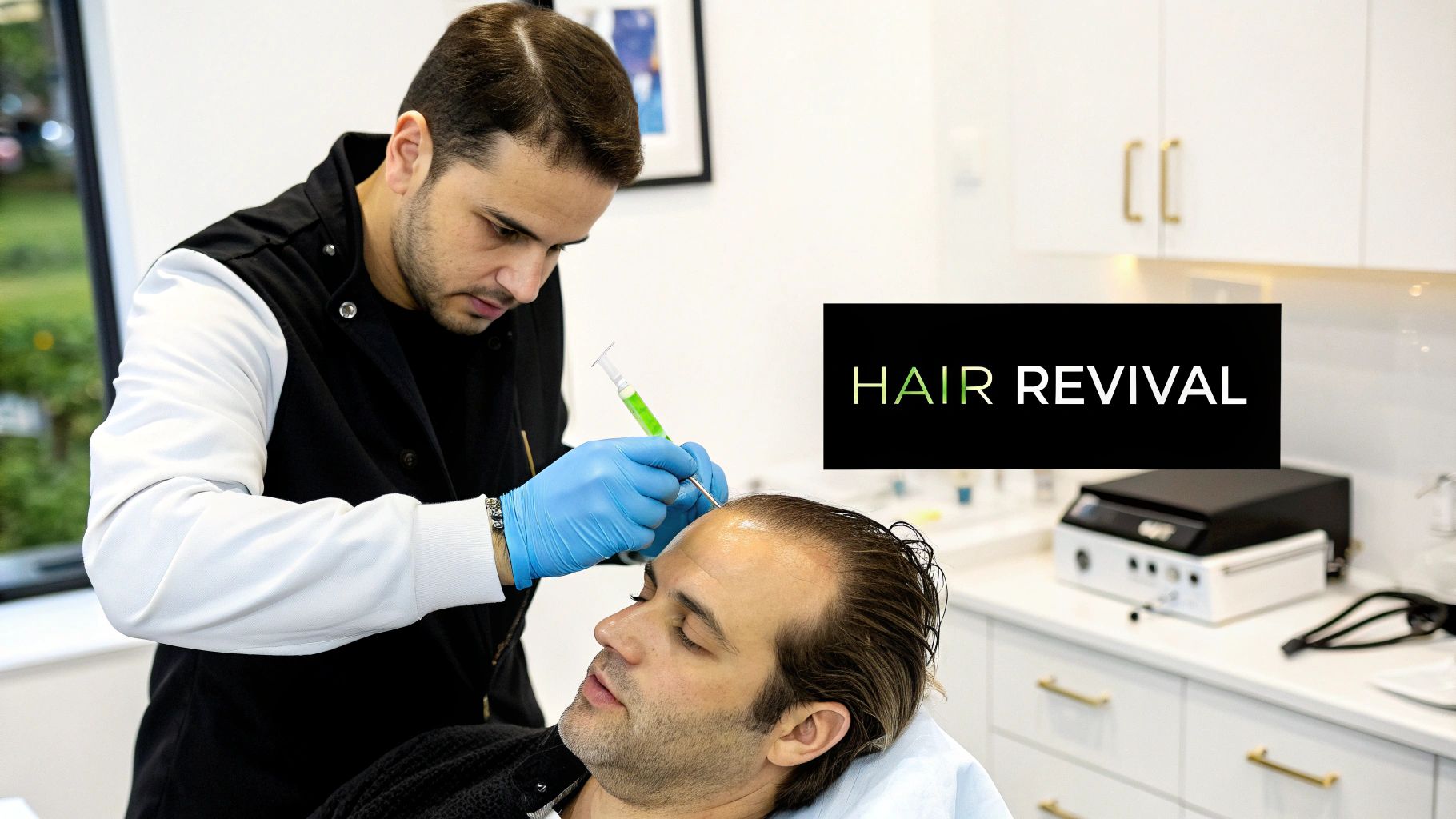
PRP therapy is particularly effective for men experiencing androgenetic alopecia, also known as male pattern baldness, and those in the early stages of hair loss. It's important to understand that PRP is most beneficial for revitalizing existing, weakened follicles. It's not a viable solution for areas of complete baldness where hair follicles are no longer active. One of the significant advantages of PRP is that it utilizes the patient's own blood, minimizing the risk of allergic reactions. This makes it a safe and natural approach to hair restoration. For men concerned about lengthy recovery periods, PRP offers minimal downtime, allowing patients to return to their normal activities the same day. Furthermore, PRP can complement other hair loss treatments such as minoxidil or finasteride, potentially enhancing their effectiveness.
PRP's inclusion in this list is warranted due to its growing popularity and proven efficacy. Clinical studies, such as one published in the Journal of Cutaneous and Aesthetic Surgery, have shown a 30-40% improvement in hair count after three months of treatment. Success stories are also readily available, with before/after photos from institutions like the Beverly Hills Hair Group and Bernstein Medical Center showcasing significant improvements in hair density, particularly in men with male pattern baldness. These visual examples clearly demonstrate the potential of PRP therapy. For those interested in exploring the broader applications of regenerative medicine and how it leverages the body's natural healing processes, resources like those available at Austin Cell Therapy provide valuable insights. You can learn more about this exciting field by exploring information on cell-based therapy.
While PRP offers many benefits, it's crucial to be aware of its limitations. Results can vary significantly between individuals, and multiple sessions are necessary to achieve noticeable improvement. The cost can be a barrier for some, as it's a relatively expensive procedure with limited insurance coverage. Temporary side effects like scalp tenderness and swelling are also possible. To optimize your PRP treatment experience, consider these tips: avoid blood thinners 3-7 days before treatment, stay well-hydrated for easier blood draw, consider combining PRP with microneedling for enhanced results, and document your progress with consistent "before" photos. Maintaining a healthy diet rich in proteins and vitamins can also support hair growth. Pioneers like Dr. Jeffrey Rapaport and institutions like the Schweiger Dermatology Group have significantly popularized PRP therapy, contributing to its widespread adoption and recognition as a viable hair restoration treatment.
2. Male Pattern Baldness PRP Success Stories
Male pattern baldness (androgenetic alopecia) is a common condition affecting a significant portion of the male population. Characterized by a receding hairline and thinning at the crown, it's primarily driven by genetic predisposition and the hormone dihydrotestosterone (DHT). Platelet-rich plasma (PRP) therapy has emerged as a promising treatment option, offering a less invasive alternative to hair transplants or systems. PRP involves drawing a small amount of the patient's blood, processing it to concentrate platelets, and then injecting this platelet-rich plasma into the scalp. Platelets contain growth factors that stimulate hair follicle activity, potentially reversing miniaturization and promoting new growth. This approach is particularly effective in the early to moderate stages of male pattern baldness (typically Norwood Scale 2-4), where hair follicles are still present but weakened. It focuses on revitalizing these dormant follicles, leading to thicker, denser hair in the affected areas, primarily the receding hairline and crown.

This method deserves its place on the list due to its documented success in treating a condition that affects millions of men. It offers a non-surgical, relatively low-risk way to combat hair loss and restore confidence. The benefits extend beyond simply adding more hairs; PRP can also increase the thickness of existing hairs by 30-40% in responsive patients. This addresses not just the quantity but also the quality of hair, creating a fuller, healthier appearance. Furthermore, PRP targets multiple factors contributing to hair loss, including poor circulation, inadequate nutrition delivery to the follicles, and inflammation of the scalp. Combining PRP with DHT-blocking treatments like finasteride often enhances results by tackling the hormonal aspect of androgenetic alopecia.
Examples of Success:
- The International Society of Hair Restoration Surgery has documented cases demonstrating a 20-30% increase in hair count among male pattern baldness patients treated with PRP.
- A Harvard Medical School study showed that 60% of male participants experienced visible improvement in temporal recession after undergoing PRP therapy.
- Dr. Alan Bauman, a renowned hair restoration specialist, has published compelling before-and-after photos documenting significant improvements in crown density following PRP treatments.
Actionable Tips for Optimal Results:
- Early Intervention: Starting PRP treatment at the first signs of thinning maximizes the chances of success.
- Combination Therapy: Consider combining PRP with low-level laser therapy (LLLT) and/or oral finasteride for synergistic effects.
- Photographic Documentation: Use magnified scalp photography to track even subtle improvements over time.
- Post-Treatment Care: Employ gentle, sulfate-free shampoos to maintain scalp health and maximize the longevity of results.
Pros and Cons of PRP for Male Pattern Baldness:
Pros:
- Slows the progression of male pattern baldness, especially when implemented early.
- Restores confidence without the stigma associated with hair systems or the invasiveness of transplants.
- Less invasive than hair transplantation surgery.
- Can thicken existing hair significantly.
- Addresses multiple contributing factors to hair loss.
Cons:
- Less effective for advanced baldness (Norwood 5-7).
- Genetic factors can influence individual responsiveness.
- Results may plateau, requiring maintenance treatments.
- Not a permanent solution without ongoing sessions.
- Requires a time commitment for multiple treatment sessions.
PRP therapy offers a compelling option for men experiencing the early to moderate stages of male pattern baldness. While individual results vary, the potential for significant hair regrowth and thickening, combined with its minimally invasive nature, makes it a valuable tool in the fight against hair loss. By understanding its benefits, limitations, and best practices, men can make informed decisions about incorporating PRP into their hair restoration journey.
3. Female Pattern Hair Loss PRP Transformations
Female pattern hair loss (FPHL), characterized by diffuse thinning rather than distinct bald patches, can be effectively addressed with Platelet-Rich Plasma (PRP) therapy. This innovative treatment leverages the growth factors present in your own blood to stimulate dormant hair follicles and prolong the hair's growth phase. This makes PRP particularly well-suited for women, who often experience widespread thinning, especially at the crown and along the part lines. It addresses the specific needs of female hair loss by focusing on increasing overall hair density as opposed to hairline restoration, which is more common in male pattern baldness.

PRP therapy deserves its place on this list due to its unique benefits for women. It effectively addresses hormonal and even postpartum hair loss, often showing quicker visible results in women than in men. It is particularly effective for Ludwig Scale I-II pattern loss, the most common stages of FPHL. The procedure involves drawing a small amount of your blood, processing it to concentrate the platelets, and then injecting this platelet-rich plasma into the scalp at the thinning areas. The concentrated growth factors then stimulate the hair follicles, promoting thicker, healthier hair growth.
Features and Benefits:
- Addresses hormonal and postpartum hair loss patterns.
- Focuses on overall density rather than hairline restoration.
- Often shows quicker visible results in women.
- Particularly effective for Ludwig Scale I-II pattern loss.
- Can be safely combined with other female-appropriate hair loss medications like topical minoxidil.
- Improves hair texture and manageability.
- Effective for postpartum telogen effluvium recovery.
- Can be performed without shaving or cutting hair.
Pros:
- No hormonal side effects, unlike some medical treatments.
- Safe during breastfeeding (though not recommended during pregnancy).
Cons:
- Results may diminish during hormonal fluctuations (menopause).
- May require more maintenance sessions than male patients.
- Thyroid-related hair loss may not respond as well.
- Can be costly over time with needed maintenance.
- Not covered by most insurance plans.
Examples of Success:
- Studies from reputable institutions like the Cleveland Clinic have reported high satisfaction rates among women undergoing PRP for hair loss.
- Before/after photos from clinics specializing in hair loss, such as the Philip Kingsley Trichological Clinic, visually demonstrate the improvements in part line density.
- Case studies published in the International Society of Hair Restoration Surgery (ISHRS) Journal have shown significant increases in hair density even in postmenopausal women.
Actionable Tips for Best Results:
- Timing: Schedule treatments away from your menstrual cycle when your scalp may be more sensitive.
- Supplements: Combine PRP with iron supplementation if you are deficient.
- Styling Products: Use volumizing products between sessions to enhance visible results.
- Combination Therapy: Consider topical minoxidil between treatments for synergistic effects.
- Hair Care: Reduce heat styling to protect newly strengthened hair.
While PRP is a promising treatment for women experiencing hair loss, it is important to consult with a qualified medical professional to determine if it is the right option for you and to discuss realistic expectations. This information is particularly relevant for men concerned about a partner or family member experiencing hair loss, enabling them to offer informed support and advice. The ability to combine PRP with other treatments, its targeted approach to diffuse thinning, and the minimal downtime make it a compelling consideration for women seeking to restore their hair's fullness and vitality.
4. PRP Combined with Microneedling Enhanced Results
For men seeking a more potent hair restoration solution, combining Platelet-Rich Plasma (PRP) therapy with microneedling offers a compelling approach. This dual treatment leverages the regenerative power of PRP and amplifies its effects through the controlled micro-injuries created by microneedling. This synergistic combination has shown significant promise in accelerating hair regrowth and improving overall hair quality.
How It Works:
Microneedling utilizes a device containing fine needles to create tiny punctures in the scalp. These micro-injuries stimulate the body's natural wound healing response, triggering the release of growth factors and promoting collagen production. Simultaneously applying PRP during or immediately after microneedling allows the growth factor-rich plasma to penetrate deeper into the scalp through these microchannels. This enhanced penetration maximizes PRP's effectiveness in stimulating dormant hair follicles and promoting new hair growth. The microneedling also helps break down any scalp scarring that may be inhibiting hair growth. Needle depths typically range from 0.5mm to 1.5mm, optimized for effective PRP delivery. Many practitioners utilize automated microneedling devices for consistency and precision. Some protocols also incorporate additional growth factors or peptides into the PRP solution for further enhancement.
Why Choose Combined Therapy?
This approach deserves its place on the list due to its superior results compared to PRP alone. Studies have shown up to a 50% improvement in hair growth with combination therapy. The dual stimulation – mechanical from the microneedling and biochemical from the PRP – creates a powerful environment for hair follicle regeneration. This often translates to fewer required sessions and faster, more noticeable results. Besides hair growth, this treatment also improves overall scalp health, addressing issues like dryness or inflammation.
Features and Benefits:
- Enhanced PRP Delivery: Microneedling creates channels for deeper PRP penetration.
- Dual Stimulation: Combines mechanical and biochemical stimulation for optimal results.
- Reduced Treatment Sessions: Potentially requires fewer sessions compared to PRP alone.
- Improved Scalp Health: Promotes a healthier scalp environment for optimal hair growth.
- Scar Reduction: Can break down scalp scarring that hinders hair growth.
Pros:
- Significantly better results compared to PRP alone (up to 50% improvement in some studies).
- Double stimulation effect: mechanical and biochemical.
- May reduce the total number of sessions needed.
- Improves overall scalp health alongside hair growth.
- Can break down scalp scarring that may inhibit hair growth.
Cons:
- Increased discomfort during the treatment.
- Slightly longer recovery period (24-48 hours of redness).
- Higher cost per session than standard PRP.
- Increased risk of infection if not performed properly.
- Not suitable for patients with certain skin conditions or blood disorders.
Examples of Success:
- The Miami Hair Institute documented 40% better results in combination therapy versus PRP alone.
- A Journal of Cosmetic Dermatology study showed twice the hair diameter increase with combined treatment.
- Clear visual improvement has been documented by Sadick Dermatology when comparing single versus dual treatment approaches.
Actionable Tips:
- Use cooling techniques before microneedling to minimize discomfort.
- Apply antibiotic ointment post-treatment if recommended by your provider.
- Avoid washing your hair for 24 hours after the treatment.
- Skip workout sessions for 48 hours to prevent excess sweating and potential irritation.
- Use gentle pressure when washing your scalp for several days following treatment.
Popularized By:
Pioneering combination protocols from experts like Dr. Amiya Prasad, endorsements from the European Dermatology Forum, and social media documentation by celebrity dermatologists like Dr. Jason Emer have contributed to the popularity of this combined approach.
If you're a man experiencing hair loss and seeking a more effective treatment option, the combination of PRP and microneedling could be a game-changer. Consult with a qualified dermatologist or hair restoration specialist to determine if this approach is suitable for your individual needs and condition.
5. Before and After: Long-Term PRP Hair Restoration Results
This section focuses on the long-term effects of PRP (Platelet-Rich Plasma) hair restoration therapy and why it's crucial for sustained success. While initial results are encouraging, the true power of PRP lies in its cumulative benefits over time. This approach emphasizes the importance of commitment to the entire treatment protocol, including essential maintenance sessions, for achieving optimal and lasting results.
PRP therapy works by injecting concentrated platelets from your own blood into the scalp. These platelets are rich in growth factors that stimulate hair follicle activity, promoting hair growth and improving hair quality. The effects are gradual and build upon each other with repeated treatments. While the initial sessions kickstart the process, ongoing maintenance treatments are vital for reinforcing these gains and preventing regression.
Why Long-Term Observation Matters:
Long-term studies reveal a progressive improvement pattern with PRP therapy. Documented results at 3, 6, 12, and 24-month intervals demonstrate the cumulative benefits. The most significant changes in hair density are typically seen after 6+ months, with continued improvements over 1-2 years of consistent therapy. Even hair quality improvements, such as increased shine and improved texture, are often observed before noticeable increases in hair count.
Features and Benefits:
- Progressive Improvement: PRP delivers gradual, natural-looking results rather than a sudden, unnatural change.
- Sustained Results: Maintenance sessions every 6-12 months help maintain and extend the results achieved in the initial treatment phase.
- Documented Long-Term Success: Studies and patient tracking data showcase continued gains beyond the initial treatment series, demonstrating the effectiveness of long-term maintenance.
- Improved Hair Quality: Besides increased hair count, PRP also improves hair thickness, growth rate, shine, and overall texture.
Pros:
- Sustained results with a proper maintenance schedule
- Progressive, natural-looking improvement
- Documented long-term success with continued gains
- Increased patient satisfaction as results accumulate
Cons:
- Requires long-term commitment and follow-up treatments
- Results may plateau after 1-2 years
- Ongoing maintenance costs
- Potential regression if maintenance appointments are missed
- Diminishing returns after a certain point in some patients
Examples of Success:
- Massachusetts General Hospital's 2-year follow-up study showed maintained improvements with quarterly maintenance sessions.
- Dr. Jeffrey Rapaport's published 5-year patient tracking data demonstrated consistent results with ongoing maintenance.
- Before/after documentation from the Harley Street Hair Clinic reveals progressive improvements over 18 months.
Actionable Tips for Men:
- Consistent Photo Documentation: Take photos at each stage using identical lighting and angles to track your progress.
- Regular Treatment Schedule: Maintain a consistent treatment schedule for optimal results.
- Prioritize Maintenance: Don't skip maintenance sessions even after seeing initial improvements.
- Gentle Hair Care: Use gentle hair products to protect newly strengthened hair.
- Annual Reassessment: Consider an annual reassessment of your treatment protocol as your hair changes.
When and Why to Consider Long-Term PRP:
This approach is ideal for men committed to a long-term solution for hair loss and willing to invest the time and resources required for ongoing maintenance. It's particularly beneficial for those experiencing diffuse thinning or early stages of hair loss who aim to proactively maintain and improve their existing hair. While PRP can deliver impressive results, it’s crucial to understand that it's not a quick fix. The long-term approach, with its emphasis on maintenance, is the key to maximizing the benefits and enjoying sustained, natural-looking results.
Popularized By:
- The American Academy of Dermatology's clinical guidelines on PRP maintenance
- Dr. Alan Bauman's long-term patient tracking methodology
- Medical journals publishing 2+ year follow-up studies
This item deserves its place on the list because it highlights the crucial aspect of long-term maintenance and its impact on the overall success of PRP hair restoration. It sets realistic expectations and empowers men with the knowledge and tools to achieve optimal and lasting results.
6. Celebrity PRP Hair Restoration Journeys
The increasing visibility of celebrities undergoing PRP hair restoration has significantly impacted public perception of this treatment. These high-profile endorsements provide a unique window into the PRP process, showcasing before-and-after results and often documenting the entire journey from initial consultation to post-treatment progress. This transparency has helped normalize discussions about hair loss and encouraged more men to explore non-surgical restoration options.
What it is and how it works: Celebrities, just like everyday individuals, experience hair thinning and loss. Many have turned to PRP (Platelet-Rich Plasma) therapy as a solution. This procedure involves drawing a small amount of the patient's blood, processing it to isolate the platelet-rich plasma, and then injecting this concentrated solution into the scalp at the areas experiencing hair loss. The growth factors present in the PRP stimulate dormant hair follicles, encouraging hair regrowth and thickening existing hair.
Examples of successful implementation (and caveats):
- Kris Jenner: Documented her PRP journey on "Keeping Up with the Kardashians," providing a relatively transparent look at the procedure. However, it's crucial to remember that her access to top-tier specialists and likely supplementary treatments contributes significantly to her results.
- Tiger Woods: The professional golfer's PRP treatments for thinning hair further normalized the procedure for men, demonstrating that hair loss is a common concern even among high-achieving athletes. Again, his resources likely exceed those of the average individual.
- Rob Lowe: The actor's candid before-and-after photos have showcased noticeable improvements in hair density. While encouraging, it's important to acknowledge the potential influence of professional styling and photography on the perceived results.
Actionable tips for men considering PRP inspired by celebrity journeys:
- Research the specific protocol: Don't just focus on the fact that a celebrity had PRP. Investigate the specific techniques, growth factor concentrations, and accompanying therapies used in their treatment. This information will help you have a more informed discussion with your own hair restoration specialist.
- Consider the celebrity's age and hair loss pattern: Comparing your situation to someone with a different age and hair loss pattern can lead to unrealistic expectations. Look for celebrities with similar characteristics for a more relevant comparison.
- Account for lighting and styling: Celebrity photos are often professionally lit and styled, which can significantly enhance the appearance of hair density. Keep this in mind when evaluating before-and-after images.
- Acknowledge the role of complementary therapies: Celebrities often combine PRP with other treatments like minoxidil, finasteride, or specialized hair care products. These additional therapies contribute to the overall results, so focusing solely on PRP may not replicate the same outcome.
When and why to use this approach (PRP): PRP is suitable for men experiencing early stages of hair loss or those seeking to thicken existing hair. It's a non-surgical option with minimal downtime, making it appealing for those hesitant about more invasive procedures.
Pros:
- Increased public awareness of non-surgical hair restoration
- Transparent (to a degree) documentation of results timelines
- Reduced stigma around hair loss treatments
Cons:
- Potential for unrealistic expectations due to celebrity access to premium protocols and supplementary treatments
- Difficulty replicating celebrity results without access to the same resources
- Potential undisclosed sponsorships influencing testimonials
Why this item deserves its place on the list: Celebrity PRP journeys provide valuable insights into the potential of this treatment. While it's crucial to maintain realistic expectations and understand the nuances of celebrity endorsements, these examples offer encouragement and demonstrate the increasing acceptance of hair restoration therapies. By understanding the factors contributing to celebrity success with PRP, men can make informed decisions about their own hair restoration journeys.
7. PRP vs. Traditional Hair Loss Treatments: Comparative Results
Understanding the effectiveness of Platelet-Rich Plasma (PRP) therapy for hair loss requires comparing it to established treatments like minoxidil (topical solution), finasteride (oral medication), and hair transplantation. This comparison helps men make informed decisions about their hair restoration journey.
What is it and how does it work?
This section focuses on comparative studies that analyze the efficacy of PRP against traditional hair loss treatments. These studies employ various methodologies, including:
- Side-by-side comparison photos: Visual documentation showcasing the before and after results of different treatments.
- Duration-matched studies: Comparing results over the same timeframe for different modalities.
- Controlled split-scalp studies: Applying different treatments to different areas of the same scalp to directly compare their effectiveness.
- Histological samples: Examining hair follicle changes at a microscopic level after different treatments.
- Patient satisfaction surveys: Gathering subjective data on treatment experiences.
These studies aim to identify the strengths and weaknesses of each approach, highlighting instances where PRP excels and where traditional methods might be more appropriate. The goal is to move beyond anecdotal evidence and provide men with data-backed insights.
Examples of Successful Implementation:
- A study published in the Journal of Dermatological Treatment showed PRP outperforming minoxidil in improving hair density at the vertex (crown) of the scalp.
- Research from NYU Langone Medical Center demonstrated the synergistic benefits of combining PRP with finasteride, achieving superior results compared to using either treatment alone.
- A split-scalp study conducted at the Cleveland Clinic highlighted regional response differences to various treatments, indicating that certain areas of the scalp may respond better to one treatment over another.
Actionable Tips for Readers:
- Consider combination therapy: In many cases, combining PRP with traditional treatments yields the best results. Discuss this option with your doctor.
- Evaluate your hair loss pattern: Different treatments are more effective for different types of hair loss. Compare results relevant to your specific pattern.
- Track multiple metrics: Don't just focus on overall appearance. Track hair density, diameter, and growth rate for a comprehensive assessment.
- Discuss comparative photos: Review before and after photos with your doctor to understand potential outcomes.
- Start with less invasive options: Consider a sequential approach, beginning with less invasive treatments like topical minoxidil or PRP before opting for surgery.
When and Why to Use This Approach:
This comparative approach is crucial for men experiencing hair loss because it allows them to make evidence-based decisions. By understanding the relative strengths and weaknesses of each treatment, men can choose the approach most likely to achieve their desired results. This is especially important considering the financial investment and potential side effects associated with various hair loss treatments.
Pros:
- Facilitates evidence-based decision-making.
- Demonstrates the potential benefits of combination therapy.
- Provides realistic timelines for different treatments.
- Helps identify the best candidates for each approach.
- Offers a cost-benefit analysis of different options.
Cons:
- Individual responses to treatment can vary significantly.
- Controlling all variables in comparative studies is challenging.
- Long-term comparative data (beyond 2-3 years) is often limited.
- Variations in study design can make direct comparisons difficult.
- Potential for bias in industry-funded research.
Popularized By:
- American Hair Loss Association's treatment comparison guidelines
- Dr. Maria Hordinsky's pioneering comparative research
- International Society of Hair Restoration Surgery consensus publications
This comparative analysis deserves its place on this list because it empowers men with the knowledge necessary to navigate the complex landscape of hair loss treatments. It emphasizes the importance of personalized treatment plans based on individual needs and scientific evidence, ultimately increasing the likelihood of achieving satisfying and sustainable results.
7-Point PRP Hair Loss Before & After Comparison
| Title | Complexity (🔄) | Resources & Use Cases (⚡) | Expected Outcomes (📊) | Key Advantages & Tips (⭐/💡) |
|---|---|---|---|---|
| PRP Hair Treatment at Dermatology Clinics | Moderate – non‐surgical but requires 3-4 initial sessions with periodic maintenance | In-clinic PRP processing; best for androgenetic alopecia & early hair loss | Gradual improvement visible in 3-6 months (≈30-40% improvement) | Natural-looking results, minimal downtime; Tip: Hydrate & avoid blood thinners pre-treatment |
| Male Pattern Baldness PRP Success Stories | Moderate – effective in early to moderate male pattern loss (Norwood Scale 2-4) | Specialized clinics; often paired with DHT blockers for receding hairlines & crown thinning | Approximately 70% of patients see moderate-to-significant density improvement | Non-invasive alternative to transplants, boosts confidence; Tip: Combine with low-level laser therapy for synergy |
| Female Pattern Hair Loss PRP Transformations | Moderate – tailored protocols addressing hormonal/postpartum hair loss | Clinics with women-focused protocols; ideal for Ludwig Scale I-II cases | Noticeable density and texture improvements, with faster visible results than in male patients | Safe without hormonal side effects; Tip: Schedule treatments away from menstrual cycles and consider supplementation if needed |
| PRP Combined with Microneedling Enhanced Results | Higher – dual-technique approach integrating microneedling & PRP in one session | Requires microneedling device & PRP preparation; ideal for patients needing accelerated results | Up to 50% better outcomes compared to PRP alone with deeper penetration | Dual stimulation (mechanical + biochemical) for improved scalp health; Tip: Use cooling techniques before treatment to reduce discomfort |
| Before and After: Long-Term PRP Hair Restoration Results | Long-term commitment – extended treatment series with consistent follow-ups | Effective for patients prepared for ongoing maintenance and regular clinical assessments | Progressive, cumulative improvements over 1-2 years with sustained density gains | Natural, gradual enhancements with high patient satisfaction; Tip: Maintain consistent photo documentation for tracking |
| Celebrity PRP Hair Restoration Journeys | Premium – customized, high-end protocols often with adjunct therapies | High-end clinics offering exclusive treatment options; ideal for high-profile cases | Clearly documented, visible improvements over multiple treatment stages | Raises public awareness & reduces stigma; Tip: Research specific protocols as celebrity treatments may include additional therapies |
| PRP vs. Traditional Hair Loss Treatments: Comparative Results | Comprehensive – involves evaluating multiple modalities and treatment timelines | Requires comparative clinical studies and split-scalp assessments; ideal for informed choice-making | PRP often shows more natural results with faster density improvements than minoxidil & similar treatments | Evidence-driven insights; supports combination therapy for optimal results; Tip: Assess synergistic effects when combining treatments |
Ready to Explore PRP?
This article explored the transformative potential of PRP therapy for hair loss, showcasing its effectiveness through various before-and-after examples, including successful treatments for both male and female pattern baldness, the enhanced results achieved when combined with microneedling, and even long-term restoration outcomes. We've also examined celebrity experiences and compared PRP to traditional hair loss treatments, highlighting its minimally invasive nature and ability to stimulate natural hair growth. Understanding these different facets of PRP therapy empowers you to make informed decisions about your hair restoration journey. Mastering this knowledge can be the key to reclaiming not only your hair but also the confidence that comes with a fuller, healthier head of hair.
Taking that first step towards hair restoration can feel daunting, but remember, you don't have to navigate this journey alone. A qualified medical professional can assess your individual hair loss pattern and overall health to determine if PRP is the right solution for you. They can also tailor a treatment plan specifically to your needs.
Ready to take the next step and delve deeper into the world of PRP hair restoration? Visit PRP For HairLoss for comprehensive information, resources, and guidance on PRP therapy, empowering you to make informed decisions about your hair restoration journey. This website offers a wealth of knowledge about the "prp hair loss before and after" process, connecting you with valuable insights to aid your research and decision-making.

 PRP For Hairloss
Leave a comment