When Does Baldness Typically Begin? Age Patterns Revealed

Many assume baldness is an issue only older men face. However, this isn't entirely accurate. Hair loss can begin much earlier in life, affecting a wider age range than commonly believed. So, when does baldness actually start?
Early Signs and Misconceptions
It's essential to differentiate between typical hair shedding and male pattern baldness (MPB). Losing 50-100 hairs daily is a normal part of the hair growth cycle and nothing to worry about. MPB, however, involves the gradual shrinking of hair follicles, eventually leading to noticeable thinning and hair loss.
Surprisingly, baldness can start quite young. Around 15% of teenage boys experience early-onset male pattern baldness. This is often connected to the increase in testosterone during puberty, which converts to dihydrotestosterone (DHT), a hormone known to shrink hair follicles. Explore this topic further. While genetics play a significant role, lifestyle factors can also contribute. This underscores the fact that baldness isn’t exclusively a concern for older men; it can begin in the teens and early twenties.
Typical Age of Onset
The age at which baldness begins varies considerably between individuals. Some men might notice thinning in their early 20s, with more significant hair loss by their 30s or 40s. Others might retain a full head of hair well into their 50s or even later. This variation is largely due to individual genetic predispositions.
Hair Loss Progression Over Time
Baldness often follows a predictable progression. It frequently begins with a receding hairline at the temples, followed by thinning at the crown, and ultimately, these areas merge. The Norwood Scale, a common classification system, categorizes male pattern baldness into seven stages, providing a framework for understanding its typical progression.
Understanding these age-related patterns and the distinctions between normal shedding and MPB is vital for managing hair loss effectively. Early recognition allows for prompt intervention, which can significantly influence long-term results. Importantly, experiencing hair loss at a younger age doesn't necessarily indicate a faster rate of progression. Every individual's experience is unique, shaped by a combination of genetics, hormones, and lifestyle factors.
The Genetic Blueprint: How DNA Determines Your Hair Timeline
Your genes play a significant role in determining when you might start losing your hair. This inherited predisposition explains why some people experience hair loss as early as their 20s, while others retain a full head of hair well into their 60s. Understanding this genetic component is key for anyone concerned about the age at which baldness might begin.
Debunking the Maternal Grandfather Myth
Many people believe that baldness is inherited solely from the maternal grandfather. This is a misconception. The reality is far more complex and involves polygenic inheritance. Baldness isn't controlled by a single gene, but rather the interaction of multiple genes inherited from both parents. Therefore, your family history on both sides can provide insights into your potential hair loss timeline.
The Role of Specific Genes
Several genes impact the sensitivity of hair follicles to hormones, especially dihydrotestosterone (DHT). Variations in these genes determine how your follicles react to DHT's miniaturizing effects. Some gene variants increase DHT sensitivity, potentially leading to earlier and more aggressive hair loss. Other variants offer protection and may delay the onset of baldness.
To better understand these genetic factors, let's take a look at the table below:
Genetic Risk Factors for Early Baldness
This table outlines the primary genetic factors that influence the age of baldness onset across different populations.
| Genetic Factor | Impact on Baldness Age | Prevalence |
|---|---|---|
| AR Gene variations (Androgen Receptor) | Increased sensitivity to DHT, potentially leading to earlier onset | Common in various populations |
| 20p11 Region | Associated with early-onset male pattern baldness | Varies across populations |
| HLA genes | May influence susceptibility to autoimmune hair loss conditions | Varies across populations |
| Other genetic variants | Ongoing research is identifying additional genes that contribute to hair loss susceptibility | More research is needed to determine prevalence |
This table shows a simplified representation of complex genetic interactions. While these are some of the major players, it's important to remember that many other genes are involved.
Ethnicity and Baldness Patterns
Genetic variations also contribute to different baldness patterns and progression rates observed across various ethnicities. Some populations may have a higher frequency of genes associated with early-onset baldness. This can result in statistically earlier hair loss within those groups. It's crucial to remember, however, that individual genetic makeup is the primary determinant, regardless of ethnicity.
Genetic Testing and Its Reliability
New genetic testing options claim to predict your risk of baldness. These tests analyze specific gene markers linked to hair loss. While they can offer some insights, their predictive accuracy is still limited. The complexity of polygenic inheritance makes precise predictions challenging. While genetic testing might suggest a predisposition, it can't definitively pinpoint the exact age at which baldness will begin. Your family history, along with observation of your individual hair characteristics, remains a valuable predictive tool.
The Hormone Connection: Why Baldness Accelerates With Age
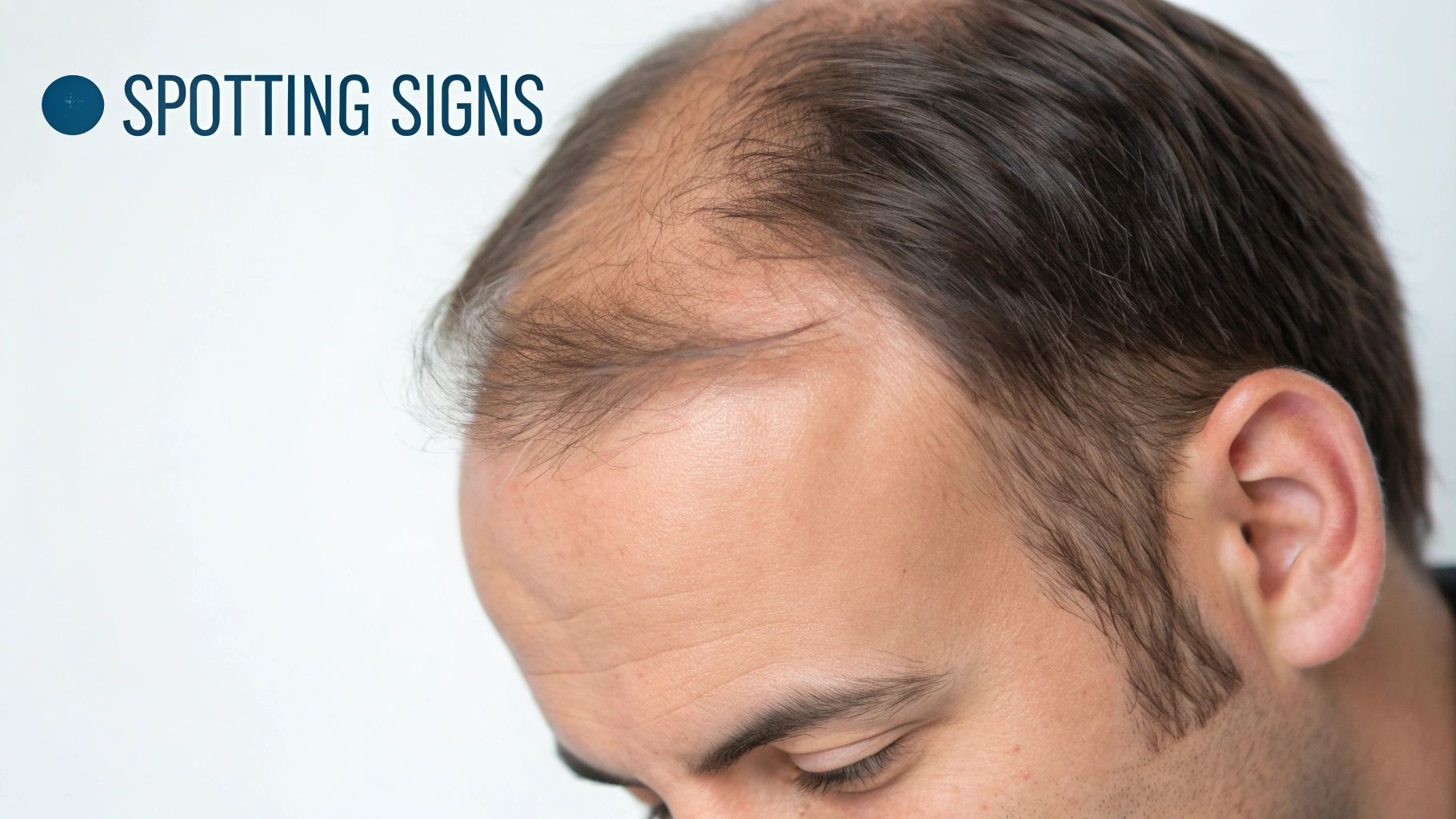
While genetics lays the groundwork, hormones play a significant role in determining when baldness begins. These chemical messengers greatly influence how hair follicles behave and contribute to accelerated hair loss as we grow older. This complex relationship between the endocrine system and hair follicles deserves a closer look.
The DHT Dilemma: A Hormonal Deep Dive
A primary hormone implicated in baldness is dihydrotestosterone (DHT), a derivative of testosterone. As previously discussed, genetics influence how sensitive your hair follicles are to DHT. This sensitivity is a crucial factor in determining when you might start losing your hair.
Higher sensitivity means that even normal DHT levels can trigger follicle miniaturization, leading to thinner hair and eventual hair loss. This process can start as early as puberty, when testosterone levels increase significantly.
Hormonal Shifts Throughout Life
Hormonal fluctuations throughout life can also significantly affect hair. Puberty isn't the only time we experience hormonal changes. For example, many women experience noticeable hair thinning during menopause due to decreased estrogen levels. This shift can disrupt the hair growth cycle, resulting in more hairs entering the resting phase.
Beyond DHT: Other Hormonal Influences
Thyroid imbalances can also trigger diffuse hair shedding, regardless of genetic predisposition. Both hypothyroidism (underactive thyroid) and hyperthyroidism (overactive thyroid) can disrupt hair growth cycles. This can lead to widespread thinning, rather than localized baldness. This highlights the importance of considering various hormonal factors, not just DHT, when investigating hair loss.
Chronic stress also plays a role. The body releases stress hormones like cortisol, which can disrupt hair growth cycles and potentially accelerate follicle miniaturization. Managing stress through lifestyle changes, such as exercise and mindfulness, can benefit hair health.
Hormonal Testing and Intervention Timing
Understanding your hormonal profile is crucial for targeted intervention. Hormonal testing can reveal imbalances that contribute to hair loss. This allows for informed decisions about treatment strategies.
Early intervention, especially when addressing hormonal imbalances, often leads to better results. It's important to consult with a healthcare professional at the first signs of concerning hair loss to determine the underlying cause and appropriate course of action. This proactive approach can significantly impact long-term hair health and potentially slow the progression of baldness.
Lifestyle Factors That Accelerate Your Baldness Timeline

While genetics and hormones are key players in determining when baldness begins, your lifestyle choices can significantly influence this timeline. Certain daily habits can unknowingly accelerate hair loss, potentially triggering baldness years earlier than your genes might suggest. Understanding and modifying these factors can make a substantial difference in preserving your hair.
The Impact of Nutrition on Hair Health
Just like other parts of your body, your hair follicles need the right nutrients to thrive. Nutritional deficiencies can directly affect follicle function, making them susceptible to miniaturization and shedding. For example, deficiencies in iron, zinc, and certain vitamins can weaken hair and increase hair fall. A balanced diet rich in these essential nutrients is crucial for healthy hair.
Workout Supplements and Hair Loss
Many people are unaware of the link between workout supplements and hair loss. Some supplements, particularly those with high levels of creatine or other androgens, can affect hormone levels in ways that accelerate baldness. They can elevate DHT levels, a hormone known to trigger follicle shrinkage in those genetically predisposed. Careful consideration and consultation with a healthcare professional are recommended before using such supplements.
Sleep, Stress, and Your Follicles
The quality of your sleep plays a surprisingly significant role in hair growth cycles. Insufficient sleep can disrupt hormone regulation, increasing stress hormones that negatively impact hair follicles. Chronic stress itself can also disrupt the normal hair growth cycle and contribute to hair loss. Prioritizing stress management and quality sleep is essential for healthy hair growth.
Styling Practices and Chemical Treatments
The cumulative effects of styling and chemical treatments can also damage your hair. Excessive heat styling, tight hairstyles, and harsh chemical treatments like bleaching and perming can weaken the hair shaft, leading to breakage and thinning. UV exposure further exacerbates this, damaging hair proteins and contributing to premature aging of the follicles. Gentler styling and minimizing chemical treatments can help preserve hair health.
Oxidative Stress and Premature Thinning
Modern living often exposes us to high levels of oxidative stress from pollution, poor diet, and other environmental factors. Oxidative stress damages cells, including hair follicles, making them vulnerable to premature aging and miniaturization. Incorporating antioxidant-rich foods into your diet and minimizing exposure to environmental pollutants can help protect your hair.
To further illustrate the connection between environmental influences and the onset of baldness, let's look at the following table:
Environmental Factors vs. Age of Baldness Onset
This comparison table shows how various environmental factors can impact the typical age when baldness begins to appear.
| Environmental Factor | Average Age Impact | Reversibility |
|---|---|---|
| Poor Nutrition (e.g., iron deficiency) | Can accelerate onset by several years | Often reversible with dietary changes |
| High Stress Levels | Can accelerate onset and worsen hair loss | Potentially reversible with stress management |
| Harsh Chemical Treatments (e.g., bleaching) | Can accelerate onset and cause damage | Damage may be irreversible; future hair loss may be preventable |
| Excessive UV Exposure | Can contribute to earlier onset | Difficult to reverse existing damage; prevention is key |
| Certain Workout Supplements | Can accelerate onset in predisposed individuals | Often reversible with discontinued use |
As you can see, various environmental factors can significantly influence the age of baldness onset. Addressing these factors can potentially delay or mitigate hair loss.
By understanding and addressing these lifestyle factors, you can proactively mitigate the risk of accelerated hair loss. If you are experiencing significant hair loss or are concerned about potential risk factors, consider consulting a specialist. PRP therapy, for example, can be a valuable tool in addressing hair loss and promoting hair regrowth.
First Signs to Final Stages: Mapping Your Baldness Journey
Understanding the progression of baldness is key to recognizing early signs and taking timely action. This section guides you through the stages of hair loss, helping you identify where you are in your own journey. This knowledge empowers you to make informed decisions about treatments and interventions.
Early Indicators: Recognizing Subtle Changes
The initial signs of baldness are often subtle. In men, it typically starts with a receding hairline at the temples, sometimes forming a widow's peak. This differs from a maturing hairline, a natural change during late adolescence or early adulthood. With male pattern baldness, the recession is more pronounced and continues over time.
Many men also experience thinning at the crown (top of the head). This appears as a gradual decrease in hair density, making the scalp more visible. In women, androgenetic alopecia usually presents as a widening part line and diffuse thinning across the scalp.
The Norwood Scale: A Roadmap for Male Pattern Baldness
Dermatologists often use the Norwood Scale to classify male pattern baldness. This scale divides hair loss into seven stages, from a full head of hair (Type I) to extensive baldness (Type VII). Each stage has specific patterns of hairline recession and crown thinning. Understanding this scale helps men assess their current stage and anticipate future progression.
Ludwig Scale: Tracking Female Pattern Hair Loss
The Ludwig Scale categorizes female pattern hair loss into three stages based on part line widening and overall thinning. Type I shows minimal thinning, Type II displays decreased volume and a wider part, and Type III indicates diffuse thinning, with the scalp visible through the hair.
Variations in Progression: Why Some People Plateau
While these scales provide a general framework, individual progression varies. Some experience rapid advancement through stages, while others plateau for years. Influencing factors include genetics, age of onset, hormonal fluctuations, and lifestyle choices. While the age baldness begins varies significantly, an early start doesn't necessarily mean faster progression. Some men with early onset experience slower loss than those who start later.
Self-Assessment and Professional Evaluation: Taking Control
Several techniques allow for self-assessment. Regular photos, taken from consistent angles and lighting, can reveal subtle changes. Comparing current hair to older photos also provides valuable insight.
However, professional evaluation is essential for accurate diagnosis and personalized treatment. A dermatologist can assess underlying causes, recommend interventions, and monitor progress. Consulting a specialist is crucial, especially if you're concerned about accelerated hair loss. PRP therapy may be effective for promoting hair regrowth and improving density, particularly when implemented based on the individual's stage and progression. For more information on PRP therapy, visit PRP for Hair Loss.
Age-Specific Treatment Strategies That Actually Work
Understanding when baldness begins is just the first step. The next, and arguably more important step, is understanding how treatment effectiveness varies depending on age, progression, and the stage of hair loss. This section explores those age-specific strategies that truly deliver.
Early Intervention: The Key to Success
Early intervention is often the most effective way to manage hair loss. This is because treatments tend to be most successful when hair follicles are still active. Addressing hair loss in its early stages, before significant miniaturization occurs, offers the best chance of preserving existing hair and potentially regrowing some of what's been lost. This proactive approach can significantly improve long-term results.
FDA-Approved Treatments and Age Groups
Several FDA-approved treatments show promising results for various age groups. Minoxidil (Rogaine), a topical solution, can be effective for both men and women experiencing hair loss, regardless of age. It stimulates hair growth and can help slow or even reverse thinning. However, results vary, and consistent use is key for maintaining any benefits.
Another FDA-approved treatment, Finasteride (Propecia), is specifically designed for men. It blocks the conversion of testosterone to DHT, the hormone primarily responsible for male pattern baldness. Finasteride is most effective when started early and is generally recommended for men under 60. It’s important to discuss potential side effects with a doctor before beginning treatment.
Combination Therapies for Synergistic Effects
Sometimes, combining different treatments can produce synergistic effects, boosting overall results. For example, using minoxidil and finasteride together can be more effective than using either treatment alone. Some individuals also combine medication with low-level laser therapy (LLLT) or platelet-rich plasma (PRP) treatments for a comprehensive approach.
Surgical Options: When They Become Relevant
Surgical hair restoration, like hair transplantation, becomes an option when other treatments have reached their limits, or when hair loss is substantial. Transplantation involves moving hair follicles from a donor area (usually the back of the head) to the recipient area experiencing hair loss. While effective, it’s a more invasive and costly procedure, typically considered later in the hair loss process.
Emerging Regenerative Treatments
Individuals exploring hair loss treatments should be aware of developing regenerative medicine approaches like cell-based therapies. These aim to revitalize inactive follicles and stimulate new hair growth. These treatments are still largely experimental but offer hope for the future of hair loss management.
Treatment Costs, Maintenance, and Expected Outcomes
Understanding the costs, maintenance needs, and realistic expectations is crucial when selecting a hair loss treatment. Costs can vary widely depending on the treatment type, duration, and individual needs. Topical minoxidil, for instance, is generally less expensive than hair transplantation. Maintenance requirements also differ; minoxidil necessitates ongoing application, while transplantation is a one-time procedure with follow-up care recommendations.
Expected outcomes depend on several factors, including age, stage of hair loss, and the chosen treatment. Early intervention often yields the best results. While complete restoration isn't always possible, many treatments can slow progression, maintain existing hair, and potentially regrow some lost hair, ultimately improving overall hair density and appearance.
Are you ready to take control of your hair loss? Explore PRP therapy and discover how it can help you achieve thicker, fuller hair. Visit PRP for Hair Loss today to find a personalized treatment plan tailored to your needs and goals. Don't let hair loss define you—take action and embrace a confident future with revitalized hair.

 PRP For Hairloss
Leave a comment