Decoding Hair Transplant Success Rates
What does "success" really mean when it comes to hair transplants? It's a combination of factors, from a natural appearance and minimal scarring to a significant boost in self-confidence. The procedure itself is intricate, involving the careful extraction of hair follicles from a donor area and their transplantation to the recipient area. Anyone considering a hair transplant needs to understand how success is measured.
This means looking at the percentage of transplanted follicles that thrive in their new location, known as the graft survival rate. It also involves assessing the hair density, or the number of hairs per square centimeter, as higher density leads to a fuller look. Finally, and perhaps most importantly, patient satisfaction plays a vital role.
So, how do we quantify a successful hair transplant? Graft survival rate is a key metric. It tells us what percentage of transplanted follicles take root and grow. Hair density, another critical factor, measures how many hairs grow per square centimeter. Denser hair growth creates a more natural-looking result. Ultimately, patient satisfaction, a subjective measure, completes the picture.
Understanding The Numbers: Graft Survival and Beyond
Hair transplant success rates have come a long way. Thanks to advancements in techniques, modern procedures boast significantly higher success rates. Today, with a skilled surgeon at a reputable clinic, graft survival rates typically fall between 90% and 95%. This improvement is largely due to modern techniques like Follicular Unit Extraction (FUE) and Follicular Unit Transplantation (FUT).
These techniques minimize scarring and create a more natural look. The surgeon's skill is paramount in achieving such high success rates, ensuring careful handling of hair follicles during both harvesting and implantation. For more information, check out resources like Learn more about hair transplant success rates. However, a high graft survival rate is just the beginning.
Factors Influencing Success Rates
Several factors contribute to a successful hair transplant. The surgeon’s experience and skill are at the top of the list. A skilled surgeon understands the art of hair follicle placement for a natural-looking hairline. Patient health and the quality of the donor hair also play significant roles.
Patients with healthy scalps and robust donor hair tend to experience better results. Factors like age, genetics, and even lifestyle choices can impact the outcome. Understanding these factors helps patients set realistic expectations and make informed decisions.
From Statistics to Satisfaction
While metrics like graft survival rates offer valuable data, true success hinges on patient satisfaction. This subjective measure encompasses the patient’s feelings about the results, including aesthetics, confidence, and overall happiness. Even with a high graft survival rate, a patient might be unhappy if the final aesthetic doesn't meet their expectations.
A truly successful outcome requires a combination of factors: technical skill, meticulous planning, open communication between patient and surgeon, and realistic expectations. This comprehensive approach considers not just the statistics, but the individual patient's needs and desired outcomes.
Critical Factors That Make or Break Your Results

Achieving a successful hair transplant involves much more than just the procedure itself. Numerous factors influence the final outcome, from the surgeon's expertise to your individual hair and scalp characteristics. Understanding these factors is crucial for setting realistic expectations and maximizing your chances of a positive result.
This means looking beyond attractive marketing and focusing on the core elements that truly contribute to successful hair restoration. Let's explore some of the most important considerations.
The Surgeon's Expertise: Beyond The Marketing Hype
A surgeon's skill and experience are paramount in hair transplantation. A highly skilled surgeon possesses a deep understanding of hair follicle placement, creating natural-looking hairlines and maximizing graft survival. This goes beyond the technical steps; it requires artistic vision and meticulous execution.
Choosing a truly qualified specialist requires careful research. Look for surgeons who are board-certified and have a proven track record of successful transplants. Review before-and-after photos and patient testimonials to get a sense of their work.
Your Individual Blueprint: Hair and Scalp Characteristics
Your hair and scalp characteristics play a significant role in the outcome of a hair transplant. Certain hair types respond better to transplantation than others. Thicker hair follicles, for example, provide better coverage and a fuller appearance.
Scalp health and elasticity are also important. A healthy scalp provides the optimal environment for graft survival and growth. The location of the recipient area also matters. Areas with good blood supply, like the front and top of the scalp, tend to yield better results.
To understand how your individual characteristics might affect your results, consult with a qualified hair transplant surgeon. They can assess your hair type, scalp health, and other factors to determine the best approach for your specific needs.
Let's explore the factors affecting success rate in more detail:
To help clarify these success factors, let’s look at the following table:
Success Rate Factors in Hair Transplantation
| Factor | Impact Level | How It Affects Results |
|---|---|---|
| Surgeon's Expertise | High | A skilled surgeon understands hair follicle placement, creating natural-looking hairlines and maximizing graft survival. |
| Hair and Scalp Characteristics | High | Thicker hair provides better coverage. Scalp health impacts graft survival. Recipient area location influences outcome. |
| Overall Health | Medium | Certain medical conditions can affect healing and compromise results. |
| Post-Operative Care | Medium | Proper aftercare promotes healing and minimizes complications. |
| Technique Used | Medium | Techniques like Sapphire FUE offer high precision and minimal scarring, potentially impacting success rates. |
This table summarizes the key factors impacting hair transplant outcomes. As you can see, various elements contribute to the overall success rate, highlighting the need for a comprehensive approach.
The success rate of hair transplants can vary significantly. While some sources report survival rates of implanted hairs as high as 60%, others suggest success rates ranging from 75% to 95%. Advancements like the Sapphire FUE method show promise with high precision and minimal scarring. You can find more detailed statistics here.
Your Health Profile: A Foundation For Healing
Your overall health and medical history are also crucial factors. Certain medical conditions can affect healing and compromise results. For example, patients with diabetes or autoimmune disorders may experience slower healing and a higher risk of complications.
Open communication with your surgeon is vital. Disclose your complete medical history so they can thoroughly assess your suitability for the procedure and manage any potential risks. This transparency allows for realistic expectations and a collaborative approach to achieving the best possible results.
FUE vs. FUT: Which Delivers Better Success Rates?

Choosing the right hair transplant technique is a big decision. The two most common methods, Follicular Unit Extraction (FUE) and Follicular Unit Transplantation (FUT), both aim to restore hair growth, but they use different approaches. This impacts not only the final look but also the overall success rate. This section explores the nuances of FUE and FUT, helping you understand which might be the best fit for you.
Graft Survival and Hair Density: Key Metrics for Success
Several key metrics define a successful hair transplant. Graft survival rate, the percentage of transplanted follicles that thrive in the new location, is crucial. Higher survival rates mean a denser, fuller appearance. Hair density, the number of hairs per graft and their distribution, also plays a vital role.
For example, a patient receiving 2,000 grafts with an average of two hairs per graft, and a 95% survival rate, can anticipate roughly 3,800 new hairs. This interplay between survival and density is essential for achieving a natural-looking result.
FUE: Harvesting Individual Follicles
FUE involves extracting individual follicles directly from the donor area, usually the back of the scalp. This leaves tiny, scattered scars that are less noticeable than the linear scar from FUT. This makes FUE popular for those who prefer shorter hairstyles.
However, FUE can be a longer process, potentially requiring multiple sessions for larger areas. It can also be slightly more expensive than FUT, partly due to the delicate nature of individual graft extraction. However, the method allows for precise donor hair selection and minimizes damage to surrounding tissues.
FUT: Transplanting Strips of Scalp
FUT, or the strip method, removes a strip of scalp from the donor area. Hair follicles are then extracted from this strip and transplanted. This method is efficient, allowing for a large number of grafts in a single session, ideal for extensive hair loss.
FUT leaves a linear scar, which can be visible with short hair. This is why it's generally recommended for those with longer hair or significant hair loss requiring numerous grafts. While FUT can be quicker and more affordable than FUE, it carries a slightly higher risk of complications like infection and wider scarring.
Comparing FUE and FUT: A Closer Look
To help you understand the key differences, let's compare FUE and FUT across several factors:
| Factor | FUE | FUT | Best For |
|---|---|---|---|
| Graft Survival Rate | 90-95% | 90-95% | Both offer comparable survival rates. |
| Scarring | Small, scattered scars | Linear scar | Patients with short hair (FUE), long hair (FUT) |
| Procedure Time | Longer | Shorter | Extensive hair loss (FUT) |
| Cost | Higher | Lower | Budget-conscious patients (FUT) |
| Recovery Time | Faster | Slower | Patients seeking quicker recovery (FUE) |
Both techniques offer high success rates. The best choice hinges on individual factors like extent of hair loss, hair type, desired hairstyle, and budget. A consultation with a qualified hair transplant surgeon is essential to determine the most suitable technique. This personalized approach ensures the best possible outcome tailored to your specific needs.
The Truth About Long-Term Hair Transplant Success
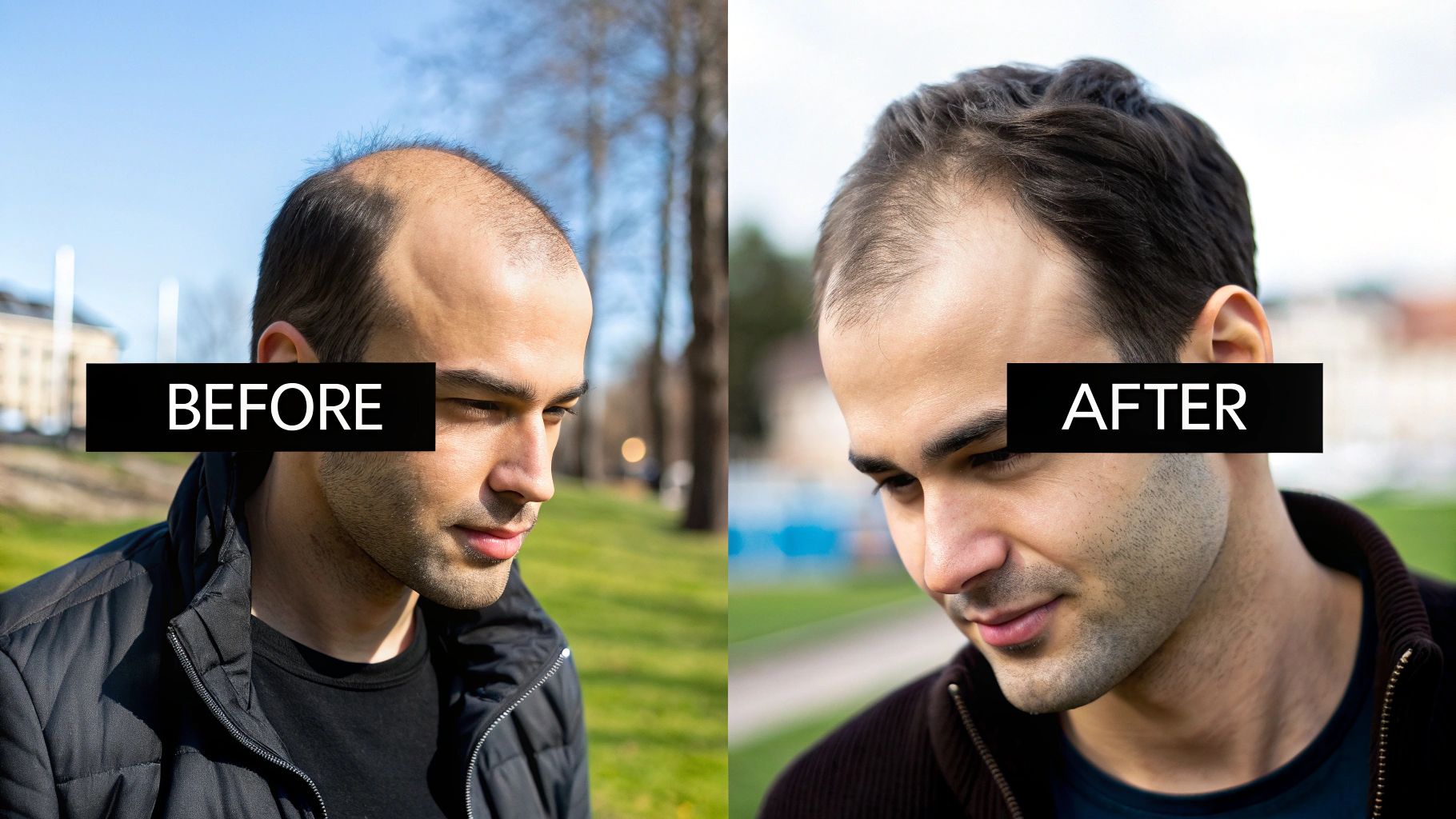
While before-and-after photos offer a glimpse of initial results, understanding the long-term trajectory of transplanted hair is crucial. Managing expectations involves understanding the phases of recovery and the factors influencing long-term success. This section explores the evolution of transplanted hair, addressing both physical changes and the psychological journey.
Navigating the Early Stages: Shedding and Regrowth
The initial months after a hair transplant can bring some surprises. Many patients experience shock loss, a temporary shedding of transplanted hair. This can be alarming, but it's a normal part of the process as follicles adjust. This phase typically occurs within the first few months. Gradual regrowth follows this shedding phase.
New hair growth often begins subtly. Fine, almost translucent hairs gradually thicken and gain pigment. This transition highlights the importance of patience during these early stages.
The Long Game: Follicle Aging and Continued Native Hair Loss
Transplanted hair follicles are generally resistant to hormonal influences that cause male pattern baldness. However, they are still subject to aging. This means they may thin over time, like natural hair. Also, native hair surrounding the transplanted area may continue to thin or recede, impacting the overall look.
This continued native hair loss can sometimes require additional procedures to maintain desired density and coverage. Considering ongoing maintenance and potential future treatments is therefore crucial.
Long-term studies offer valuable insights. One study found that 81% of patients experienced good results one year after follicular unit transplantation (FUT). This percentage decreased over time. By year four, only about 8.92% maintained the same density. This highlights the importance of ongoing care and potential further treatments. Discover more about long-term hair transplant success here. Factors like recipient site characteristics can also influence long-term survival.
Maintaining Your Investment: Strategies for Long-Term Success
Preserving transplant results requires ongoing maintenance. This includes a healthy lifestyle, appropriate hair care products, and potentially medications or therapies recommended by your surgeon.
These strategies support the health of existing hair and maximize the longevity of transplanted follicles. Regular check-ups with your surgeon help monitor progress and address any concerns.
The Psychological Journey: Managing Expectations and Embracing Change
Hair transplantation can be transformative, impacting appearance, self-esteem, and confidence. However, managing expectations is vital for long-term satisfaction. Transplants don't create "super hair." Transplanted hair behaves like regular hair and undergoes the same aging processes.
Embracing the ongoing evolution of your hair and adapting your maintenance routine is key to long-term happiness. This involves open communication with your surgeon and a proactive approach to care. Understanding the long-term perspective, acknowledging potential changes, and adopting appropriate maintenance strategies contribute to a fulfilling hair restoration journey.
Global Hair Transplant Success Rate Variations
Hair transplant success rates can vary considerably between countries. This begs the question: what causes these differences? Several factors contribute to these global variations, including the surgeon's expertise, regulatory oversight of the procedure, and access to technological advancements. Understanding these elements is essential, particularly for those considering medical tourism for hair restoration.
Surgeon Training and Expertise
Training and certification standards for hair transplant surgeons differ significantly worldwide. Some countries maintain rigorous certification and continuing education, while others have no standardized training programs. This discrepancy in training directly impacts the hair transplant success rate. Experienced, well-trained surgeons are more likely to deliver natural-looking results with minimal complications.
Countries with established medical boards dedicated to hair restoration surgery frequently report higher success rates. Their surgeons undergo extensive training and must meet specific criteria to practice. Furthermore, membership in international organizations like the International Society of Hair Restoration Surgery (ISHRS) demonstrates a commitment to high standards.
Regulatory Oversight and Clinic Standards
The level of regulatory oversight for hair transplant clinics plays a vital role in patient outcomes. Countries with strict regulations for clinic facilities, hygiene protocols, and surgical practices tend to have better results. These regulations ensure clinics adhere to essential safety standards and utilize proper equipment.
Conversely, countries with lax regulations, or a lack of enforcement, increase the risk of complications and subpar results. This risk is especially relevant in medical tourism, where lower prices may entice patients unaware of the potential dangers associated with unregulated clinics.
Technology and Innovation in Hair Transplantation
Access to advanced technology and innovative techniques significantly influences hair transplant success rates. Countries at the forefront of hair restoration research and development often see better outcomes. They utilize the latest techniques, including Follicular Unit Extraction (FUE) and Follicular Unit Transplantation (FUT), along with specialized variations such as Sapphire FUE and DHI.
The availability of advanced equipment for graft extraction, implantation, and post-operative care contributes to improved results. These cutting-edge technologies enable precise graft placement, minimal scarring, and faster healing times. This technological edge often translates to higher success rates and greater patient satisfaction.
The global popularity of hair transplants is evident in the sheer volume of procedures – approximately 703,183 in 2021. This widespread adoption highlights hair transplantation as a viable solution for hair loss. Interestingly, 87.3% of these procedures were performed on men, reflecting the prevalence of male pattern baldness. The growth of black-market clinics suggests the actual number may be even higher. You can explore this topic further here.
Evaluating Overseas Clinics: A Guide for Medical Tourists
Careful research and due diligence are paramount for those considering hair transplantation abroad. When evaluating overseas clinics, prioritize the surgeon’s qualifications, experience, and reputation. Verify their certifications and memberships in professional organizations.
Carefully review before-and-after photos, patient testimonials, and online reviews. Thoroughly understand the clinic’s adherence to safety standards and regulations. Consulting with multiple surgeons, both domestically and internationally, allows for a broader perspective and a more informed decision. Choosing a reputable clinic with skilled surgeons and high standards is crucial for a successful hair transplant, regardless of location.
Maximizing Your Hair Transplant Success Probability
A successful hair transplant depends on several factors, beginning well before the actual procedure and extending throughout the recovery phase. Understanding these elements allows you to make informed choices and maximize your chances of a positive outcome. This involves selecting a skilled surgeon and adopting a proactive approach to pre- and post-operative care.
Choosing the Right Clinic and Surgeon: Your First Step to Success
The cornerstone of a successful hair transplant is selecting a qualified and experienced surgeon practicing in a reputable clinic. The surgeon's expertise directly influences graft survival, hairline design, and the overall natural look of the transplanted hair.
Seek out board-certified surgeons specializing in hair restoration. Membership in professional organizations like the ISHRS (International Society of Hair Restoration Surgery) demonstrates a commitment to high standards. Carefully review before-and-after photos and patient testimonials, noting the details and naturalness of the results.
Be wary of overly aggressive marketing, unrealistic promises, and a lack of transparency regarding the procedure and potential risks. Asking detailed questions about the surgeon’s experience, techniques, and approach to personalized treatment is essential.
Pre-Operative Preparation: Setting the Stage for Success
After selecting a qualified surgeon, preparing for the procedure is the next crucial step. This requires open communication with your surgeon about your medical history, current medications, and any existing health concerns.
Following your surgeon’s pre-operative instructions is vital. This might include discontinuing certain medications, such as blood thinners, and refraining from smoking and alcohol for a designated period before the surgery. These preparations optimize your scalp and body for the transplant, enhancing the chances of successful graft integration.
Post-Operative Care: Nurturing Your New Hair
The period immediately after the transplant is essential for graft survival and healing. Strictly adhering to your surgeon's post-operative instructions is paramount. This includes proper wound care, medication schedules, and specific guidelines for washing and caring for the transplanted area.
You'll likely need to avoid strenuous activities, direct sunlight, and certain hair products for a specified time. Proper care minimizes infection risk, reduces swelling, and promotes optimal healing, contributing to better long-term results.
Lifestyle Adjustments and Nutritional Support: Contributing Factors
Beyond direct medical care, lifestyle and nutritional choices can influence successful hair transplant outcomes. Maintaining a healthy diet rich in vitamins and minerals supports hair growth and overall well-being.
Managing stress and adopting a healthy sleep routine also benefit healing and recovery. These lifestyle changes can improve the transplant's effectiveness and promote optimal results.
Long-Term Maintenance: Preserving Your Investment
Transplanted hair is generally permanent, but ongoing maintenance is essential for preserving its health and appearance. This might involve using specialized hair care products, following a prescribed medication regimen, and scheduling regular check-ups with your surgeon.
Some patients may benefit from medications like minoxidil or finasteride Minoxidil or Finasteride to maintain existing hair and prevent further loss. These proactive measures help sustain the transplant results and ensure long-term satisfaction. Understanding the potential need for future procedures, especially for extensive hair loss, is also part of a realistic long-term plan.
A hair transplant is a significant investment, both financially and emotionally. By prioritizing a skilled surgeon, thorough preparation, and diligent post-operative care, you can maximize your likelihood of achieving the desired outcome. Furthermore, embracing a healthy lifestyle and adhering to a comprehensive maintenance plan contributes to the longevity and overall success of your hair restoration journey.
Want to learn more about optimizing hair health? Explore the benefits of PRP therapy for hair loss at PRP For HairLoss.

 PRP For Hairloss
Leave a comment