Reclaiming Your Crown: A Guide to Male Pattern Baldness Solutions
Male pattern baldness, also known as androgenetic alopecia, has affected men for centuries. From ancient remedies like applying hippopotamus fat to the scalp to modern surgical procedures, the search for a hair loss solution has been ongoing. Understanding the history of these treatments, from folklore to science-backed therapies, is key to navigating the often-confusing world of hair restoration. What defines a treatment's effectiveness? It comes down to several factors: scientific evidence, the extent of hair regrowth, safety, and long-term sustainability.
This guide explores ten different approaches to addressing male pattern baldness, empowering you to make informed decisions. We'll cover everything from established methods to newer innovations, outlining the pros and cons of each. We'll also discuss which treatments are best suited for different stages of hair loss.
Understanding Your Options
Whether you're noticing initial signs of a receding hairline or dealing with more significant thinning, you'll gain a comprehensive understanding of the available options. We'll explore their potential benefits and what you can expect throughout the process.
Treatment Approaches Explored
This guide provides detailed information on a range of solutions, giving you the knowledge you need to address your specific hair loss concerns. We'll cover both medical and surgical interventions, along with other approaches that can support hair health.
Making an Informed Decision
By understanding the various factors that contribute to hair loss and the range of treatments available, you can make a confident choice about the best path forward. This guide will help you assess your individual needs and find a solution that aligns with your goals and expectations.
Finasteride For Treating Hair Loss
Finasteride, commonly known as Propecia, is a key medication for combating male pattern baldness. This oral prescription medication proactively addresses hair loss by targeting its hormonal root cause. Its proven effectiveness, simple usage, and long-term impact on maintaining and even regrowing hair make it a prominent treatment option.
How Finasteride Works
Finasteride inhibits the 5-alpha-reductase enzyme. This enzyme converts testosterone to dihydrotestosterone (DHT). DHT is the primary hormone responsible for shrinking hair follicles, leading to thinning and hair loss in male pattern baldness. By reducing DHT levels, finasteride slows hair loss and can even encourage regrowth.
Features and Benefits of Finasteride
- FDA-Approved: Finasteride is approved by the Food and Drug Administration (FDA) for treating male pattern baldness.
- Simple Dosage: A single 1mg tablet taken orally once a day is the recommended dosage.
- Hormonal Action: Directly targets the hormonal cause of male pattern baldness.
- Effective for Crown/Vertex Balding: Shows the greatest efficacy in treating hair loss at the crown of the head. Results for receding hairlines can be less pronounced.
Pros of Using Finasteride
- Clinically Proven: Studies show finasteride stops hair loss in roughly 85% of men.
- Regrowth Potential: Approximately 65% of users see some hair regrowth.
- Easy Regimen: The once-daily pill is simple to integrate into a routine.
- Relatively Quick Results: Improvements are usually seen within 3-6 months.
- Sustained Effectiveness: Long-term studies, like the PLESS study, demonstrate lasting effectiveness.
Cons of Using Finasteride
- Potential Sexual Side Effects: A small percentage (2-4%) of men experience sexual side effects, such as reduced libido and erectile dysfunction. These often diminish with continued use or after stopping the medication.
- Requires Continuous Use: Hair loss will return if finasteride is discontinued.
- Not Suitable for Women: Not recommended for women, especially those pregnant or potentially pregnant, due to risks to a male fetus.
- Delayed Maximum Results: It can take up to a year to see full results.
- Potential PSA Test Impact: May affect prostate-specific antigen (PSA) test results. Inform your doctor if you take finasteride and are undergoing PSA testing.
Real-World Results and Studies
- Five-year studies show 90% of men taking finasteride had no further hair loss, compared to 25% in the placebo group.
- The PLESS study, a 10-year clinical trial, confirmed the long-term safety and efficacy of finasteride.
Popularity and Availability of Finasteride
Finasteride gained popularity after its 1997 FDA approval for treating male pattern baldness, marketed as Propecia by Merck. It became a frequently prescribed medication. Generic versions have increased its affordability and accessibility.
Tips for Using Finasteride
- Early Intervention: Start treatment early in the balding process for best results.
- Consistent Use: Take the medication at the same time daily.
- Be Patient: Allow up to a year to see full benefits.
- Generic Options: Consider generic finasteride for cost savings.
- Combination Therapy: Finasteride can be used with topical minoxidil for enhanced results. Consult a dermatologist for your best treatment plan.
Minoxidil: A Tried-And-True Treatment For Hair Loss
Minoxidil, better known as Rogaine, is a topical solution applied directly to the scalp to address male pattern baldness. Its place as a leading hair loss treatment is well-earned. It was the first treatment for this condition approved by the FDA (in 1988) and remains a cornerstone of hair loss therapy. It provides a non-invasive, clinically proven solution for many men facing thinning hair or a receding hairline.
Originally intended as an oral medication for high blood pressure, minoxidil unexpectedly caused hair growth as a side effect. This fortunate discovery led to its reformulation as a topical solution and subsequent approval for treating androgenetic alopecia. Johnson & Johnson popularized the treatment under the Rogaine brand, with Kirkland Signature offering a widely available generic version.
How Minoxidil Works
Minoxidil stimulates hair follicles directly and boosts blood flow to the scalp. It extends the anagen (growth) phase of the hair cycle, enabling hair to grow longer and thicker. It also revitalizes shrunken hair follicles, a key characteristic of male pattern baldness. Importantly, minoxidil operates independently of hormonal pathways. This makes it an effective option even when hormonal imbalances aren't the primary cause of hair loss.
Features and Benefits
- Over-the-Counter Availability: No prescription is required, making it easy to obtain.
- Formulation Options: Available in liquid or foam, suiting individual preferences.
- Strength Variations: Available in 2% and 5% concentrations. The 5% concentration is generally recommended for men.
- Application: Applied directly to the scalp, typically twice a day.
- Targeted Areas: Effective for both a receding frontal hairline and crown/vertex thinning.
- Combination Therapy: Can be used with other hair loss treatments like finasteride for potentially improved results.
Pros and Cons of Using Minoxidil
Let’s look at the advantages and disadvantages of using minoxidil:
| Pros | Cons |
|---|---|
| FDA-approved and clinically proven | Requires twice-daily application |
| Minimal systemic side effects | Noticeable results may take 4–6 months |
| Versatile application | Potential for scalp irritation (itching, dryness) |
| Can be combined with other treatments | Hair loss resumes if treatment is discontinued |
| Accessible and affordable | May cause initial shedding |
Real-World Results and Case Studies
Clinical studies show that roughly 40% of men using 5% minoxidil experience moderate to dense hair regrowth within a year. Success rates are typically higher in younger men with hair loss of fewer than 10 years duration. While individual results will vary, numerous anecdotal reports and before-and-after photos available online demonstrate minoxidil's potential benefits.
Tips for Effective Use
- Dry Scalp Application: Apply minoxidil to a dry scalp to ensure proper absorption.
- Foam Preference: Foam formulations may lessen scalp irritation compared to liquid.
- Consistency is Key: Consistent, twice-daily application is essential for the best results. Skipping applications reduces effectiveness.
- Drying Time: Allow the solution to dry thoroughly before styling your hair or going to bed.
- Persistence Through Shedding: Don't stop using the product during the initial shedding phase, as this often signifies the treatment is activating hair follicles.
Minoxidil remains a valuable option for men seeking to address hair loss. While not a guaranteed solution, its accessibility, proven effectiveness, and potential for combination therapy make it a worthwhile choice.
Hair Transplant Surgery (FUT/FUE)
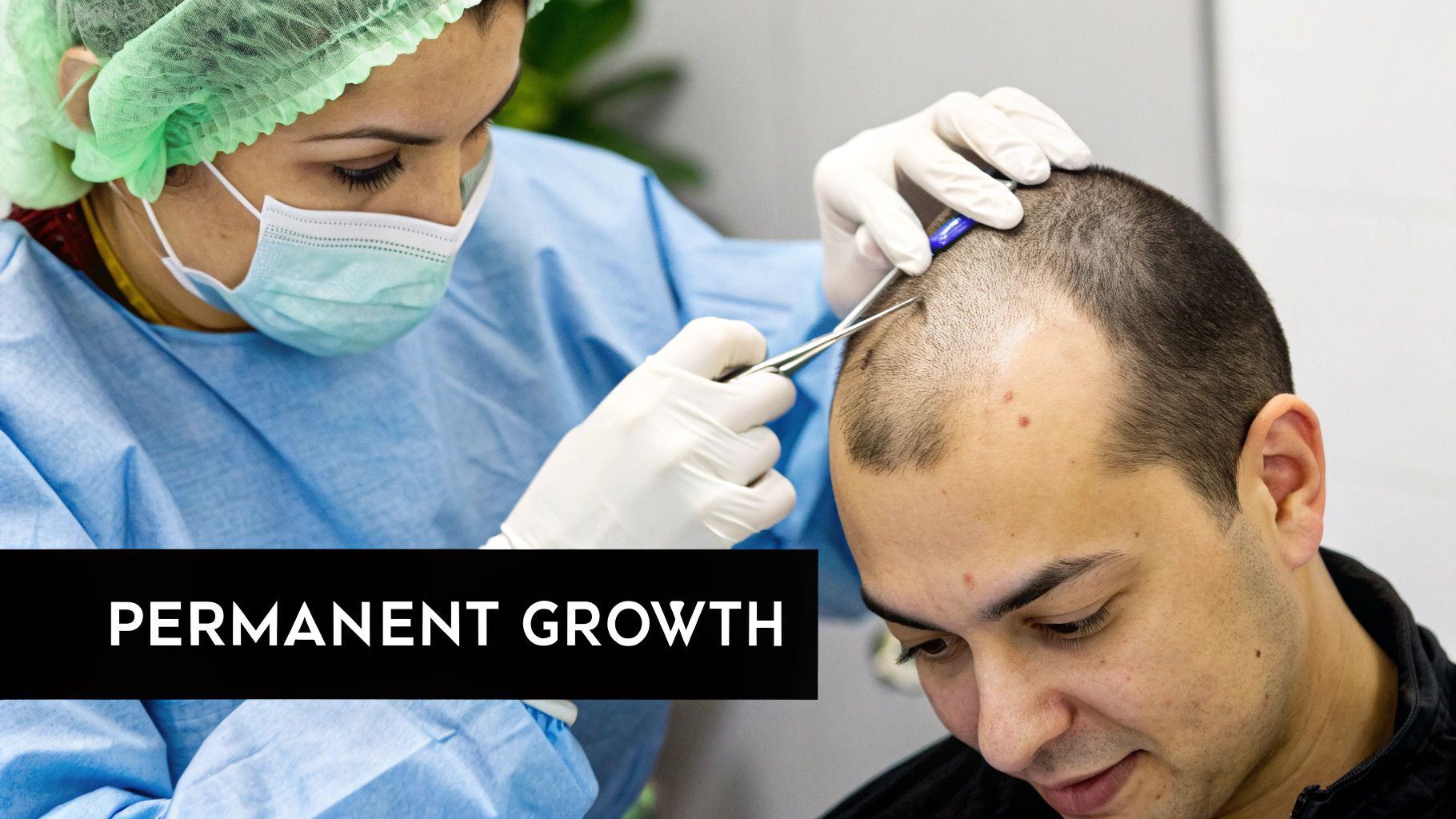
Hair transplant surgery offers a permanent solution for male pattern baldness. It works by relocating hair follicles from DHT-resistant areas (typically the back of the head) to thinning or balding areas. This makes it an attractive option for men seeking a long-term restoration of their natural hairline. The two main methods are Follicular Unit Transplantation (FUT) and Follicular Unit Extraction (FUE). Both achieve similar results, but differ in how donor hair is harvested.
How It Works
Both FUT and FUE are performed under local anesthesia. FUT, sometimes called the "strip method," involves removing a strip of scalp from the donor area. Hair follicles are then extracted from the strip and grafted onto the recipient area. FUE, in contrast, extracts individual follicular units directly from the scalp using a specialized punch tool. This leaves small, dot-like scars.
Features and Benefits
-
Permanent Results: Transplanted hair grows naturally and permanently, mirroring the characteristics of hair from the donor area. You can style, cut, and color it as usual.
-
Natural Appearance: Modern techniques focus on achieving a natural look by replicating the original hair density and growth pattern.
-
One-Time Procedure (Mostly): A single session can often achieve significant results. However, multiple sessions might be needed for more extensive hair loss, which can increase the overall cost.
-
No Ongoing Maintenance: Besides regular hair care, transplanted hair doesn't require any special maintenance.
Pros and Cons
Pros:
- Delivers permanent, natural-looking results.
- Generally a one-time procedure (though multiple sessions may be necessary).
- Transplanted hair behaves like normal hair.
- Requires no ongoing maintenance.
Cons:
- Can be expensive ($4,000-$15,000+).
- Involves a recovery period of 1-2 weeks with visible scabbing.
- FUT leaves a linear scar at the donor site.
- Carries the risk of complications such as infection, scarring, or an unnatural appearance.
- Limited by the amount of available donor hair.
Real-World Examples and Evolution
Hair transplant surgery has advanced significantly over the years. Pioneers like Dr. Bobby Limmer refined the FUT technique, while Dr. Ray Woods was an early innovator in FUE. The procedure's growing popularity stems from its effectiveness and the visibility of successful transplants, with celebrities like Elon Musk, Wayne Rooney, and LeBron James rumored to have undergone the procedure. Organizations like the ISHRS (International Society of Hair Restoration Surgery) have helped establish standards and promote best practices. Modern FUE techniques can now transplant 2,000-4,000 grafts in a single session, with graft survival rates often exceeding 95% in reputable clinics.
Practical Tips
-
Thorough Research: Choose a qualified and experienced surgeon with a proven track record. Results heavily depend on the surgeon's skill.
-
Permanent Decision: Recognize that hair transplant surgery is a permanent decision.
-
Combination Therapy: Consider combining it with finasteride to prevent further loss of existing, non-transplanted hair.
-
Realistic Expectations: Maintain realistic expectations about the achievable density and coverage.
-
Future Planning: Be aware of the potential need for future procedures if hair loss continues.
Hair transplant surgery earns its place on this list because it provides a permanent and natural-looking solution for male pattern baldness. While the cost and recovery time are important considerations, the possibility of long-lasting results makes it a worthwhile option for those seeking a long-term solution.
Laser Therapy (LLLT)
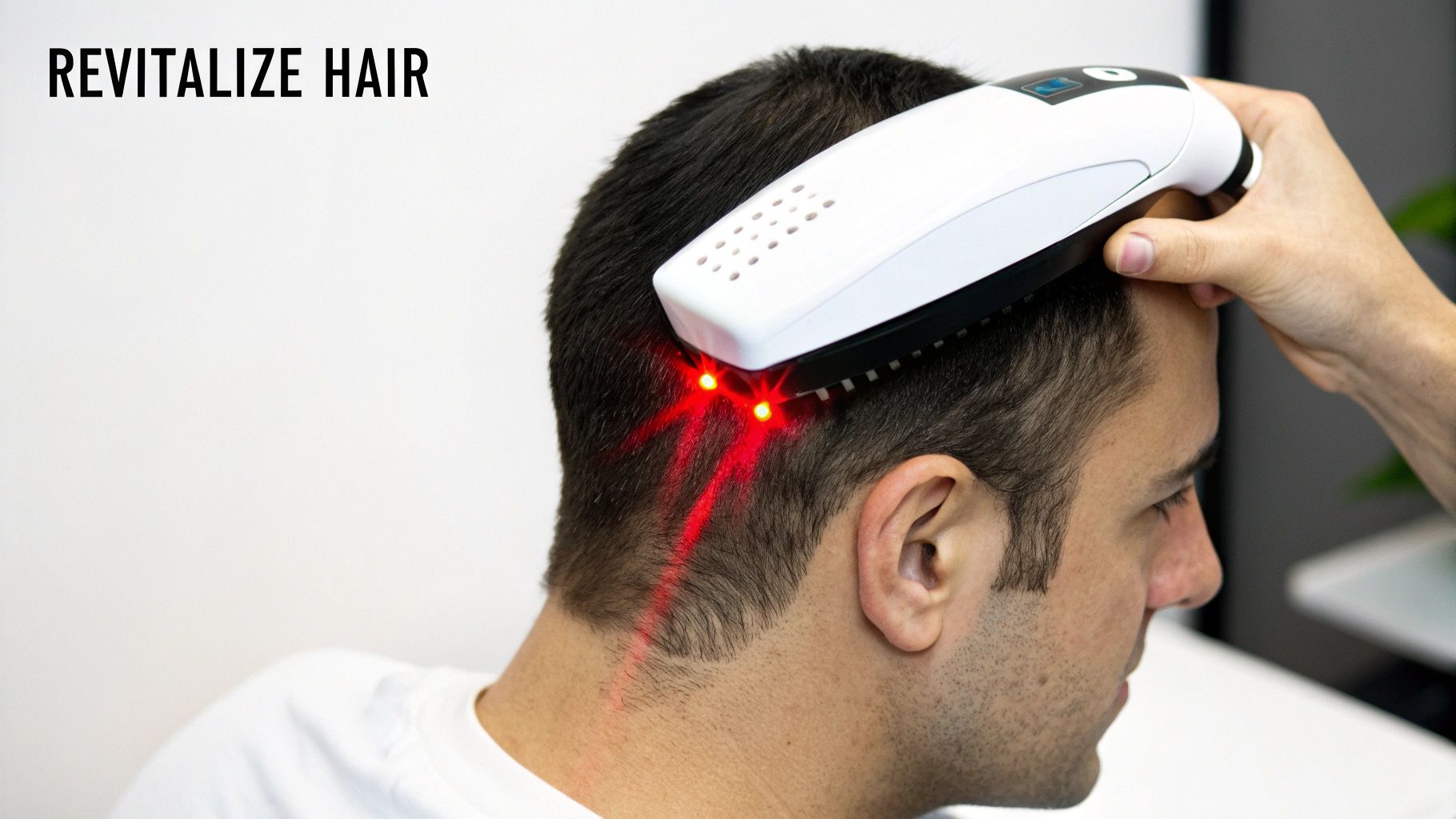
Low-Level Laser Therapy (LLLT), also known as red light therapy, offers a non-invasive way to address male pattern baldness. It uses specific red light wavelengths, typically 650-670nm, to stimulate hair follicles. This process, called photobiomodulation, delivers photons of light that weakened hair follicle cells absorb.
This absorption increases ATP production (the cell's energy source) and improves cellular metabolism. LLLT essentially energizes dormant or shrinking hair follicles, potentially reversing the miniaturization process associated with androgenetic alopecia and encouraging new hair growth.
LLLT earns its place on this list due to its convenient, low-risk nature. Unlike medications like Finasteride or Minoxidil, LLLT has no systemic side effects. This makes it suitable for individuals sensitive to those medications. Treatments are conveniently administered at home using devices like caps, helmets, bands, or combs.
How LLLT Works and Its Evolution
The theory behind LLLT for hair growth stems from the observation that certain wavelengths of light can influence biological processes. Red light, in particular, appears to stimulate hair follicle cellular activity, promoting growth. HairMax, a leading company in LLLT, pioneered the first FDA-cleared LLLT device for hair growth—the LaserComb—in 2007.
This paved the way for various LLLT devices, including caps and helmets from companies like Capillus, iRestore, and Theradome. A 2014 study in the American Journal of Clinical Dermatology reported a 39% increase in hair count after 16 weeks of LLLT treatment, further solidifying its potential.
Features and Benefits
- Non-invasive and Painless: Simply wear the device for a specified time.
- FDA-Cleared: Several LLLT devices have received FDA clearance for both men and women.
- Variety of Device Formats: Choose a device that fits your lifestyle and hair loss pattern.
- At-Home Convenience: No clinic visits are necessary.
- Cost-Effective in the Long Run: No recurring medication costs after the initial device purchase.
Pros and Cons
Pros:
- No known serious side effects
- Can be combined with other hair loss treatments
- Convenient at-home use
- One-time purchase
- Suitable for those with medication sensitivities
Cons:
- Expensive initial investment ($300 – $3,000)
- Requires consistent, long-term use (typically 3-7 times per week for 15-30 minutes per session)
- Results are generally modest compared to medications or surgery
- Limited clinical evidence compared to established treatments
- Individual results can vary significantly
Tips for Effective LLLT Use
- Clean Hair and Scalp: Maximize light penetration with clean hair and scalp before each treatment.
- Consistency is Key: Follow the recommended treatment schedule.
- Be Patient: Visible results may take 3-6 months.
- Consider Diode Count: Devices with more diodes/lasers offer better coverage.
- Combination Therapy: Combine LLLT with topical treatments like Minoxidil for potentially enhanced results.
While LLLT may not be as effective as Finasteride or hair transplant surgery, it offers a safe and convenient, non-invasive approach to hair loss. Its ease of use, lack of side effects, and potential for modest improvements make it a worthwhile option.
Dutasteride: A Powerful Option for Treating Hair Loss
Dutasteride, sold under the brand name Avodart, offers a potent approach to tackling male pattern baldness by targeting the root cause: dihydrotestosterone (DHT). Similar to finasteride, dutasteride is a 5-alpha-reductase inhibitor, but with a key difference. Finasteride primarily inhibits type II of the 5-alpha-reductase enzyme, while dutasteride inhibits both type I and type II. This broader action results in a more significant DHT reduction (over 90% compared to finasteride's 70%).
This makes dutasteride a compelling option for those seeking a more aggressive treatment.
How Dutasteride Works
Dutasteride is an oral medication, typically taken as a 0.5mg daily dose for hair loss. It works by blocking the conversion of testosterone to DHT, the hormone primarily responsible for shrinking hair follicles in genetically susceptible men. This can help slow, stop, or even reverse hair loss.
Why Dutasteride is a Prominent Treatment
Dutasteride is recognized for its potential for greater efficacy compared to finasteride. It's a viable solution for men who haven't seen satisfactory results with finasteride or who prefer a more proactive initial approach. Its longer half-life (around 5 weeks) also offers greater dosing flexibility, meaning missed doses are less likely to impact its effectiveness.
Features of Dutasteride
- Oral medication (0.5mg typical daily dose for hair loss)
- Prescription required (off-label use for hair loss in the US)
- Inhibits both type I and type II 5-alpha-reductase enzymes
- More potent DHT reduction than finasteride
Pros of Using Dutasteride
- Studies suggest potentially greater efficacy than finasteride.
- May be effective for men who don't respond to finasteride.
- Simple, once-daily pill regimen.
- Some research indicates better results for maintaining and restoring the frontal hairline.
- Longer half-life allows for occasional missed doses.
Cons of Using Dutasteride
- Higher risk of sexual side effects (5-7% of users) compared to finasteride, including decreased libido, erectile dysfunction, and ejaculatory problems.
- Not FDA-approved specifically for hair loss in the US (prescribed off-label).
- More expensive than generic finasteride.
- Limited long-term safety data specifically for hair loss.
- More potent hormonal effects may pose additional, unknown risks.
Real-World Examples and Case Studies
Studies have shown promising results with dutasteride. One study demonstrated that dutasteride 0.5mg provided more significant hair regrowth than finasteride 1mg after 24 weeks. Another Korean study showed a higher percentage of dutasteride users (90%) experiencing increased hair count compared to finasteride users (80%). While anecdotal evidence exists, many online hair loss communities report positive experiences, especially when finasteride was ineffective.
Dutasteride's Growing Popularity
Initially developed for benign prostatic hyperplasia (BPH), dutasteride's hair loss benefits gained recognition through research and word-of-mouth. Its popularity for hair loss treatment is particularly high in countries like South Korea and Japan.
Tips for Using Dutasteride
- Consult Your Doctor: Discuss off-label use with a physician experienced in hair loss treatment to determine if it's appropriate for you.
- Consider Starting with Finasteride: Some doctors recommend trying finasteride first due to its lower cost and generally lower risk of side effects.
- Dosage and Frequency: The typical dose is 0.5mg daily, but some doctors may suggest a 3x weekly schedule.
- Food Intake: Dutasteride can be taken with or without food.
- Pregnancy Precautions: Dutasteride carries the same precautions as finasteride regarding women and pregnancy. Women of childbearing age should avoid handling crushed or broken tablets.
Dutasteride offers a powerful option in the fight against male pattern baldness. By understanding its benefits, risks, and proper usage, and with guidance from your doctor, you can make an informed decision about whether it's the right treatment for you.
Platelet-Rich Plasma (PRP) Therapy
Platelet-Rich Plasma (PRP) therapy is a promising treatment for male pattern baldness. This innovative procedure utilizes the body's natural healing processes to encourage hair regrowth. While it can be a pricier option, it’s increasingly recognized for its potential effectiveness.
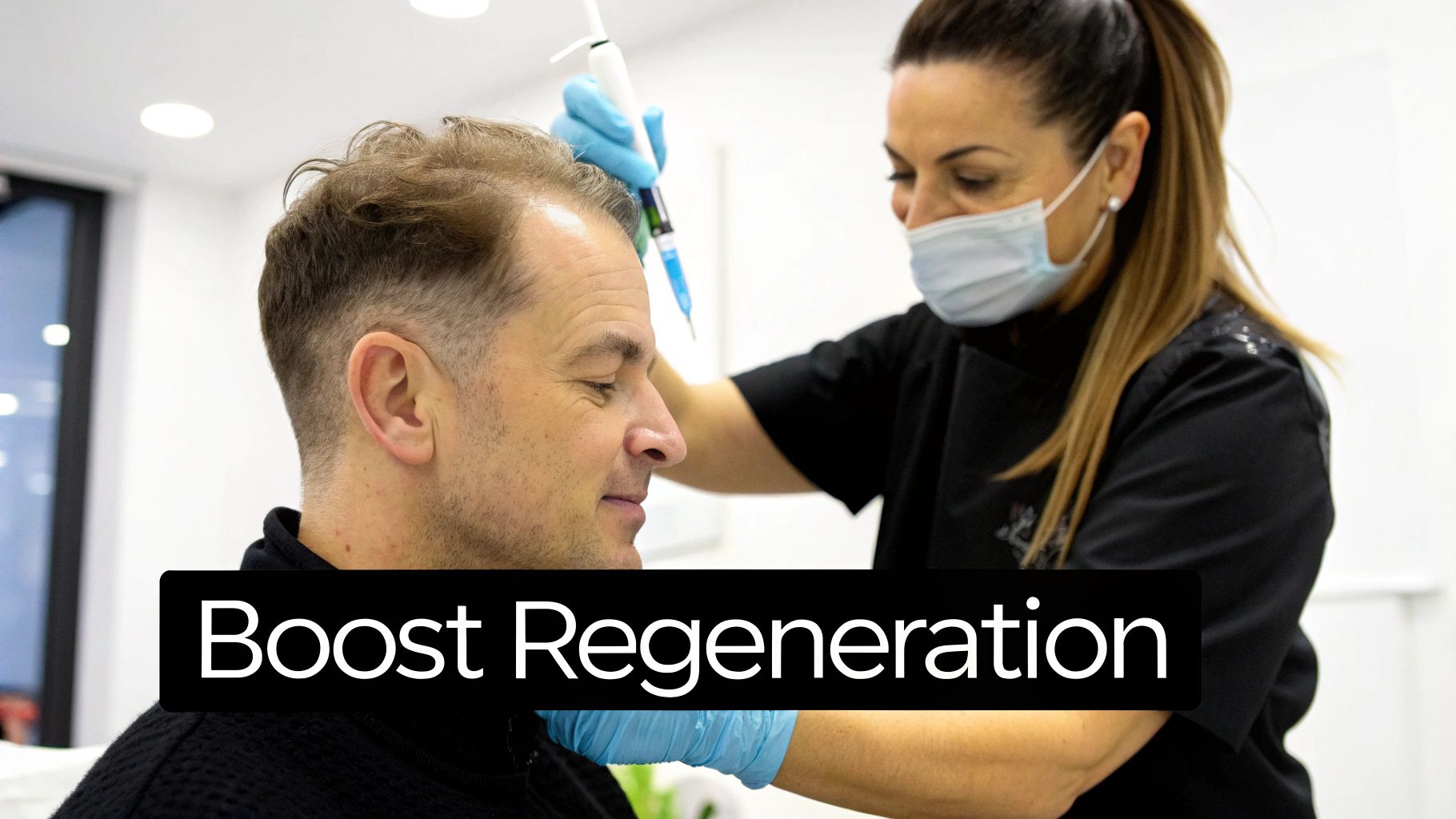
PRP therapy involves drawing a small blood sample, processing it in a centrifuge to isolate and concentrate the platelets, and then injecting this platelet-rich plasma into specific areas of the scalp.
Why platelets? These cells are rich in growth factors vital for tissue repair and regeneration. When injected into the scalp, these growth factors may revitalize dormant hair follicles. They can also increase blood flow to the follicles and prolong the hair's active growth phase. The aim is to thicken existing hair and potentially stimulate miniaturized follicles to produce healthier hair.
How PRP Works and What to Expect
PRP therapy is a minimally invasive procedure performed in a doctor's office. It involves multiple micro-injections across the scalp, which may cause temporary discomfort. While generally well-tolerated, some patients experience mild soreness or redness at the injection sites. Downtime is minimal, allowing most men to resume normal activities immediately.
An initial series of 3-4 treatments spaced 1-2 months apart is typically recommended. Following this, maintenance treatments are usually needed every 3-12 months to maintain the results.
Pros and Cons of PRP Therapy
Pros:
- Natural Approach: Utilizes the patient’s own blood, minimizing the risk of allergic reactions.
- Treatment Combinations: Can be combined with other hair loss treatments like minoxidil or finasteride for potentially improved results.
- Minimal Downtime: Allows immediate return to regular activities.
- Growing Evidence: Research suggests PRP can be effective for many men with androgenetic alopecia. A 2019 systematic review found that most studies showed positive outcomes, with some indicating a 30-40% increase in hair count.
Cons:
- Cost: PRP is expensive, ranging from $500 to $2,500 per session, and is typically not covered by insurance.
- Variable Results: Effectiveness varies from person to person.
- Multiple Treatments: Requires an initial series and ongoing maintenance treatments.
- Discomfort: Some temporary discomfort can be expected.
- Evolving Standards: Standardized protocols are still under development.
From Sports Injuries to Hair Restoration
PRP gained initial recognition in sports medicine for treating injuries. Its use by professional athletes for joint and muscle injuries increased awareness of its regenerative potential. Dr. Charles Runels is considered a pioneer in the PRP field. Further exposure came from aesthetic procedures like the "Vampire Facial," which uses PRP for skin rejuvenation and indirectly boosted its visibility for hair loss treatments.
Tips for Maximizing PRP Results
- Avoid Blood Thinners: Discuss medications with your doctor, particularly blood thinners like aspirin, which should be avoided before treatment.
- Experienced Provider: Select a provider specializing in PRP for hair loss.
- Complete Treatment Course: Commit to the entire treatment course before assessing results, as noticeable changes typically take 3-4 months.
- Combine with Other Treatments: Combining PRP with minoxidil or finasteride can often optimize results.
While PRP is a promising approach to hair loss, managing expectations regarding time, cost, and maintenance is important. Consult a dermatologist or hair restoration specialist to see if PRP is right for you.
Ketoconazole Shampoo for Hair Loss: A Comprehensive Guide
Ketoconazole shampoo, widely recognized for its antifungal properties in treating dandruff and seborrheic dermatitis, is also gaining traction as a potential treatment for male pattern baldness. While not as powerful as other treatments like Finasteride or Minoxidil, its accessibility, affordability, and potential synergistic effects with other hair loss solutions make it worth considering.
Ketoconazole primarily works by combating scalp inflammation and fungal overgrowth, which can worsen hair loss. Research also suggests it may have local anti-androgenic properties, potentially inhibiting the activity of dihydrotestosterone (DHT) in the scalp. DHT is the main hormone responsible for shrinking hair follicles in male pattern baldness.
Features and Benefits of Ketoconazole Shampoo
- Available over-the-counter (1%) and by prescription (2%).
- Typically used 2-3 times per week.
- Works topically, minimizing systemic absorption.
- Addresses fungal/inflammatory scalp conditions and possibly DHT activity.
- Easily incorporated into a regular hair care routine.
Pros of Using Ketoconazole Shampoo
- Relatively inexpensive: Ketoconazole shampoo is budget-friendly compared to other hair loss treatments.
- Minimal side effects: Most users tolerate it well, with scalp dryness being the most common issue.
- Improved scalp health: Even without significant hair regrowth, it can improve overall scalp health.
- Ease of use: Simply use it a few times a week in the shower.
- Synergistic effects: It can be combined with other treatments for potentially enhanced results.
Cons of Using Ketoconazole Shampoo
- Modest effects when used alone: It's generally more effective as a supplementary treatment.
- Limited direct clinical evidence: More research is needed to confirm its efficacy.
- Potential dryness: Some formulations can dry the hair and scalp.
- Requires continuous use: Benefits stop when you discontinue use.
- Variable results: Effectiveness differs between individuals.
Real-World Examples and Case Studies
Small studies have shown that 2% ketoconazole shampoo can produce hair growth similar to 2% minoxidil. Research also indicates synergistic effects when used with finasteride, suggesting that combining treatments may yield better outcomes.
How Ketoconazole Shampoo Gained Popularity
Nizoral, a popular brand of ketoconazole shampoo, became a topic of conversation in hair loss communities, leading to its off-label use. Research by dermatologists, such as Dr. Jerry Shapiro, further contributed to its growing popularity.
Practical Tips for Using Ketoconazole Shampoo
- Leave on for 3-5 minutes: This maximizes effectiveness.
- Alternate with regular shampoo: This prevents excessive dryness.
- Use consistently: Stick to a regular schedule of 2-3 times per week.
- Consider a conditioner: This mitigates potential dryness.
- Early intervention: Ketoconazole may be most effective in the early stages of hair loss.
Ketoconazole shampoo offers a relatively inexpensive and accessible option for men experiencing hair loss. While not a standalone cure, its potential benefits for scalp health and possible synergistic effects with other treatments make it a valuable part of a broader hair loss regimen. Consulting a dermatologist is recommended to determine if ketoconazole shampoo is right for you.
Topical Finasteride: A Targeted Approach to Hair Loss
Topical finasteride presents a focused method for treating male pattern baldness. It delivers the same active ingredient as oral Propecia (finasteride) directly to the scalp. This approach aims to minimize potential side effects associated with the oral version, while maintaining its effectiveness in blocking DHT, the hormone primarily responsible for hair follicle shrinkage.
How It Works
Finasteride inhibits the enzyme 5-alpha-reductase, which converts testosterone to DHT. Topical application concentrates the drug's action on the scalp, reducing its absorption into the bloodstream and lessening the likelihood of systemic side effects. Various formulations, including solutions, foams, and combinations with minoxidil, provide flexibility and potential synergistic benefits when combined with other treatments.
Features and Benefits
- Targeted Application: Applied directly to affected scalp areas once daily.
- Variable Concentrations: Available in concentrations from 0.1% to 0.25% for personalized treatment.
- Combination Therapy: Combinable with minoxidil for a dual-action approach.
- Reduced Systemic Exposure: Aims to minimize finasteride entering the bloodstream, potentially reducing side effect risk.
- Alternative for Oral Finasteride Intolerance: A viable option for those with adverse reactions to oral finasteride.
Pros of Topical Finasteride
- Potentially reduced risk of sexual side effects compared to oral finasteride.
- Direct scalp targeting with less systemic exposure.
- Can be combined with minoxidil for enhanced results.
- Suitable for those who cannot tolerate oral finasteride.
- Growing evidence suggests comparable efficacy to the oral version.
Cons of Topical Finasteride
- Less extensive clinical data compared to oral finasteride.
- Not FDA-approved specifically as a topical hair loss treatment.
- Formulation inconsistencies can exist between compounding pharmacies.
- Potential for local skin irritation in some individuals.
- Generally more expensive than oral finasteride.
Real-World Evidence and Examples
A 2009 study showed that a 0.25% topical finasteride solution effectively reduced scalp DHT levels by 70%, with minimal impact on serum DHT levels. This supports localized action and reduced systemic exposure. Anecdotal evidence from online hair loss communities and compounding pharmacies like Essengen and early providers like MinoxidilMax suggests growing popularity, especially among men seeking alternatives to oral finasteride due to side effect concerns.
Tips for Effective Application
- Dry Scalp Application: Apply to a dry scalp for best absorption.
- Targeted Application: Use provided applicators or a dropper on thinning areas; avoid over-application.
- Start Low and Go Slow: Begin with a lower concentration to assess for local irritation.
- Reputable Source: Obtain topical finasteride from reputable compounding pharmacies.
- Allow to Dry: Let the solution dry completely before styling hair or sleeping.
Why Topical Finasteride Is a Valuable Option
Topical finasteride is a promising alternative for men addressing hair loss while minimizing potential systemic side effects of oral finasteride. While more research is needed to confirm long-term efficacy and safety, existing evidence and growing anecdotal support position it as a valuable treatment option. It addresses a specific need within the hair loss community, providing a targeted approach with potentially fewer drawbacks. Consulting a dermatologist or hair loss specialist is crucial to determine if topical finasteride is right for you.
Scalp Micropigmentation (SMP)
Scalp Micropigmentation (SMP) offers a non-surgical solution for men experiencing hair loss. It creates the illusion of a full head of closely shaved hair. This technique has become increasingly popular due to its relatively quick, low-maintenance, and effective results for various stages of baldness. This includes thinning hair to complete hair loss.
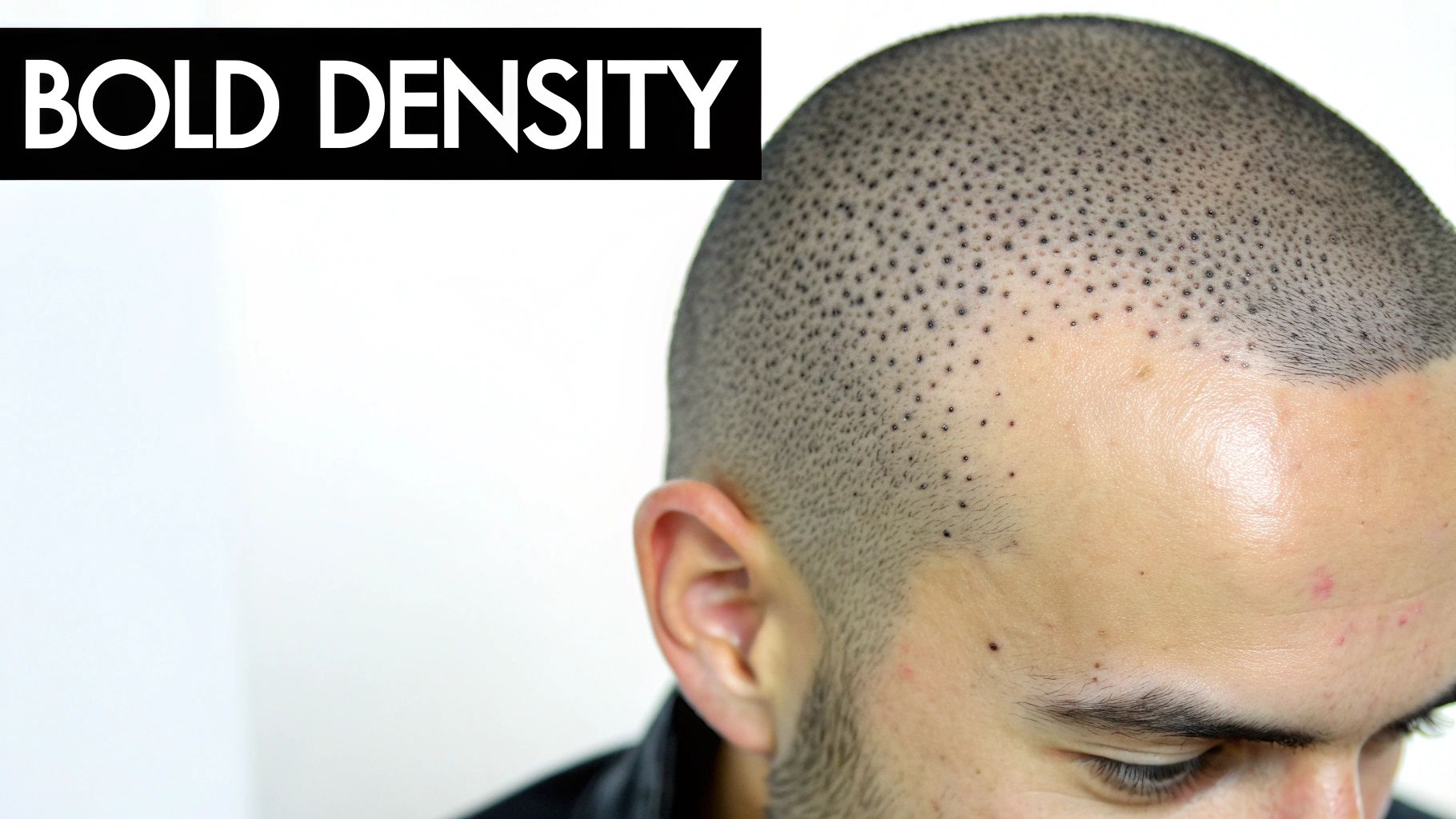
Unlike traditional tattoos, SMP uses specialized equipment and pigments. Tiny, layered dots are deposited into the scalp, meticulously mimicking natural hair follicles. This creates a realistic buzz cut look. The procedure typically requires 2-4 sessions, spaced 10-14 days apart. This allows the pigment to settle and the practitioner to gradually build density. The pigments are designed to resist fading and discoloration, with results lasting 4-6 years before needing touch-ups.
How SMP Works and Its Benefits
SMP creates a convincing visual effect rather than regrowing hair. It's particularly effective for:
- Increasing Density: SMP can create the appearance of fullness in thinning areas, making hair look more voluminous.
- Camouflaging Scars: It effectively conceals scars from hair transplant procedures.
- Defining Hairlines: SMP can create a natural-looking hairline, restoring a youthful appearance for those with receding hairlines.
- Achieving a Buzzed Look: It provides a consistent, even look across the scalp for men who prefer short hairstyles.
Pros and Cons
Pros:
- Immediate results with minimal recovery
- Effective for all hair loss stages
- No daily maintenance
- Creates a defined hairline and fuller look
- Suitable for non-transplant candidates
Cons:
- Cosmetic solution, doesn't regrow hair
- Limits styling options to short hair
- Requires touch-ups every few years
- Quality depends on practitioner skill
- $2,000-$5,000 total cost
Real-World Examples and Popularity
SMP clinics often report high client satisfaction, some claiming rates as high as 98%. The procedure's popularity has grown, partly due to endorsements from celebrities and athletes seeking alternatives to transplants. HIS Hair Clinic is known for pioneering the modern SMP technique, and Scalp Aesthetics is another popular provider. Numerous online before-and-after photos demonstrate SMP's potential for various hair loss patterns.
Tips for Choosing and Maintaining SMP
- Research Practitioners: Review portfolios and testimonials to assess skill and experience.
- Test Run: Start with a small, less visible area to test results and color.
- Aftercare: Follow instructions, including limiting sun exposure, to maintain results.
- Realistic Expectations: SMP mimics shaved hair, not longer styles.
- Combination Therapy: Combine SMP with existing hair or transplants for enhanced results.
By understanding the SMP process, benefits, and limitations, you can decide if this cosmetic procedure is the right solution for your hair loss concerns.
Hair Systems: A Modern Solution For Hair Loss
Hair systems, also known as modern hairpieces, provide a non-surgical solution for men experiencing hair loss. Unlike older wigs, today's hair systems are customizable and often undetectable, offering a compelling alternative to other hair loss treatments. Their ability to provide immediate, full coverage and styling versatility makes them a popular choice.
These systems are constructed with human or synthetic hair attached to a thin, breathable base material, such as lace, polyurethane, or monofilament. The base is then attached to the scalp using adhesives, tape, or clips. The key advantage of modern hair systems lies in their customization options.
They can be tailored to match your existing hair color, density, texture, and preferred hairstyle, resulting in a natural look. The base material itself can also be customized for breathability, durability, or invisibility based on individual needs and lifestyle.
The Evolution and Growing Popularity of Hair Systems
Hair systems have evolved significantly from the noticeable toupees of the past. Advancements in materials, construction techniques, and attachment methods have resulted in more realistic and comfortable systems. Online providers like Lordhair and Hair Direct, along with custom studios like Northwest Lace, have increased access and driven innovation. Increased visibility, including rumored use by celebrities, has also contributed to the growing acceptance of hair systems.
Features and Benefits of Hair Systems
- Customizable: Tailored to your natural hair and desired style.
- Variety of Base Materials: Options for different budgets and needs.
- Secure Attachment Methods: Adhesives, tape, and clips provide varying levels of hold.
- Integration with Existing Hair: Blends seamlessly with natural hair.
- Styling Versatility: Allows for various hairstyles and activities.
Pros of Hair Systems
- Immediate, Full Coverage: Instantly transforms your appearance.
- No Medical Side Effects: A non-invasive alternative to surgery or medication.
- Styling Freedom: Style like your own hair.
- No Recovery Time: Ready to wear immediately after application.
Cons of Hair Systems
- Ongoing Maintenance: Requires regular cleaning, reattachment, and replacement (every 2-6 months).
- Cost: Initial investment and maintenance can be substantial.
- Potential for Shifting: Proper attachment and care are essential.
- Possible Scalp Irritation: Some may experience irritation from adhesives or base materials.
- Psychological Adjustment: Adapting to wearing a hair system can take time.
Practical Tips For Hair System Users
- Professional Fitting and Styling: Crucial for a natural and comfortable initial fit.
- Proper Maintenance Techniques: Learn proper cleaning and care for longevity.
- Backup System: A second system ensures uninterrupted wear during maintenance.
- Skin-Safe Bonding Products: Minimize irritation with appropriate adhesives.
- Seasonal Systems: Consider lighter systems for summer and adjusted colors for winter.
Real-World Experiences with Hair Systems
High-quality systems made with human hair can be virtually undetectable. Many users report increased self-confidence and an improved quality of life. Online forums provide valuable support and insights. While individual case studies are often private, anecdotal evidence suggests that modern hair systems offer a transformative solution for men seeking a full head of hair.
Hair systems do require a commitment to maintenance and a financial investment. However, they offer an immediate and effective way to address hair loss and regain confidence. Understanding the features, benefits, and potential drawbacks allows you to make an informed decision about whether this option is right for you.
10-Point Comparison: Baldness Treatment Options
| Treatment Option | 🔄 Complexity | Resource Requirements | ⚡ Time to Results | 📊 Expected Outcomes | 💡 Key Advantages |
|---|---|---|---|---|---|
| Finasteride (Propecia) | Moderate – Daily oral pill; prescription needed | Prescription, regular monitoring | 3–6 months (up to 1 year for full effect) | ~85% stop hair loss; ~65% regrowth in responders | Clinically proven; simple regimen |
| Minoxidil (Rogaine) | Low – Topical, OTC; twice-daily application | Over-the-counter product; consistent daily use | 4–6 months | Moderate regrowth; effective for crown and frontal areas | Easily accessible; affordable; few systemic side effects |
| Hair Transplant Surgery (FUT/FUE) | High – Surgical procedure under local anesthesia | Surgical fees, skilled surgeon, recovery time | 6+ months for regrowth; immediate density boost | Permanent, natural-looking hair with high graft survival | Permanent solution; natural integration; no daily maintenance |
| Laser Therapy (LLLT) | Moderate – Non-invasive, at-home sessions | Initial device investment ($300–$3,000) and regular use | 3–6 months | Modest improvement in hair density | Painless; non-invasive; good as complementary treatment |
| Dutasteride (Avodart) | Moderate – Daily oral medication; prescription required | Prescription medicine (off-label use) with monitoring | 3–6 months (may vary) | Potentially greater efficacy than finasteride | More potent DHT inhibition; alternative for non-responders |
| PRP Therapy | Moderate–High – Multiple in-office micro-injection sessions | Clinic visits; cost per session ($500–$2,500) | 3–4 months (after full treatment course) | Natural hair thickening; activation of dormant follicles | Uses patient’s own plasma; minimal downtime |
| Ketoconazole Shampoo | Low – Topical; easy to incorporate in routine | Inexpensive shampoo; regular application (2–3 times weekly) | Gradual; best in combination | Modest improvement; enhanced scalp health | Affordable; dual action (antifungal and anti-DHT) |
| Topical Finasteride | Moderate – Daily topical application; requires compounding | Compounded formulation; prescription required | 3–6 months | Comparable to oral finasteride with reduced systemic levels | Targeted delivery; potential for fewer side effects |
| Scalp Micropigmentation (SMP) | Moderate – Cosmetic procedure; multiple sessions needed | In-office treatment; specialized practitioner | Immediate visual improvement (over multiple sessions) | Creates illusion of denser hair; camouflages thinning areas | Immediate cosmetic effect; non-biological solution |
| Hair Systems (Modern Hairpieces) | Moderate – Custom fitting with regular maintenance | Custom-made hairpiece; recurring maintenance (cleaning/replacement) | Immediate coverage | Complete coverage; realistic appearance | Non-surgical; versatile styling; no medical side effects |
Choosing the Right Path For Hair Restoration
Navigating the world of hair loss treatments can feel daunting. Understanding the pros, cons, and features of each option—from medications like Finasteride and Minoxidil to procedures like hair transplant surgery and PRP therapy—is key to making an informed decision. What works for one person might not work for another.
Several factors influence the ideal treatment path. These include the stage of hair loss, overall health, budget, and personal preferences. Consulting with a dermatologist or a hair loss specialist is highly recommended.
These specialists can offer expert guidance and create a personalized treatment plan. They can assess your specific needs and goals, taking into account your unique circumstances. Effective hair restoration rarely relies on just one solution.
Combining Treatments for Optimal Results
Combining treatments is often the most effective approach. This multifaceted strategy can address hair loss from different angles, maximizing the potential for regrowth and improvement. Your journey also requires consistent monitoring and adaptation.
Track your progress and be willing to adjust your approach based on the results. Stay informed about new developments and ongoing trends in hair loss treatment. Research consistently produces new insights and innovative techniques.
For example, advancements in PRP therapy, topical Finasteride, and laser therapy show promising results. These advancements are expanding the range of options for men experiencing hair loss, offering new hope for effective treatment.
Key Takeaways for Your Hair Restoration Journey
-
Personalized Approach: Consult a specialist for tailored guidance, as there's no universal solution.
-
Combination Therapy: Combining treatments is often a more impactful strategy than using a single treatment.
-
Ongoing Learning: Staying up-to-date on new developments and adapting your approach as needed is vital for long-term success.
-
Proactive Steps: Take charge of your hair loss and explore the available solutions.
Ready to take a proactive step towards restoring your hair and confidence? Learn more about Platelet-Rich Plasma (PRP) therapy, a promising treatment for male pattern baldness. This comprehensive resource provides valuable information and insights specifically about PRP, helping you make a well-informed decision.

 PRP For Hairloss
Leave a comment