Decoding Your Hair Loss Journey
Male pattern baldness, also known as androgenetic alopecia, affects millions of men worldwide. While the process can feel overwhelming at first, understanding what's happening allows you to take informed action. Most men notice subtle changes in their hair that develop gradually over time.
Early Warning Signs
The first sign many men notice is a receding hairline, particularly at the temples, which often forms an "M" shape. Another common indicator is thinning hair at the crown area, which may progress to a visible bald spot. Each person's experience is unique – some men lose hair rapidly while others see a slower progression over many years.
The Role of Genetics
Research shows that genes play a major role in male pattern baldness, accounting for about 80% of cases. Scientists have discovered more than 600 genetic variations linked to this condition. Learn more about the genetic factors behind hair loss in this Medical News Today article about male pattern baldness genetics. These inherited traits determine how your hair follicles react to hormones, especially DHT.
DHT Sensitivity and Hair Follicles
DHT (dihydrotestosterone) is essential for male development but can trigger hair loss in men with genetic sensitivity. Picture your hair follicles like plants – some are naturally more sensitive to environmental factors than others. When follicles are DHT-sensitive, they gradually shrink and produce thinner, shorter hairs. This miniaturization process eventually stops new hair growth completely. The varying levels of follicle sensitivity explain why hair loss patterns differ between individuals.
Understanding Your Individual Journey
Your personal hair loss path – including when it starts, how fast it progresses, and its final pattern – depends on your unique genetic makeup combined with other health and lifestyle factors. Understanding these basics helps you make informed decisions about managing your hair loss effectively.
Understanding Your Family Hair Loss Legacy
Male pattern baldness has a significant hereditary component, known as your hair loss legacy. Your risk of experiencing hair loss largely depends on genes inherited from your family. The inheritance pattern isn't simple though – understanding this genetic relationship helps you better manage potential hair loss.
The following table shows how male pattern baldness typically progresses with age:
| Age Group | Percentage Affected | Common Patterns |
|---|---|---|
| 20s | 20% | Receding hairline |
| 30s | 30% | Crown thinning |
| 40s | 40% | Combined pattern |
| 50s | 50% | Advanced loss |
| 60+ | 60-70% | Extensive loss |
How Hair Loss Travels Through Generations
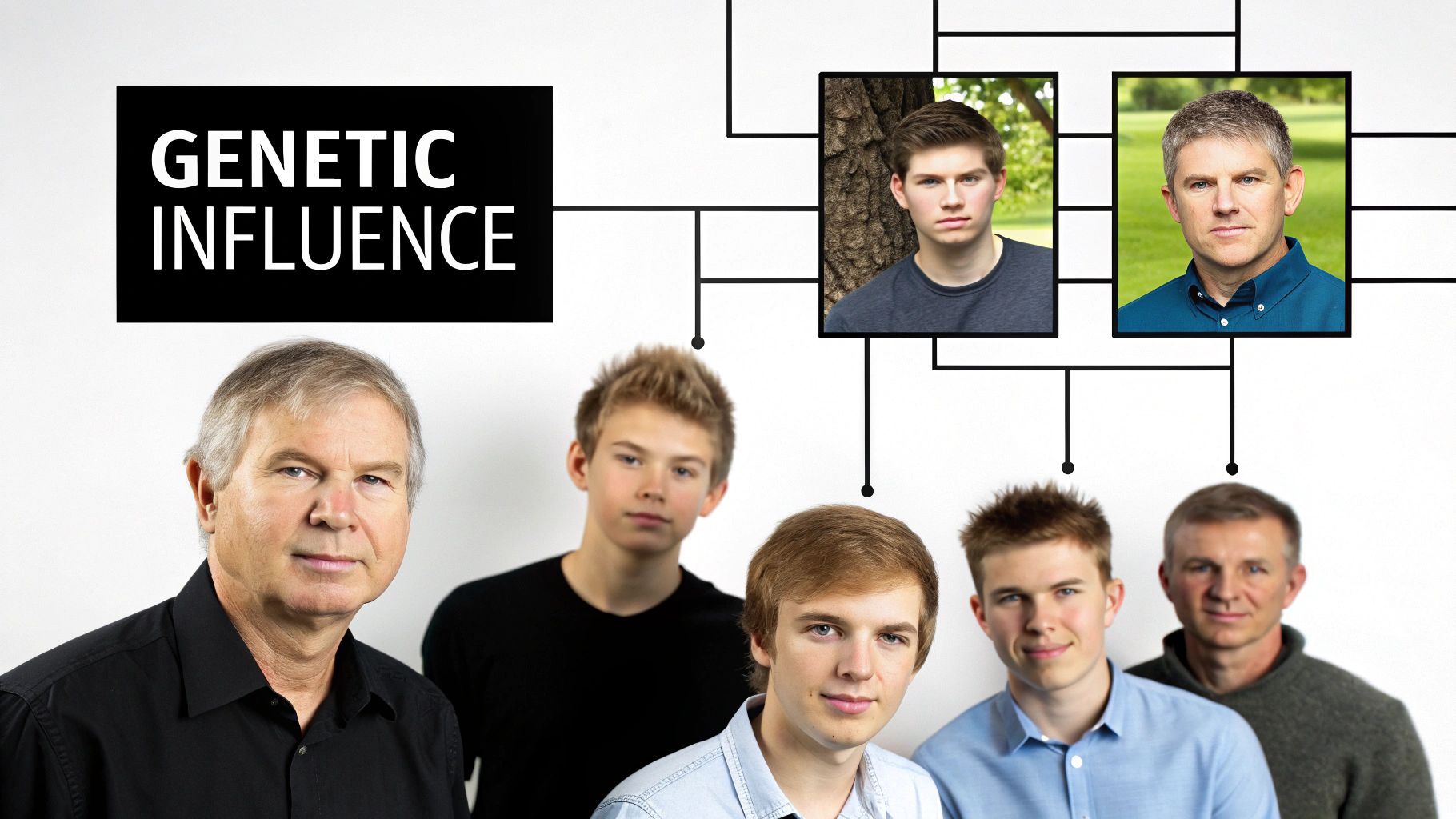
Unlike simpler traits like eye color, male pattern baldness is a polygenic trait controlled by multiple genes from both parents. This explains why brothers can show different balding patterns, or why your father might have significant loss while your grandfather kept most of his hair.
Hair loss genes can skip generations too. You may not inherit the exact same genetic variations as a balding relative, but could still get a mix of genes that increases your overall risk. The specific genes you inherit affect not just if you'll lose hair, but when it starts and how it progresses.
Interpreting Your Family History
Your family's hair loss patterns offer important clues about your own risk. Pay attention to hair loss in your closest male relatives – fathers, grandfathers, uncles, and brothers. Note when their hair loss began, how severe it became, and which areas were affected. Currently, 35 million men in the United States deal with male pattern baldness. Learn more about male pattern baldness and its progression through generations.
Identifying Key Genetic Markers
While family history gives a general picture, scientists have identified specific genetic markers linked to male pattern baldness. These markers influence how your hair follicles respond to androgens like DHT, a hormone that plays a key role in hair loss. Having more risk-related markers typically means higher chances of experiencing hair loss.
Mapping Your Genetic Predisposition
Research continues to uncover new genetic factors in male pattern baldness. Understanding your family history and considering genetic testing can help you make informed decisions about hair care and treatment options. This growing knowledge leads to better, more personalized approaches for managing hair loss effectively.
The Genetic Blueprint of Hair Loss
Male pattern baldness, known as androgenetic alopecia in medical terms, is heavily guided by our genes. Your DNA contains important instructions that largely determine if and when you might experience hair loss. The mechanisms behind this genetic influence are complex but important to understand.
The Androgen Receptor Gene and DHT Sensitivity
The androgen receptor gene (AR gene) plays a key role in male pattern baldness. You get this gene from your mother since it sits on the X chromosome. This gene controls how your hair follicles respond to dihydrotestosterone (DHT), a hormone made from testosterone. Think of DHT like a key that fits into a lock (the androgen receptor) on your hair follicles.
When you inherit a certain version of the AR gene, your hair follicles become more sensitive to DHT. This sensitivity makes the follicles gradually get smaller, like turning down the volume on hair growth. Over time, the affected follicles make thinner, shorter hairs until they stop growing completely. This is why DHT sensitivity is so central to understanding how genes influence hair loss.
Polygenic Influence: Beyond the AR Gene
While the AR gene is important, male pattern baldness involves many genes working together – what scientists call a polygenic trait. Research has found more than 600 genetic variations that may affect hair loss. This complex mix of genes explains why hair loss can look very different even among close relatives. Two brothers might inherit different gene combinations, leading one to keep a full head of hair while the other experiences significant thinning.
Some genes can also affect when hair loss starts. One genetic variant might trigger hair loss in someone's 20s, while another might delay it until their 40s or 50s. This shows how each person's genetic makeup creates their own unique pattern of hair loss.
Understanding Your Genetic Predisposition
While looking at family history gives good clues about potential hair loss, new genetic testing can provide more specific insights. These tests look for genetic markers linked to male pattern baldness. Having this personal genetic information helps people make informed choices about prevention and treatment options, including those discussed on PRP for Hairloss. This growing understanding of genetics continues to improve how we approach and treat hair loss.
Beyond DNA: Lifestyle Factors That Matter

The story of hair loss involves more than just genetics. While your DNA plays a major role, various lifestyle and environmental factors can speed up or slow down hair loss. Understanding these factors gives you more control over managing hair thinning, even if you have genetic predisposition.
Let's examine how genes and environment work together when it comes to hair loss. The table below breaks down key differences:
| Factor Type | Impact Level | Controllability | Research Evidence |
|---|---|---|---|
| Genetic | High | Low | Strong family history correlation |
| Environmental | Moderate | High | Multiple studies show lifestyle impact |
| Stress-Related | Moderate | Medium | Clinical evidence of telogen effluvium |
| Nutritional | Moderate | High | Research links deficiencies to loss |
The Impact of Stress
Physical and emotional stress can disrupt your natural hair growth cycle. When stressed, more hair follicles enter the resting phase, leading to increased shedding. Up to 70% of people experience more hair loss during highly stressful periods. Regular exercise, meditation, and relaxation techniques can help maintain healthy hair growth patterns.
Nutrition's Role
Your hair needs proper nutrients to grow and thrive. Key nutrients include:
- Iron
- Zinc
- Vitamin D
- Protein
- Biotin
A balanced diet rich in these nutrients supports optimal hair growth. Missing these vital elements can contribute to thinning and loss.
Daily Habits Matter
Several everyday choices affect your hair health. Smoking reduces blood flow to hair follicles, while heavy drinking can deplete essential nutrients. Poor sleep patterns may also impact hormone balance and hair growth. Making positive lifestyle changes often leads to noticeable improvements in hair quality.
Taking Action
While you can't change your genes, you can make choices that support hair health. Focus on factors within your control:
- Maintain a nutrient-rich diet
- Manage stress levels
- Get adequate sleep
- Limit harmful habits
- Consider treatments like PRP For Hairloss
By taking a proactive approach to these lifestyle factors, you can better manage your hair loss journey and potentially slow its progression.
Mapping Your Personal Hair Loss Risk
Understanding your genetic blueprint can help you take early action against male pattern baldness. Let's explore how to assess your individual risk factors and develop targeted strategies based on your genetic profile.
Genetic Testing for Hair Loss
Getting insight into your genetic makeup can shed light on your hair loss journey. Genetic testing looks at specific genes linked to male pattern baldness, particularly the androgen receptor gene that affects how sensitive your hair follicles are to DHT. When certain genetic variations are present, your follicles may be more likely to shrink when exposed to DHT. This information helps predict both when hair loss might start and how it may progress.
Interpreting Your Genetic Test Results
Your genetic test won't give you a simple answer about hair loss. Instead, it creates a detailed risk profile based on different genetic markers working together. Having multiple risk markers often points to higher chances of hair loss starting earlier. But remember – your genes are just one piece of the story.
Combining Genetics with Other Factors
While genes play a key role, many other elements affect hair loss too. Your daily habits, stress management, diet and overall wellness all make a difference. This means that even with high genetic risk, making healthy lifestyle choices can help protect your hair. Understanding your genetic profile also helps you make smart choices about prevention and treatment options.
Working with Healthcare Professionals
Making sense of genetic information and creating a personal plan takes expert guidance. That's why it's helpful to work with a healthcare provider or genetic counselor. They can explain your test results clearly and help you explore treatment options, from lifestyle changes to medical treatments like those discussed on PRP for Hairloss. Their expertise ensures you're making well-informed decisions about managing your hair health based on your unique situation.
Tomorrow's Solutions: Genetic Breakthroughs
Recent advances in genetic research have given us new insights into male pattern baldness. Scientists are making exciting discoveries that could lead to better treatments in the coming years.
Personalized Medicine and Targeted Treatments
Scientists can now identify specific genetic variations that contribute to hair loss in each person. This allows for a customized treatment approach that targets the exact mechanisms causing baldness in individual cases. For example, if testing shows someone has genes that make their hair follicles extra sensitive to DHT, doctors can focus on blocking those particular pathways. This precise targeting helps create more effective treatments with fewer side effects.
Gene Therapy: Reprogramming Hair Follicles
Gene therapy offers a promising new direction for treating hair loss. This technique involves changing genes within hair follicles to either fix problematic genes or add beneficial ones that promote growth. Research teams are working on methods to deactivate genes that make follicles react strongly to DHT. They're also studying ways to insert genes that extend the growth phase of hair. While these therapies are still being developed, they could fundamentally change hair loss treatment.
The Future of Hair Loss Treatment: Emerging Therapies
Scientists are actively working on several new treatment approaches:
- Growth factor therapies: Special proteins that activate dormant hair follicles
- Stem cell treatments: Using stem cells to create new hair follicles
- New medications: Drugs designed to interrupt specific genetic pathways involved in balding
These developing treatments give real hope to people dealing with hair loss. As research continues, more effective options for managing and treating baldness will become available.
What This Means for Your Hair Loss Journey
The genetic discoveries being made about male pattern baldness point to better solutions ahead. Though some treatments are still in development, research is moving quickly and new options could be available within the next few years. This progress brings hope for both stopping hair loss and regrowing hair.
Ready to explore current, effective treatments for hair loss? Learn more about PRP therapy for hair loss at PRP for Hairloss.
 PRP For Hairloss
Leave a comment