Unlocking the Power of Microneedling with PRP
For men looking to refresh their appearance and address concerns like aging, hair loss, or acne scarring, microneedling with PRP offers a compelling solution. This innovative treatment combines microneedling, a procedure that creates micro-injuries in the skin, with PRP (platelet-rich plasma), a concentration of growth factors derived from the patient's own blood. This combination stimulates the body's natural healing processes, leading to significant improvements in skin and hair health.
From ancient acupuncture practices to modern advancements in plasma therapy, the evolution of skin rejuvenation has led to this powerful synergy. Microneedling with PRP goes beyond traditional methods by harnessing the body's regenerative capabilities.
The effectiveness of this treatment lies in its ability to boost collagen and elastin production. These proteins are essential for maintaining skin firmness and elasticity. Microneedling creates controlled micro-injuries, triggering a healing response. The addition of PRP, rich in growth factors, amplifies this response, promoting cell turnover and enhancing nutrient delivery. The result is a revitalized appearance with improvements in fine lines, wrinkles, skin texture, tone, and even hair growth.
In this article, we'll explore the eight key benefits of incorporating PRP into your microneedling regimen. Discover how this dynamic duo can help you achieve a healthier, more youthful look and address your specific skin and hair concerns.
1. Enhanced Collagen Production
One of the most compelling benefits of microneedling with PRP, especially for men concerned with hair loss and skin rejuvenation, is its ability to enhance collagen production. This treatment works deep within the skin to stimulate the body's natural healing process, resulting in a significant boost of collagen and elastin. These proteins are the building blocks of youthful, firm skin and play a vital role in hair follicle health.
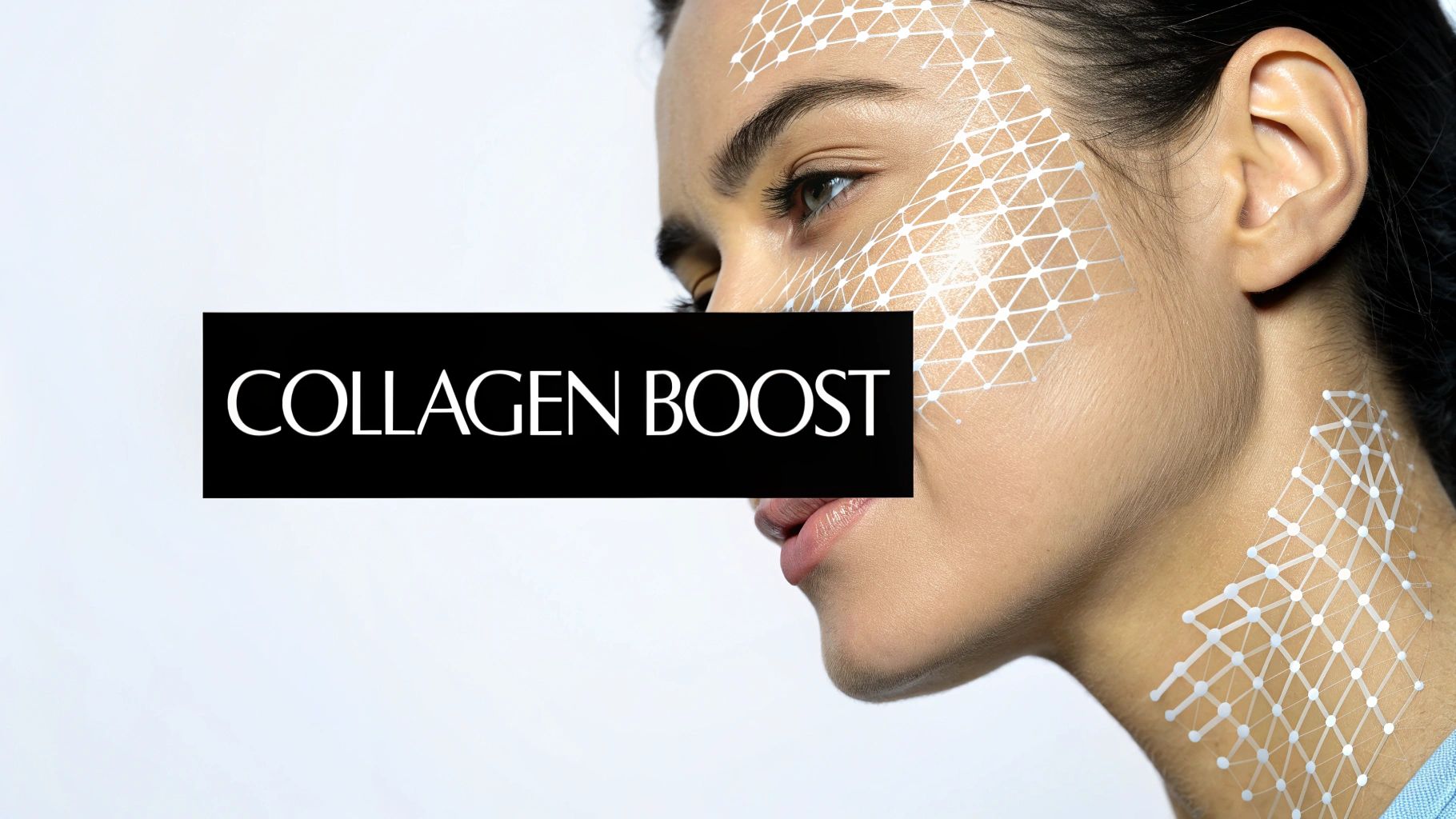
Microneedling creates controlled micro-injuries that trigger the skin's repair mechanism. Adding PRP (Platelet-Rich Plasma), derived from your own blood, supercharges this process. PRP contains a potent combination of at least eight growth factors, including platelet-derived growth factor (PDGF), transforming growth factor-beta (TGF-β), and fibroblast growth factor (FGF), which stimulate fibroblast activity. Fibroblasts are the cells responsible for producing collagen.
This combination results in more robust collagen formation than microneedling alone. It stimulates the synthesis of type I, III, and VII collagen, essential for skin structure, elasticity, and anchoring the epidermis to the dermis. This creates a matrix for new collagen, leading to thicker, firmer skin and a more youthful appearance.
Features and Benefits
- Stimulates Type I, III, and VII Collagen Synthesis: These types are crucial for skin strength and elasticity.
- PRP Growth Factors: The concentrated growth factors amplify collagen development.
- Matrix for New Collagen Formation: The treatment creates an ideal environment for new collagen fibers.
- Progressive Improvement: Results continue to improve for up to six months post-treatment.
Pros
- Natural Approach: Utilizes the body's own healing mechanisms.
- Long-Lasting Results: Offers longer-lasting improvements than topical treatments.
- Significant Increase in Collagen: Studies show potential increases of up to 400%.
- Multi-Depth Impact: Works at multiple skin depths.
Cons
- Multiple Sessions: Requires multiple sessions for optimal results.
- Gradual Results: Results develop gradually over time.
- Higher Cost: More expensive than microneedling alone.
Real-World Examples and Case Studies
Clinical studies have shown a 51% improvement in dermal collagen density after just three PRP microneedling sessions. Histological examinations further confirm these findings by revealing increased collagen band thickness in treated areas.
Popularity and Evolution
The "vampire facial," a popular term for microneedling with PRP, gained popularity thanks to celebrities. Skincare specialists further refined the technique, contributing to its widespread use.
Tips for Maximizing Collagen Stimulation
- Consistent Treatments: Maintain treatments every 4-6 weeks initially.
- Sun Protection: Protect new collagen with daily sunscreen.
- Vitamin C Serum: Combine with vitamin C serums to support collagen synthesis.
- Hydration: Stay hydrated to support collagen formation.
Enhanced collagen production is a cornerstone of skin and hair health. Microneedling with PRP offers a way to achieve this, making it a valuable addition to any man's skincare and hair loss prevention routine.
2. Reduces Acne Scars and Textural Imperfections
Microneedling with PRP is a powerful treatment for acne scarring and improving overall skin texture, a particularly relevant option for men concerned with their appearance. This procedure creates controlled micro-injuries to the skin with tiny needles, stimulating the body's natural healing response and collagen production. Adding Platelet-Rich Plasma (PRP), derived from your own blood, supercharges this process.
PRP contains concentrated growth factors, like PDGF and TGF-β, which target damaged skin, accelerating healing and promoting new, healthy tissue growth to replace scarred areas. This gradually smooths and refines the skin's surface, diminishing the appearance of various types of acne scars.
This combination therapy is exceptionally effective because it addresses acne scarring on multiple levels. It breaks down existing scar tissue, encourages new collagen and elastin fiber formation in the dermis (the deeper skin layer), and improves the overall texture and tone of the epidermis (the outer skin layer). This dual-action approach makes microneedling with PRP stand out from other scar treatments.
Benefits for Specific Scar Types
It’s particularly beneficial for atrophic acne scars, including boxcar, rolling, and ice pick scars, common types of indented scars caused by acne. Microneedling with PRP has gained popularity due to its effectiveness and relatively low downtime compared to more invasive procedures like laser treatments. Prominent dermatologists like Dr. Doris Day have championed its use for acne scar revision. Clinics such as LaserAway have showcased impressive before-and-after results, further solidifying its place as a leading scar treatment.
Research also supports these observations. A study in the Journal of Cutaneous and Aesthetic Surgery reported a 62.2% average improvement in atrophic acne scars. Research from King's College London showed a 35% greater improvement in scar appearance with PRP added compared to microneedling alone.
Pros and Cons of Microneedling with PRP
Pros:
- 60-80% improvement in acne scarring is possible with multiple sessions.
- Less downtime than laser treatments.
- Suitable for all skin types, including darker skin tones prone to hyperpigmentation with other treatments.
- Can be effective on scars unresponsive to other treatments.
Cons:
- Typically requires 3-6 treatments for significant improvement.
- Deep ice pick scars may show less dramatic improvement.
- Not as effective for hypertrophic or keloid scars (raised scars).
- Results are gradual and not immediate.
Tips for Optimal Results:
- Deeper needle depths (1.5-2.5mm) are generally most effective for scar tissue. A qualified practitioner will determine the appropriate depth.
- Combining microneedling with PRP with at-home retinol treatments between sessions can enhance collagen production.
- For severe, deep ice pick scarring, consider subcision (a minor surgical procedure) before microneedling with PRP.
- Allow 4-6 weeks between treatments for optimal tissue remodeling and collagen synthesis.
Microneedling with PRP deserves a spot on this list for its proven efficacy in reducing acne scars and improving skin texture. While it requires multiple sessions and is not a quick fix, the gradual improvement, minimal downtime, and suitability for various skin types make it an attractive option for men seeking smoother, clearer skin.
3. Skin Tone Improvement and Hyperpigmentation Reduction
Uneven skin tone and hyperpigmentation, including issues like melasma, sun damage, and post-inflammatory hyperpigmentation (PIH) from acne or injuries, can be a significant concern for many men. Microneedling with PRP offers a compelling solution for achieving a brighter, more uniform complexion. This treatment tackles hyperpigmentation by stimulating the skin's natural regenerative processes and modulating melanin production, the pigment responsible for skin color.

Microneedling creates micro-injuries that trigger collagen and elastin production. The PRP (Platelet-Rich Plasma) further enhances this regenerative response. PRP contains growth factors and other bioactive proteins that promote rapid cell turnover, helping to shed pigmented cells and reveal fresh, healthy skin underneath.
PRP also contains factors that regulate melanocyte activity. This inhibits excessive melanin production and prevents future hyperpigmentation. This dual action of stimulating skin renewal and controlling melanin makes microneedling with PRP highly effective for improving overall skin tone.
Features and Benefits
- Treats multiple forms of hyperpigmentation: Effective for sun damage, melasma, and PIH.
- PRP's melanocyte-regulating factors: Helps prevent future discoloration.
- Accelerated cell turnover: Speeds up the removal of pigmented cells.
- Gradual, natural-looking improvement: No drastic changes, just a progressively brighter complexion.
Pros and Cons
Here's a breakdown of the advantages and disadvantages:
| Pros | Cons |
|---|---|
| Safer for darker skin tones | Limited efficacy for deep melasma |
| Holistic approach | Sun sensitivity |
| Overall brightening effect | Maintenance treatments may be needed for long-term results |
| Temporary redness, possibly more noticeable on darker skin |
Examples and Case Studies
Clinical trials have shown significant reductions in MASI (Melasma Area and Severity Index) scores. Some studies report up to a 40% reduction. Before/after photos also reveal noticeable improvements in PIH after just a few treatments. These results demonstrate the treatment's potential for significantly improving skin tone and reducing hyperpigmentation.
Practical Tips for Implementation
- Combine with topical treatments: Use vitamin C and niacinamide between sessions to boost results.
- Sun protection is crucial: Use a broad-spectrum SPF 50+ daily, even on cloudy days.
- Needle depth: Lower needle depths (0.5-1.0mm) are typically used for pigmentation treatments.
- Treatment frequency: Start with monthly treatments and then transition to quarterly maintenance sessions.
- Avoid sun exposure: Avoid treatments during periods of high sun exposure.
Microneedling with PRP deserves recognition for providing a safe and effective way to address hyperpigmentation concerns for a variety of skin tones. Its multi-faceted approach, targeting both skin regeneration and melanin production, offers a comprehensive solution for a clearer, more even complexion. While results may vary and multiple sessions may be needed, the potential for significant improvement makes it a valuable option.
4. Minimizes Fine Lines and Wrinkles
One of the most compelling benefits of microneedling with PRP is its ability to minimize fine lines and wrinkles. This makes it a valuable tool in the fight against aging, even for men. The treatment tackles the visible signs of aging on multiple fronts, addressing both superficial lines and deeper wrinkles for comprehensive rejuvenation. It's a non-surgical, minimally invasive solution with natural-looking results, addressing a key concern for many seeking a youthful appearance.
Microneedling creates controlled micro-injuries that stimulate the body's natural healing response, boosting collagen and elastin production. Combining this with PRP (Platelet-Rich Plasma) amplifies the effect. PRP, derived from your own blood, contains over 30 bioactive proteins, including growth factors like PDGF, TGF-β, and EGF.
These growth factors accelerate skin cell turnover and directly target signs of both photoaging (sun damage) and intrinsic aging (natural aging process). This results in a noticeable reduction in wrinkles and an increase in skin thickness by up to 40% in treated areas, effectively reorganizing the skin's structure. The result is a smoother, more youthful complexion. Clinical studies support these findings, showing a 63% reduction in periorbital fine lines (crow's feet) after a complete treatment course. Facial aesthetic scales demonstrate a 1-2 grade improvement in the Glogau wrinkle classification, a standardized system for assessing wrinkle severity.
Features and Benefits
- Targets both superficial and deeper wrinkles: Addresses a wider range of wrinkle types.
- Increases skin thickness: Creates a firmer, more resilient complexion.
- PRP provides over 30 bioactive proteins: Boosts the skin's regenerative processes.
- Controlled wound healing: Reorganizes skin structure for lasting improvement.
Pros
- Non-surgical alternative: Avoids the risks and downtime of invasive procedures.
- Natural-looking results: Enhances your natural features.
- Treats delicate areas: Safe for use around the eyes and lips.
- Cumulative improvement: Results improve with each session.
Cons
- Not immediate: Requires multiple sessions for optimal results.
- Multiple sessions needed: Typically requires 3-6 sessions for wrinkle reduction.
- Deep wrinkles may need additional treatments: May not fully eliminate deep-set wrinkles alone.
- Results are temporary: Requires maintenance sessions to sustain results.
Tips for Maximizing Results
- Consistency is Key: Maintain a consistent treatment schedule every 4-6 weeks initially.
- Boost with Peptides: Use peptide serums between treatments to enhance collagen synthesis.
- Combine with Other Treatments: Consider alternating with other anti-aging treatments like light therapy.
- Maintenance is Essential: Maintain results with annual or bi-annual sessions.
- Hydration is Crucial: Hydrate properly before treatment for optimal platelet function.
Gaining Popularity
Microneedling with PRP has gained significant popularity thanks to celebrity endorsements like Jennifer Aniston and the work of physicians like Dr. Julius Few, developer of the MD Codes approach to facial rejuvenation. Companies like Skinbetter Science have also contributed to its rise, as their products are often used in conjunction with the treatment. This treatment offers a balance between effectiveness and minimal downtime, appealing to those seeking noticeable improvements without surgery. The natural-looking results further enhance its appeal, especially for men who may prefer subtle enhancements.
5. Accelerated Healing and Reduced Downtime
One of the most compelling reasons to consider microneedling with PRP, particularly for men and those concerned about hair loss, is its significantly faster healing time compared to traditional microneedling. This accelerated recovery is crucial for individuals with busy schedules or those who want to minimize visible signs of treatment.
The addition of PRP (Platelet-Rich Plasma) supercharges the healing process. Derived from your own blood, PRP is packed with growth factors and cytokines that work synergistically to expedite tissue repair. Specifically, PDGF (platelet-derived growth factor) can accelerate tissue repair by up to 50%, while anti-inflammatory cytokines help reduce post-procedure redness and swelling.
These growth factors also enhance epithelialization, the process of surface healing, and create a protective matrix over the micro-injuries created by the microneedling device. This translates to less inflammation, redness, and peeling, allowing you to get back to your routine faster.
Features and Benefits
- PRP's Powerhouse Ingredients: Contains concentrated growth factors like PDGF, transforming growth factor (TGF), and anti-inflammatory cytokines.
- Enhanced Healing: Promotes rapid cell regeneration and collagen production.
- Reduced Inflammation: Minimizes redness, swelling, and discomfort.
- Faster Epithelialization: Speeds up surface skin healing.
Pros
- Reduced Downtime: Shortens typical microneedling downtime from 3-5 days to 1-2 days.
- Minimized Hyperpigmentation Risk: Less chance of developing dark spots after treatment.
- More Aggressive Treatment Options: Faster recovery allows for potentially more intensive treatments for better results.
- Faster Makeup Resumption: You can typically return to using makeup sooner.
Cons
- Some Redness: While minimized, some initial redness is still expected.
- Higher Cost: Slightly more expensive than standard microneedling due to the PRP processing.
- Blood Draw: Requires a small blood draw, which can be uncomfortable for some.
- Variable Results: Healing and results vary based on individual factors.
Real-World Evidence
Split-face studies, where one side of the face is treated with microneedling and the other with microneedling with PRP, demonstrate the significant difference in healing time. The PRP-treated side often returns to a normal appearance up to 48 hours sooner. Clinical photography has also shown a substantial reduction (e.g., 62%) in erythema (redness) at the 24-hour mark compared to standard microneedling.
Popularity and Evolution
The benefits of reduced downtime have been heavily marketed by medical spa chains like LaserAway, making microneedling with PRP a popular choice. High-profile clinics like Dr. Shafer Plastic Surgery & Laser Center in NYC, known for catering to celebrities with demanding schedules, have also contributed to its rise in popularity.
Tips for Optimal Healing
- Cool Compresses: Apply cool compresses for 10-minute intervals during the first 24 hours post-treatment.
- Post-Procedure Products: Use only recommended post-procedure skincare products to avoid irritation.
- Hydration: Stay well-hydrated before and after treatment for optimal plasma quality and skin health.
- Avoid Anti-inflammatories: Refrain from taking anti-inflammatory medications before treatment, as they may affect platelet function.
- Scheduling: Schedule treatments at least 2 weeks before important events to allow for complete healing.
The accelerated healing and reduced downtime associated with microneedling with PRP make it a particularly attractive option for men, especially those undergoing treatment for hair loss who may be self-conscious about visible signs of the procedure. The ability to return to normal activities quickly with minimal redness and swelling significantly enhances the convenience and appeal of this treatment.
6. Improved Skin Firmness and Elasticity
Sagging skin is a common concern, especially as we age. Microneedling with PRP offers a compelling solution for improving skin firmness and elasticity, making it a valuable addition to any anti-aging regimen. This combination therapy goes beyond superficial improvements by directly targeting the underlying structural components of the skin, resulting in a more youthful and resilient complexion.
The magic lies in the synergistic action of microneedling and PRP (Platelet-Rich Plasma). Microneedling creates micro-injuries that stimulate the body's natural healing response, prompting the production of collagen. Simultaneously, PRP, rich in growth factors, supercharges this process. These growth factors, particularly TGF-β (Transforming Growth Factor beta), are key in boosting the production of not just collagen, but also elastin and glycosaminoglycans – the essential building blocks for firm, bouncy skin. This leads to a noticeable improvement in skin texture, tone, and overall firmness.
How Does It Work?
The microneedling creates microchannels, allowing the PRP to penetrate deeper into the dermis. This targeted delivery maximizes the impact of the growth factors, enhancing the quality and organization of newly synthesized collagen and elastin fibers. Features like increased elastin fiber production (up to 40% in some studies), improved dermal matrix density, and enhanced skin recoil demonstrate the effectiveness of this combined approach. Improvements in skin firmness measurements (up to 32% after three treatments) and enhanced viscoelastic properties further validate its efficacy.
Pros and Cons
Pros:
- Natural-looking firmness: Avoids the "pulled" look often associated with surgical facelifts.
- Effective for early laxity: Particularly beneficial for addressing mild to moderate skin sagging.
- Preventative measure: Can be used proactively to maintain skin elasticity and slow down the aging process.
- Versatile treatment areas: Suitable for delicate areas like the neck and décolletage.
Cons:
- Less effective for severe laxity: May not be sufficient for advanced skin sagging.
- Not a surgical replacement: Cannot replace a surgical facelift for significant lifting.
- Gradual results: Requires patience, as results develop over 2-3 months.
- May require combination therapy: Patients with more pronounced laxity may benefit from combining microneedling with PRP with other modalities.
Tips for Maximizing Results
- At-home RF devices: Consider using at-home radiofrequency devices between professional treatments to further stimulate collagen production.
- Targeted skincare: Incorporate firming peptides and ceramides into your post-treatment skincare routine.
- Consistent treatments: Schedule treatments every 8-12 weeks for progressive and cumulative benefits.
- Facial massage: Incorporate facial massage techniques to improve lymphatic drainage and boost circulation.
Popularity and Evolution
Microneedling with PRP for skin tightening has gained significant traction in recent years, partly due to its use by celebrities for skin rejuvenation. Experts who often combine PRP microneedling with other modalities for enhanced tightening have also contributed to its increasing popularity.
While this treatment may not be specifically targeted towards men with hair loss, the benefits of improved skin firmness and elasticity are universal. This treatment can be particularly beneficial for men concerned with maintaining a youthful and toned appearance, especially in areas like the face and neck. The ability to address early signs of laxity and maintain skin health makes microneedling with PRP a valuable tool in a comprehensive anti-aging strategy for anyone.
7. Enhanced Product Absorption and Efficacy
One of the most compelling benefits of microneedling with PRP, especially for men concerned with hair loss or skin rejuvenation, is the significant increase in product absorption and efficacy. This elevates the treatment from a standalone procedure to a powerful delivery system for topical solutions, maximizing the impact of your skincare investments.
Microneedling creates thousands of microscopic channels in the skin. These channels bypass the stratum corneum (the skin's protective barrier), allowing topical products to penetrate more deeply. This increased penetration, up to 3000% for 24-72 hours post-procedure, means active ingredients can reach the deeper layers of the dermis where they work most effectively. The PRP itself also primes skin cells, making them more receptive to these ingredients. It does this by upregulating cell receptors and metabolic activity. This synergy between microneedling and PRP leads to substantially improved results.
This enhanced absorption isn't limited to small molecules. Larger molecules like hyaluronic acid and peptides, which typically struggle to penetrate the skin, can be delivered effectively through the microchannels. This opens up exciting possibilities for targeted treatments, especially for hair loss. Delivering growth factors and specialized serums directly to hair follicles can significantly boost their effectiveness.
Pros of Enhanced Absorption
- Maximizes ROI on Skincare: Get the most out of your serums and growth factors.
- Deeper Delivery: Beneficial ingredients reach deeper layers of skin and hair follicles.
- Professional-Grade Infusions: Creates an opportunity for potent "microinfusion" treatments with customized serum cocktails.
- Enhanced Results: Improves the efficacy of both the microneedling procedure and your skincare routine.
Cons of Enhanced Absorption
- Increased Sensitivity: Skin becomes more susceptible to irritation from harsh ingredients.
- Product Limitations: Not all products are suitable for post-microneedling application.
- Temporary Window: The enhanced absorption period lasts 24-72 hours.
- Careful Selection: Requires careful product selection to avoid adverse reactions.
Real-World Evidence of Enhanced Absorption
Fluorescence microscopy studies have visually confirmed the increased penetration depth of labeled ingredients post-microneedling, showing up to 80% greater penetration. Clinical studies also demonstrate a significant increase in hydration (around 40%) when hyaluronic acid serums are applied immediately after treatment. These findings highlight the benefits of combining microneedling with topical treatments.
Practical Tips for Maximizing Results
- Post-Procedure Products: Use only formulated, gentle products for the first 24 hours.
- Hyaluronic Acid: Apply hyaluronic acid serums immediately post-treatment for hydration and to soothe the skin.
- Avoid Irritants: Refrain from using retinoids, vitamin C, and acidic products for 48-72 hours.
- Strategic Timing: Apply expensive growth factors or hair loss serums immediately after treatment.
- Personalized Protocol: Consult with your provider to create a tailored post-microneedling skincare protocol.
Gaining Popularity
Combining microneedling with topical treatments has been popularized by skincare leaders like SkinCeuticals, which offers professional post-procedure kits, and Dr. Zein Obagi, who developed specific protocols for product application. Many medical spas now offer "Microinfusion" treatments, combining microneedling with custom serum blends.
This enhanced absorption significantly contributes to microneedling with PRP's effectiveness, especially for men addressing hair loss or improving skin quality. By facilitating deeper delivery of powerful ingredients, it amplifies treatment results and allows for a more personalized skincare approach.
8. Reduced Pore Size and Improved Skin Texture
Microneedling with PRP offers men a compelling solution for achieving smoother, more refined skin. A key benefit is its ability to minimize pore size and improve overall texture, a common concern for men of all ages.
This treatment works by creating microscopic channels in the skin. These channels stimulate the body's natural healing process and boost collagen production. Adding PRP (Platelet-Rich Plasma) supercharges this process. PRP contains growth factors that further enhance collagen and elastin synthesis, resulting in faster skin regeneration and improved structural integrity around pores. This creates a support structure that tightens pore openings, making them appear smaller. PRP also helps regulate sebum production, a factor influencing both pore size and skin texture.
Features and Benefits
- Targets both superficial and deep pore structures: Microneedling's adjustable needle depth allows customized treatment, addressing both surface imperfections and deeper structural issues that contribute to enlarged pores.
- PRP regulates sebaceous gland activity: This helps control oil production, minimizing clogged pores and reducing their appearance.
- Stimulates peri-follicular collagen formation: Collagen strengthens the skin around hair follicles and pores, creating a tighter, smoother surface.
- Improves overall skin surface smoothness: Microneedling with PRP addresses multiple factors like collagen production, cell turnover, and sebum regulation for a refined and even skin texture.
Pros
- More lasting results than topical treatments: Unlike topical products, this treatment addresses the underlying structural causes of enlarged pores for sustained results.
- Refinement without aggressive exfoliation: This avoids the potential irritation and sensitivity associated with harsh chemical or physical exfoliants.
- Addresses both pore size and general texture simultaneously: One treatment targets multiple concerns for a comprehensive approach to skin rejuvenation.
- Effective for various causes of textural irregularities: Whether due to genetics, sun damage, or acne scarring, this treatment can improve various textural issues.
Cons
- Requires multiple sessions: Achieving significant pore reduction usually requires a series of treatments.
- Cannot completely eliminate permanently enlarged pores: While minimizing their appearance significantly, complete and permanent erasure isn't possible.
- Results require maintenance: Ongoing maintenance treatments are recommended to counter the effects of aging.
- May temporarily exacerbate texture issues during healing: Expect minor redness, swelling, and temporary textural changes during the initial healing phase.
Real-World Examples
- Digital skin analysis often reveals a significant reduction in pore visibility (e.g., 40% reduction) after a full course of treatment.
- 3D imaging can show measurable improvements in skin surface regularity, demonstrating the treatment's effectiveness in refining overall texture.
Popularity and Evolution
Dermatologists like Dr. Sandra Lee (Dr. Pimple Popper) have popularized microneedling with PRP for pore refinement. Brands like Murad Skincare have developed complementary products to enhance treatment benefits. This trend is also popular in Korean beauty clinics, often part of "glass skin" treatments that combine microneedling with customized serums.
Tips for Implementation
- Gentle chemical exfoliants: Use these between treatments to enhance cell turnover and product penetration.
- Niacinamide serums: Incorporate these into your routine to support pore refinement and regulate sebum production.
- Oil control: Maintain this with the right skincare products to maximize treatment benefits.
- Optimal needle depth: 0.5-1.0mm is generally considered optimal for targeting pores.
- Hydration: Stay hydrated to support the skin's natural exfoliation process and overall health.
This comprehensive approach to pore refinement and texture improvement makes microneedling with PRP a valuable option for men seeking smoother, healthier-looking skin.
Microneedling with PRP: 8 Benefits Comparison
| Benefit | Implementation Complexity 🔄 | Resource Requirements ⚡ | Expected Outcomes 📊 | Key Advantages ⭐ |
|---|---|---|---|---|
| Enhanced Collagen Production | Multiple sessions; gradual, progressive results | PRP kits, microneedling device, blood draw | Up to 400% collagen increase with continued improvement post-treatment | Natural rejuvenation with multi-depth stimulation |
| Reduces Acne Scars and Textural Imperfections | 3–6 treatments; requires deeper needle penetration | PRP with targeted growth factors and adjustable needle depths | 60–80% improvement in acne scarring | Effective on various scar types with minimal downtime |
| Skin Tone Improvement and Hyperpigmentation Reduction | Requires strict sun exposure management; careful treatment intervals | PRP integrated with pigmentation-safe protocols | Up to 40% reduction in hyperpigmentation indices | More even skin tone and safe for most skin types |
| Minimizes Fine Lines and Wrinkles | 3–6 sessions; gradual cumulative improvement | PRP combined with anti-aging serums and bioactive proteins | Approximately 63% reduction in fine lines with improved turnover | Non-surgical approach yielding natural, refreshed look |
| Accelerated Healing and Reduced Downtime | Quick procedure with rapid recovery protocols | PRP, cooling and post-care products | Downtime reduced from 3–5 days to 1–2 days; less inflammation | Faster healing allowing swift return to daily activities |
| Improved Skin Firmness and Elasticity | Gradual improvement over 2–3 months; regular sessions | PRP with fibroblast stimulation for elastin and collagen | 32–40% improvement in firmness and enhanced dermal structure | Natural firming effective for early skin laxity |
| Enhanced Product Absorption and Efficacy | Requires strict post-treatment regimen | PRP microneedling combined with professional-grade skincare | Up to 3000% increased topical product penetration over 24–48 hours | Maximizes skincare product ROI through deeper delivery |
| Reduced Pore Size and Improved Skin Texture | Multiple sessions with meticulous depth control | PRP and customized protocols targeting pore structure | Approximately 40% reduction in pore visibility; smoother skin texture | Refines pores and texture simultaneously |
Embrace the Transformative Journey of Microneedling with PRP
Microneedling with PRP offers men a powerful solution for hair loss and skin rejuvenation. The treatment involves creating micro-injuries in the skin and introducing platelet-rich plasma (PRP). This process stimulates collagen production, enhances blood flow, and promotes natural hair growth. It can also minimize acne scars, improve skin tone, reduce wrinkles, and even enhance the absorption of other hair loss products. The key is understanding your individual needs and finding a qualified practitioner.
Consultation and Treatment Planning
Begin with thorough research and consult a dermatologist or a hair restoration specialist experienced in PRP therapy. The American Academy of Dermatology is a good starting point for finding a qualified professional. They will assess your hair loss pattern, discuss realistic expectations, and create a personalized treatment plan. Be prepared for multiple sessions spaced several weeks apart, allowing sufficient time for collagen production and hair growth.
The Treatment Process and Aftercare
The treatment itself is minimally invasive with minimal downtime. You can expect some temporary redness and swelling. Your practitioner will likely recommend specific aftercare products to optimize healing and minimize any discomfort. The number of sessions and the time between them will vary depending on your individual needs and treatment plan.
Staying Informed About PRP Therapy
It's helpful to stay informed about ongoing trends and future developments in PRP technology. Research is constantly refining techniques and expanding applications, which may lead to even more effective treatments in the future. Staying up-to-date will help you make informed decisions about your hair restoration journey.
Key Takeaways
- Microneedling with PRP utilizes your body’s natural healing power for hair restoration.
- The procedure is minimally invasive with minimal downtime.
- Multiple sessions are typically required for optimal results.
- Consulting with a qualified professional is crucial for a personalized treatment plan.
Ready to explore PRP for a fuller, healthier head of hair? Visit PRP For HairLoss to learn more and begin your journey.


Leave a Reply