To get stronger hair, you have to think about the whole picture.To get stronger hair, you have to think about the whole picture. It’s a mix of what you put in your body, how you care for your scalp, and your daily habits. This means focusing on a diet packed with proteins and vitamins, keeping harsh chemicals and tight hairstyles away from your scalp, and getting a handle on stress before it harms your follicles.
Understanding Your Hair Follicles
Before we dive into how to strengthen your hair, let's get to know the machinery you're working with. A hair follicle isn't just a tiny hole in your scalp; it’s a complex, living mini-organ that builds every single hair on your head. Think of it as the powerhouse for hair growth.
The health of that powerhouse determines everything—the thickness of your hair, its strength, and how fast it grows. When your follicles are in top shape, they're anchored deep in the dermis, getting a rich supply of blood, oxygen, and nutrients. This allows them to move smoothly through their natural growth, transition, and rest phases.
What Weakens Hair Follicles
But this system is delicate. A number of things can throw it off balance and lead to weakened follicles. When a follicle weakens, it often shrinks in a process called miniaturization. This makes it produce thinner, shorter, and more fragile hairs until, eventually, it might just stop producing hair at all.
Several common culprits are behind this weakening process. We see them every day in people struggling with hair thinning.
Before we get into the solutions, it’s helpful to understand what you’re up against. Here’s a quick breakdown of the most common factors that can compromise the strength of your hair follicles.
Key Factors That Weaken Hair Follicles
| Factor Type | Specific Cause | Impact on Follicle |
|---|---|---|
| Hormonal | Dihydrotestosterone (DHT), a testosterone byproduct, is a major cause of androgenetic alopecia. | DHT binds to follicle receptors, causing them to shrink (miniaturize) and shorten the growth phase. |
| Nutritional | Deficiencies in key nutrients like protein, iron, zinc, and B vitamins. | Starves the follicle of essential building blocks, impairing its ability to produce strong hair. |
| Lifestyle | Chronic stress elevates cortisol levels in the body. | High cortisol can push follicles prematurely into the resting (telogen) phase, leading to excessive shedding. |
| Scalp Health | Product buildup, inflammation (folliculitis), dandruff, or poor circulation. | Creates a hostile environment that can clog, inflame, and damage the follicle, hindering healthy growth. |
| Physical Damage | Tight hairstyles (traction alopecia), harsh chemical treatments, or excessive heat styling. | Puts direct physical strain on the follicle, which can lead to inflammation, scarring, and permanent damage. |
Understanding these root causes is the first step. It's not just about one thing; it's often a combination of factors that, over time, wear down the follicle's ability to function.
These issues are incredibly widespread, which is why there's such a huge demand for effective treatments. The global hair growth market was valued at a staggering $7.73 billion in 2023 and is expected to climb to $11.58 billion by 2030. If you’re interested in the market trends, you can find more detailed industry analysis on Grandview Research. This isn't a niche problem; it's a major concern for millions.
Key Takeaway: Strengthening your hair isn't really about the strands you can see—it’s about revitalizing the follicle itself. A strong, healthy follicle is the bedrock of strong, healthy hair. By tackling the root causes of weakness, you create the ideal foundation for resilient growth.
Nourish Your Hair From the Inside Out
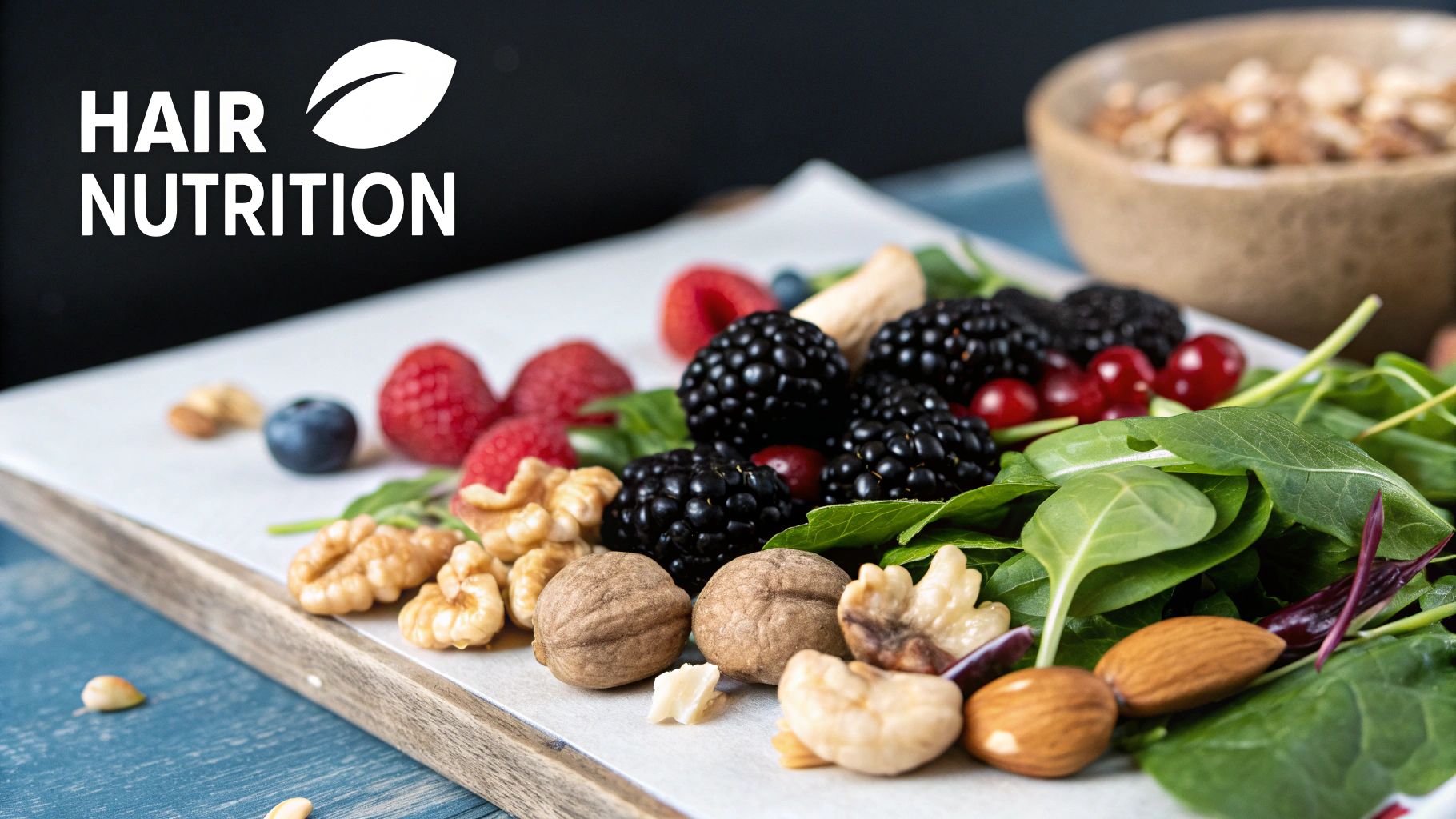
While scalp treatments and lifestyle adjustments are great, you can't build a strong house on a weak foundation. What you eat directly fuels the tiny engines that are your hair follicles. If your diet is missing the right building blocks, your hair will eventually show it by becoming thin and weak.
This is about more than just "eating healthy." It’s about being smart with your nutrition to specifically target follicular strength. Let's get past the generic advice and lay out a food plan that actively supports your hair's growth cycle.
The Essential Building Blocks for Hair
Your follicles are always at work, and they need a constant stream of specific nutrients to build strong, resilient hair. Once you understand what these key nutrients do, it's a lot easier to make sure they're on your plate every day.
- Protein (Keratin): Hair is roughly 95% keratin, which is a protein. If you don't eat enough protein, your body starts to ration it. Since hair growth isn't essential for survival, it's one of the first things to get shut down.
- Iron: This mineral is a must-have for producing hemoglobin, the part of your blood that carries oxygen. Your follicles need a rich supply of oxygenated blood to thrive.
- Zinc: Zinc is a workhorse for hair tissue growth and repair. It also helps the oil glands around the follicles work properly, which prevents a dry, flaky scalp that can get in the way of growth.
Pro Tip: To get more out of your iron, always pair iron-rich foods (like spinach or lean red meat) with a source of vitamin C. Think a squeeze of lemon on your steak or adding bell peppers to a spinach salad. This simple trick makes a huge difference in how much iron your body can actually use.
Follicle Superfoods for Your Grocery List
Knowing what nutrients you need is one thing, but actually eating them is another. Here’s a simple list of "follicle superfoods" you can easily work into your diet to strengthen hair from the inside.
| Nutrient Group | Top Food Sources | Why It Matters for Hair |
|---|---|---|
| Protein | Eggs, Greek Yogurt, Chicken Breast, Lentils | Gives your body the direct keratin building blocks for hair structure and strength. |
| Iron & Zinc | Oysters, Spinach, Red Meat, Pumpkin Seeds | Crucial for getting oxygen to the scalp and for cell repair and growth within the follicle. |
| Vitamin D | Fatty Fish (Salmon, Mackerel), Fortified Milk | Often called the "sunshine vitamin," it helps create new follicles—the tiny pores where new hair can grow. |
| Biotin (B7) | Nuts, Seeds, Sweet Potatoes, Egg Yolks | A famous B-vitamin that plays a key role in producing keratin, hair's main structural protein. |
| Omega-3s | Walnuts, Flaxseeds, Chia Seeds, Salmon | These healthy fats can reduce scalp inflammation and help with hair density and shine. |
Building your meals around these foods is a powerful strategy for fighting hair thinning from within. A diet packed with these nutrients ensures your body has all the fuel it needs for the demanding work of a healthy hair growth cycle.
Of course, eating the right foods is only half the battle; your body also needs to absorb those nutrients effectively. Learning how to increase nutrient absorption can help you get the most out of your meals for your hair and overall health. Making sure your body can actually use the vitamins and minerals you consume is a critical part of any plan to strengthen hair follicles.
Building a Hair-Friendly Lifestyle
While what you eat sets the foundation from the inside, your day-to-day habits have a massive impact on your hair's strength. To really fortify those follicles, you have to look at the external pressures you're putting on them, both physically and mentally. This is all about crafting a lifestyle that actively protects and nurtures your scalp.
One of the biggest culprits we often ignore is stress. When you're constantly stressed out, your body pumps out more of the hormone cortisol. This isn't just a feeling in your head; it triggers real physical changes. High cortisol levels can throw your hair's natural growth cycle out of whack, forcing way too many follicles into the resting phase at once. The result? Noticeable shedding, a condition known as telogen effluvium.
Manage Stress to Protect Your Follicles
Getting a handle on your body's stress response is one of the most powerful things you can do for your follicles. You don't need to completely rearrange your life, either. Small, consistent practices can genuinely lower cortisol and encourage a healthy growth cycle.
- Mindful Moments: Try to carve out just 10 minutes a day for mindfulness or meditation. This short pause can do wonders for calming your nervous system and regulating stress hormones.
- Active Breaks: A quick 20-minute walk, especially if you can get outside, is fantastic for cutting down on stress. It also boosts circulation, which means more oxygen and nutrients are getting delivered right to your scalp.
- Prioritize Sleep: Seriously, aim for 7-9 hours of good-quality sleep each night. Sleep is your body's prime time for cellular repair, and that absolutely includes fixing and strengthening your hair follicles.
A Personal Tip: I used to be skeptical that "managing stress" could help my hair. It just felt too vague. But I committed to taking a short walk on my lunch break every single day, and within a few months, I saw a real drop in shedding. It was proof that small, consistent habits are what truly build stronger hair over time.
Smart Styling and Gentle Handling
Beyond stress, how you physically handle your hair is critical. So many common styling habits put a ton of strain on the follicles without us even realizing it, leading to inflammation and a type of hair loss called traction alopecia.
Think about those high-tension hairstyles—the tight ponytails, slicked-back buns, or heavy braids that pull at your roots all day. Heat is another big one. Frying your hair with styling tools can weaken the hair shaft and even damage the follicle itself. Whenever you can, opt for looser styles, and always, always use a heat protectant.
This kind of mindful approach to hair care is catching on globally. In fact, the Asia-Pacific region makes up 46% of the worldwide revenue for hair growth products. This is partly driven by long-standing cultural hair care routines and a huge population dealing with thinning hair.
Interestingly, men account for 61.1% of these consumers, often jumping on preventative care early to keep their follicles healthy. Shampoos and conditioners are the most common starting point because they're so easy to work into a routine. If you're curious, you can explore detailed hair growth statistics from Power Your Curls. Adopting a hair-friendly lifestyle is a huge piece of this proactive puzzle.
7. Adopt Effective Topical Treatments and Scalp Care
While building strong hair from the inside out is crucial, you can't ignore what's happening on the surface. A targeted approach right at the scalp can give your follicles the direct support they need to thrive.
This isn't about falling for flashy marketing promises. It's about using ingredients with real science behind them and creating a scalp environment that actively encourages growth. Think of it like gardening: even with the best fertilizer (your diet), a plant will struggle in dry, compacted soil. Your scalp is that soil.
Evidence-Backed Topical Ingredients
Plenty of bottles on the shelf promise a miracle cure for thinning hair, but only a handful of ingredients have the research to back them up. I always tell my clients to focus on these to avoid wasting time and money.
Here are a few of the heavy hitters:
- Minoxidil: You’ve probably heard of this one, and for good reason. It’s one of the most studied over-the-counter hair loss treatments available. It started as a blood pressure drug, but researchers quickly noticed an interesting side effect: it grew hair. Minoxidil works by improving blood flow to the follicles and, importantly, extending the anagen (growth) phase of your hair cycle.
- Rosemary Oil: If you're looking for a natural alternative, rosemary oil is a fantastic starting point. A 2015 study actually found it to be as effective as 2% minoxidil for androgenetic alopecia after six months of use. It's believed to work by improving circulation and providing anti-inflammatory and antioxidant benefits right at the scalp.
- Caffeine: That morning coffee does more than wake you up. When applied topically, caffeine can penetrate the hair roots and help block the effects of DHT, a hormone that shrinks follicles and is a primary culprit in pattern baldness.
Proper application is key to making these treatments work. You need to get the ingredients directly to the roots.
When applying oils or serums, use the pads of your fingers to gently work the product directly onto your scalp, ensuring it reaches the follicles instead of just sitting on your hair strands.
To help you navigate the options, here’s a quick comparison of some of the most effective topical ingredients you'll find.
Comparing Popular Topical Hair Treatments
| Ingredient | How It Works | Best For | Considerations |
|---|---|---|---|
| Minoxidil | Widens blood vessels to improve follicle blood flow; extends the anagen (growth) phase. | Androgenetic alopecia (pattern baldness) in both men and women. | Requires consistent, long-term use. May cause initial shedding or scalp irritation. |
| Rosemary Oil | Improves circulation, has anti-inflammatory properties, and may inhibit DHT. | Those seeking a natural alternative for androgenetic alopecia or general thinning. | Can be irritating for sensitive skin. Best used diluted in a carrier oil (like jojoba or coconut). |
| Caffeine | Penetrates hair roots to counteract DHT and stimulate the hair shaft. | Early-stage pattern hair loss, particularly in men. | Most effective in leave-in treatments (serums, tonics) rather than rinse-off shampoos. |
| Ketoconazole | An antifungal that reduces scalp inflammation and has anti-androgenic effects. | Hair loss associated with dandruff, seborrheic dermatitis, or fungal issues. | Primarily found in medicated shampoos (like Nizoral). Can be drying with frequent use. |
Choosing the right ingredient often comes down to the root cause of your hair concerns and your personal preferences for natural versus pharmaceutical solutions.
Create a Scalp-First Care Routine
What's in the bottle matters, but how you care for your scalp determines whether those ingredients can even do their job. A healthy, clean scalp is the foundation for everything else.
Start with gentle exfoliation. Over time, a mix of dead skin cells, natural oils (sebum), and styling product residue can build up, literally clogging your hair follicles. You don't need to scrub aggressively; a soft scalp brush or a gentle chemical exfoliant with salicylic acid used once a week is perfect for clearing debris without causing irritation.
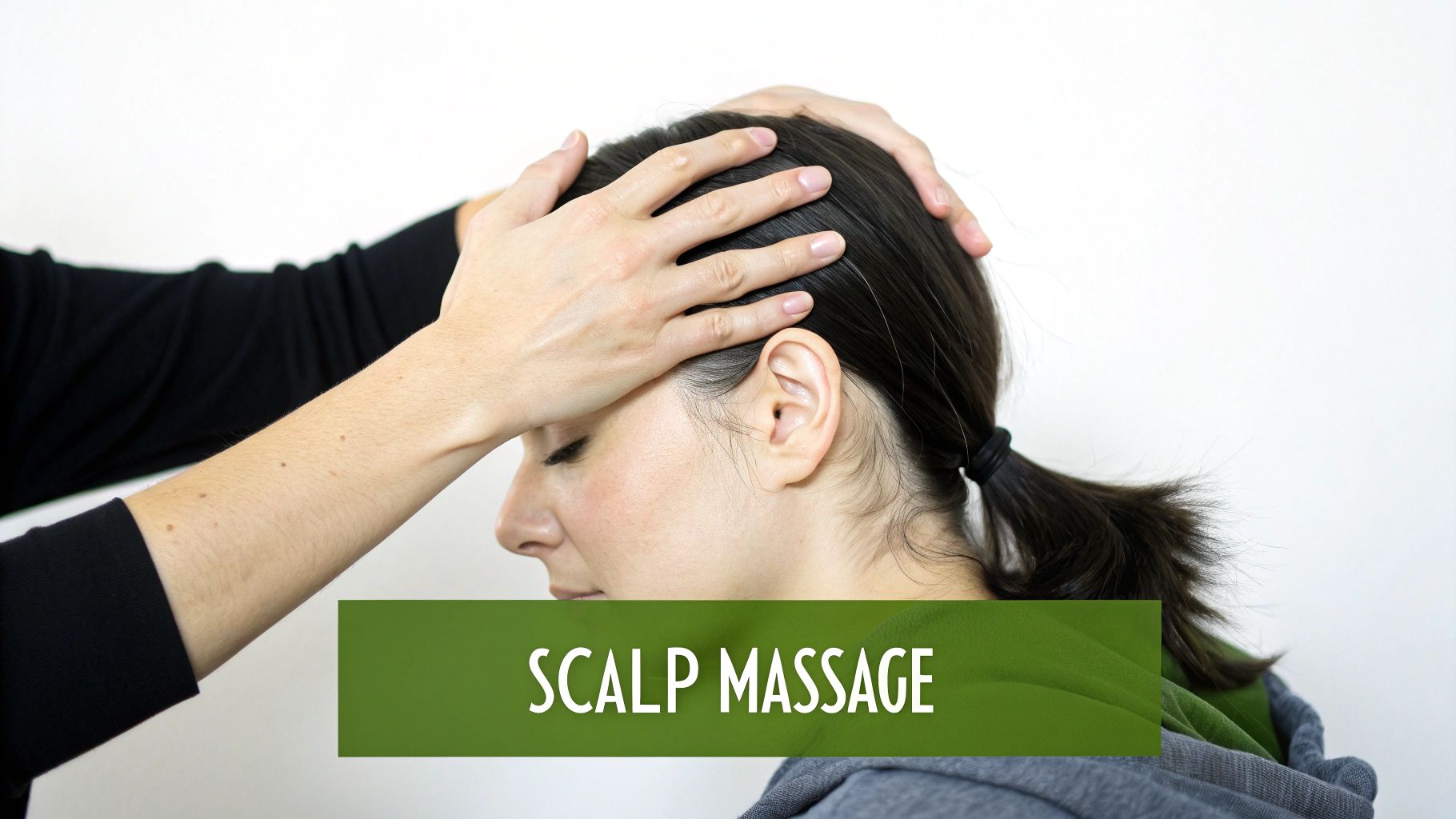
Next, make scalp massage a non-negotiable habit. Just four or five minutes a day can make a world of difference. The simple act of massaging your scalp with your fingertips boosts circulation, bringing a fresh supply of oxygen and nutrients straight to your follicles. I find the best time to do this is while shampooing or when applying a treatment oil.
My Pro Tip: Consistency beats intensity every time. A gentle 5-minute daily massage will do far more for your follicles than a harsh, 20-minute scrub once a month. The goal here is stimulation, not inflammation.
Finally, take a hard look at your shampoo. Many contain harsh sulfates that strip your scalp of its natural, protective oils. This can lead to a vicious cycle of dryness, irritation, and inflammation—all of which are enemies of healthy hair growth. Look for a gentle, sulfate-free shampoo that cleanses effectively while keeping your scalp’s delicate moisture barrier intact.
When to Seek Professional Hair Loss Solutions
https://www.youtube.com/embed/CRn_83wTPSM
Sometimes, you can do everything right—eating well, managing stress, using all the best topicals—and still not see the results you want. If you're dealing with serious thinning or just feel like you've hit a wall with at-home care, it might be time to call in the professionals. This isn't a sign you've failed; it's just acknowledging that some situations need a stronger, more clinical approach to get your follicles back on track.
Knowing when to make that call is important. If you look in the mirror and your part seems wider, you're seeing more scalp than hair, or your ponytail feels noticeably skimpier, that’s your cue. A visit to a dermatologist or a hair loss specialist can give you a clear diagnosis and open the door to advanced treatments that go far beyond what you can do at home.
Exploring Platelet-Rich Plasma Therapy
One of the most talked-about professional treatments right now is Platelet-Rich Plasma (PRP) therapy. It sounds high-tech, but the idea behind it is actually quite elegant: it uses your body's own healing power to wake up dormant or weakened hair follicles.
The procedure starts with a simple blood draw, no different than a routine check-up. That blood is then spun in a centrifuge to separate the platelets, creating a super-concentrated, golden plasma. This "liquid gold" is then meticulously injected into the areas of your scalp that need it most.
These platelets are your body's emergency response team. They're loaded with growth factors that tell cells to get to work repairing and rebuilding. When injected into the scalp, they act as a potent signal to sluggish follicles, nudging them back into an active growth phase.
PRP tends to work best for people with androgenetic alopecia (pattern hair loss) who still have follicles, even if they've become miniaturized and weak.
Understanding Low-Level Laser Therapy
Another fantastic, non-invasive option is Low-Level Laser Therapy (LLLT). You might have seen FDA-cleared caps and combs that allow you to do this at home. LLLT works by bathing the scalp in specific wavelengths of red light, which essentially gives the cells inside your hair follicles a jolt of energy.
I like to think of it as photosynthesis for your hair. The light is absorbed by the cells, kick-starting their metabolism. This boost can help extend the hair's growth phase, increase blood flow to the area, and calm inflammation around the follicle—all things that create a healthier environment for hair to grow.
- Who It's For: LLLT is a great choice for men and women in the earlier stages of hair thinning.
- What to Expect: The key here is consistency. You'll typically use the device for about 20-30 minutes a few times each week. It takes patience, with most people seeing noticeable changes after three to six months of dedicated use.
The science behind follicle stimulation is always moving forward. We're seeing incredible breakthroughs, like the discovery of the PP405 molecule by UCLA researchers, which shows real promise in directly "awakening" dormant follicle stem cells. In fact, the company behind this research landed $16.4 million in funding from Google Ventures to push it toward clinical trials. If you're curious, you can learn more about the growing investment in hair growth innovations on Coherent Market Insights.
Talking to a specialist is the best way to figure out which of these treatments—or even future ones—is the right fit for you.
Got Questions About Strengthening Your Hair Follicles? We've Got Answers.
When you decide to get serious about your hair health, questions are going to pop up. It's totally normal. Knowing what to expect as you work to strengthen your hair follicles helps you stick with the plan and keep your expectations realistic.
Let's dive into some of the most common questions guys have when they start this journey.
How Long Until I Actually See Results?
This is the big one, isn't it? Everyone wants to know when they'll see a change in the mirror. The honest answer is: it depends. Your results are tied to the methods you're using and your own body's unique hair growth cycle. Patience is key.
If you're focusing on diet and lifestyle changes—like eating better and managing stress—you might notice less shedding in about 3 to 4 months. For something like Minoxidil, you’re usually looking at 4 to 6 months of consistent application before you see noticeable new growth. Professional treatments like PRP are a longer game, involving a series of sessions with results gradually appearing over several months.
Can I Really Strengthen Follicles That Are Already Damaged?
This is a critical question, and the answer depends entirely on the state of the follicle. Let's be realistic: if a follicle is scarred over or has been inactive for years, bringing it back is highly unlikely.
The good news? Follicles that are just weakened, shrunken (miniaturized), or stuck in a long resting phase can absolutely be revived. That’s what most treatments are designed to do—wake up these viable follicles and push them back into an active growth phase.
Key Takeaway: Acting early makes all the difference. The sooner you start tackling the problem, the better your odds are of strengthening your follicles and preventing permanent loss.
Do Hair Growth Supplements Actually Work?
They can, but their effectiveness really hinges on one thing: are you deficient in a key nutrient? If your hair thinning is directly caused by a lack of certain vitamins or minerals, then yes, supplements can be a game-changer.
However, if you're already eating a balanced diet, just adding more vitamins probably won't do much. Before you start popping pills, it's a smart move to talk to a doctor and get tested for any deficiencies. For hair loss driven by genetics or hormones, it's better to think of supplements as part of the supporting cast, not the star of the show.
Should I Focus on My Diet or on Topical Treatments?
Why choose? The most powerful strategy doesn't make you pick one over the other—it combines them. A two-pronged attack, tackling the issue from the inside out, is always going to be more effective.
Think of it this way: your diet supplies the raw materials your body needs to build strong, healthy hair from within. At the same time, topical treatments provide direct stimulation and support right at the scalp. They work together. A nutrient-rich diet builds the foundation, while a solid scalp care routine creates the perfect environment for your follicles to thrive.
At PRP For HairLoss, we believe that clear, straightforward information is the first step toward taking control. We're committed to providing reliable insights on male pattern baldness and effective treatments like PRP. To learn more about how you can manage your hair health journey, check out our resources at https://prpforhairloss.com.
 PRP For Hairloss
Leave a comment